Faith Nyasuguta

Russia is steadily building a web of military partnerships stretching from the Mediterranean coast deep into the Sahel, connecting Algeria, eastern Libya, Mali, Burkina Faso and Niger through arms deals, troop deployments, intelligence cooperation and logistics networks.
It is not a formal alliance like NATO. There is no treaty, no common headquarters and no collective defence clause. Yet the pattern is becoming increasingly visible: a network of states that rely on Russian weapons, training, security assistance and diplomatic backing, while sharing a common desire to reduce Western influence.

What is emerging may not yet be a military bloc in the traditional sense, but it increasingly resembles a loose security architecture built around Moscow’s strategic interests in Africa.

The shift comes at a time when relations between many Sahel governments and Western powers have deteriorated sharply.

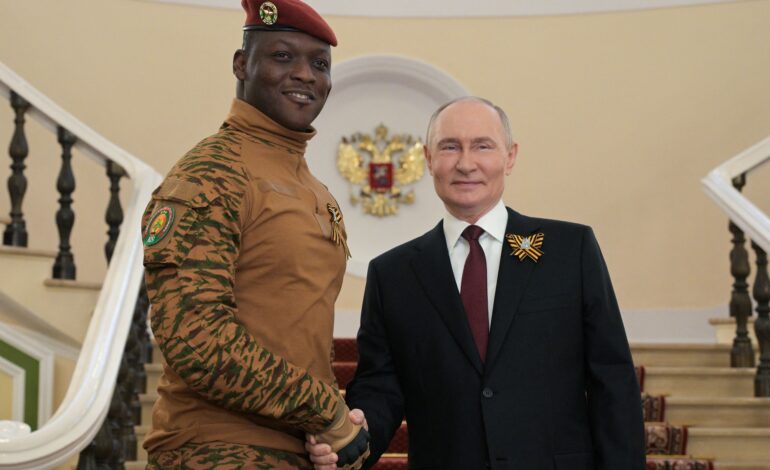
France has withdrawn troops from Mali, Burkina Faso and Niger. American military forces have also left Niger, including the large drone base in Agadez. Into that vacuum, Russia has moved quickly, expanding the role of Africa Corps, the force that replaced the Wagner Group, while strengthening ties with governments seeking alternative security partners.
The European Union has openly expressed concern.

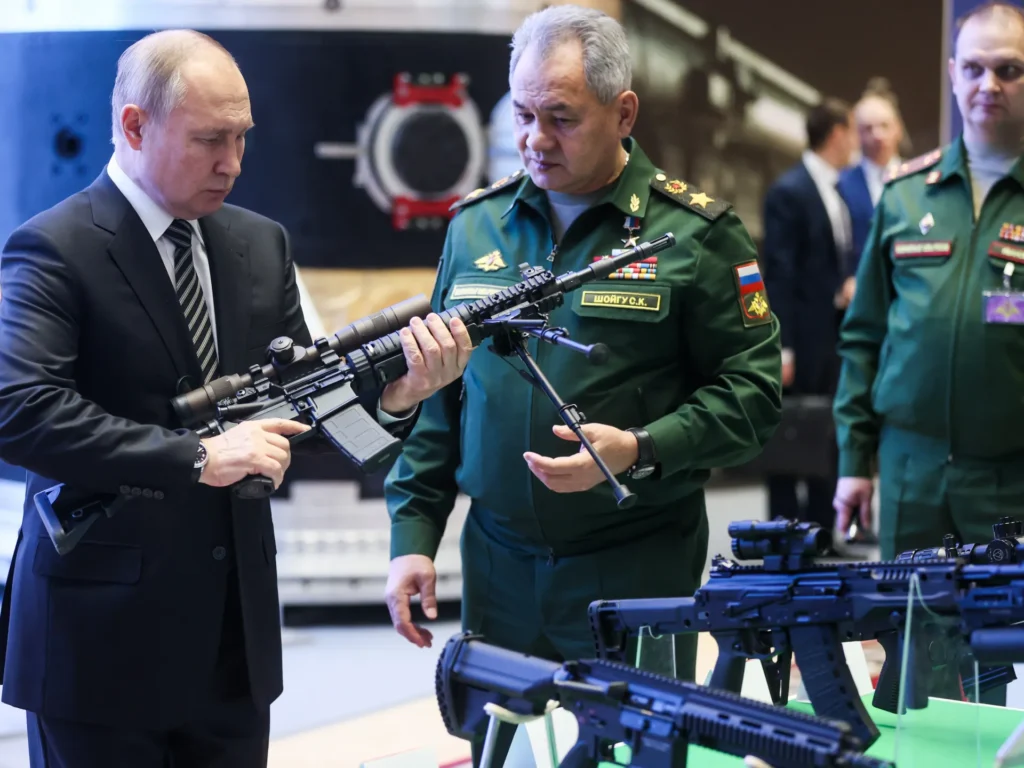
In recent reports on Foreign Information Manipulation and Interference (FIMI), Brussels accused Moscow of using political change in Africa to position itself as a counterweight to Western influence. But for many African governments, the attraction of Russia goes beyond information campaigns.
It is rooted in a practical calculation: Russia provides weapons, military training and security support without the political conditions often attached to Western assistance. Libya is central to this strategy.
Field Marshal Khalifa Haftar’s Libyan National Army controls much of eastern and southern Libya, offering Moscow a strategic bridge between the Mediterranean and the Sahel. Through Haftar-controlled territory, Russia can move personnel, equipment and supplies into Mali, Niger and Burkina Faso.
Western intelligence reports and satellite imagery indicate that Russian forces and equipment are present at multiple Libyan bases, including Jufra, Al-Khadim, Ghardabiya, Brak Al-Shati, Maaten Al-Sarra and Tamanhint.
These facilities have reportedly hosted Russian personnel, MiG-29 fighter jets, drones and advanced air-defence systems. Haftar’s forces have also received Russian military hardware, including Pantsir-S1 air defence systems, Tor missile systems and BM-30 Smerch rocket launchers. If Libya provides the geography, Algeria provides the military weight.
Algeria possesses one of Africa’s strongest conventional armies and has relied on Russian military equipment for decades. Its arsenal includes Su-30 fighter jets, MiG-29 aircraft, submarines, tanks and sophisticated air-defence systems.
Recent reports have also linked Algeria to interest in Russia’s Su-57 fifth-generation fighter and Su-35 aircraft, reinforcing its position as one of Moscow’s most important defence partners on the continent.
This relationship became particularly important after tensions emerged between Algeria and Mali in 2025 following the downing of a Malian drone. The dispute threatened to widen divisions between Algeria and the Alliance of Sahel States (AES), which groups Mali, Burkina Faso and Niger. Russia moved quickly behind the scenes.
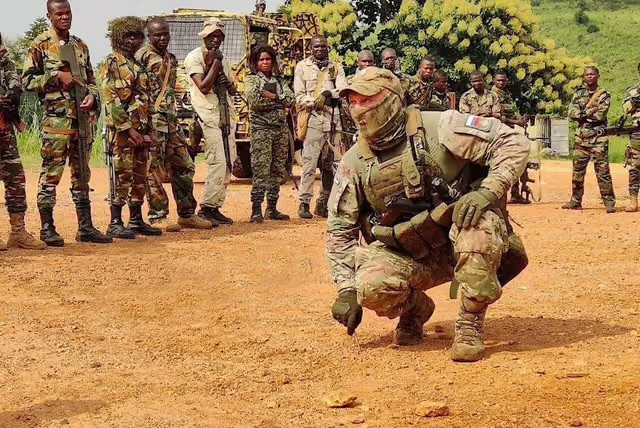
According to Africa Intelligence, Russian diplomats spent weeks encouraging reconciliation, while Niger also acted as a mediator. By July 2026, Algeria and Mali had restored diplomatic relations, reopened airspace and returned ambassadors.
Military cooperation soon followed. Algeria supplied Niger with Mi-24 attack helicopters and Mi-171 transport helicopters, alongside ammunition and logistical support. In August 2026, Algerian Su-30 fighter aircraft were reportedly deployed to Niger during a military mutiny, while Africa Corps supported loyalist forces in retaking a strategic airbase.
For analysts, this offered a glimpse of how an informal collective security arrangement could function. The Sahel itself has become heavily dependent on Russian military equipment.
Mali has received artillery systems, armoured personnel carriers, fighter aircraft and helicopters. Satellite imagery has identified Russian-made Su-24 bombers at Bamako airbases, while open-source military analysts have documented deliveries of Su-25 attack aircraft, Mi-24 helicopters and Mi-8 transport helicopters.
Additional shipments in 2026 included BMP infantry fighting vehicles, BTR carriers and Tigr-M armoured vehicles for Africa Corps units.
Burkina Faso has emerged as an important transit hub. Research organisation C4ADS tracked dozens of Russian-linked military flights involving Mali, Burkina Faso and Niger between 2025 and 2026. This growing network explains why Western capitals increasingly view Russian activity in Africa as more than isolated partnerships.
What is taking shape is a strategic corridor: Algeria offers military depth, Libya provides access routes, and the AES states offer political alignment and operational space. Yet the development also raises difficult questions.
Can this network become a formal alliance? Will African states retain strategic independence while relying on external military partners? And can security cooperation translate into broader economic and industrial development?
For Moscow, the benefits are clear: access, influence, markets and strategic reach far beyond Europe. For African governments, Russia represents another option in a world where many no longer wish to depend on a single external power.
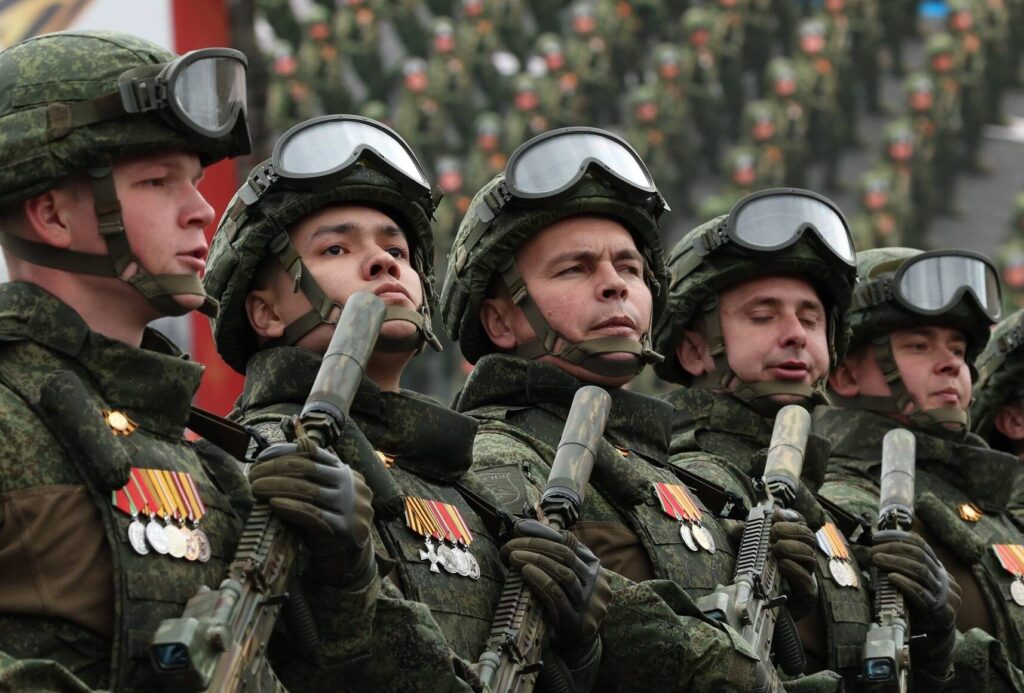
Whether this evolves into an African security bloc or remains a loose arrangement, one reality is becoming harder to ignore: The map of military influence in Africa is changing—and Russia is placing itself at the centre of that transformation.
RELATED: