Njoki Kangethe

There is something deeply satisfying about planting a tree. You dig a hole, lower a seedling into the soil, cover its roots and water it. It is a small, tangible act, and perhaps that is why tree planting has become such a powerful symbol of environmental action. It gives us something to do in the face of climate change, deforestation and disappearing biodiversity. Kenya has embraced that symbolism on a national scale, with a target of growing 15 billion trees by 2032 as part of its National Landscape and Ecosystem Restoration Programme.
The government also aims to increase forest and tree cover towards 30 percent by 2032. But there is an important distinction hidden inside those targets. A tree is not necessarily a forest, and planting a large number of trees does not automatically recreate what was there before.

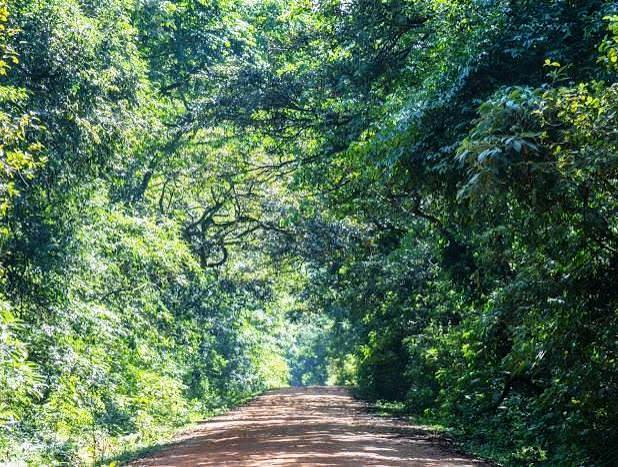
A forest is a functioning ecological system. It contains trees of different ages and species, understorey plants, fungi, insects, birds, mammals, microorganisms, soil and water. These components interact over time. Some trees provide food for animals; animals disperse seeds. Fallen leaves become part of the soil. Roots stabilise slopes and influence how water moves through the landscape. Shade changes temperature and moisture. The result is something considerably more complex than a collection of trunks standing next to one another.

This is why restoration scientists distinguish between tree planting and forest restoration. The Food and Agriculture Organization describes forest and landscape restoration as a range of approaches that can include restoring degraded forests, allowing natural regeneration, planting multiple species, establishing commercial plantations and undertaking ecological restoration. The appropriate approach depends on what the land is supposed to provide and what has already been lost. Sometimes the best thing we can do for a damaged forest is surprisingly little.

If a degraded landscape still has healthy forest fragments nearby, seeds in the soil and natural vegetation beginning to return, protecting the area from fire, grazing and further disturbance may allow regeneration to happen with relatively little planting. Assisted natural regeneration works on precisely this principle. Rather than replacing nature’s recovery process, people remove the obstacles preventing it from happening. FAO describes it as a potentially cost-effective way of restoring degraded land and recovering ecosystem functions.
This matters in Kenya because the country’s restoration ambition is enormous. The national programme has targets covering millions of hectares of degraded forests and landscapes, with both natural regeneration and planting included as restoration approaches. The government’s medium-term planning documents explicitly envisage the rehabilitation of 3.5 million hectares through protection of natural regeneration and planting. The numbers can therefore be impressive without telling us everything we need to know.

Imagine two hectares of land. On one, a thousand seedlings of a single fast-growing species are planted in neat rows. On the other, natural regeneration is protected, indigenous trees of different species and ages return, shrubs and grasses establish themselves, and birds and insects gradually come back. Both areas may increase the country’s tree cover. Both may eventually contain many trees. But they are not necessarily performing the same ecological functions, nor will they necessarily provide the same combination of biodiversity, water regulation, soil protection and livelihoods. The distinction becomes particularly important when we talk about plantations.
Kenya has a legitimate need for timber. The country needs construction materials, furniture, paper, poles and other forest products, and plantation forestry can help supply some of that demand. The Forest Conservation and Management Act itself makes a distinction between indigenous forests, which are managed for purposes including water, soil and biodiversity conservation as well as sustainable production, and plantation forests, which are managed primarily for commercial production of wood and other forest products.
There is nothing inherently wrong with a plantation. In the right place and under good management, a planted forest can produce timber efficiently and reduce some of the pressure on natural forests. FAO notes that plantation monocultures can provide high levels of wood production, although their contribution to environmental services varies and they restore relatively few of the species found in the original ecosystem. And the problem begins when we treat the two as interchangeable.
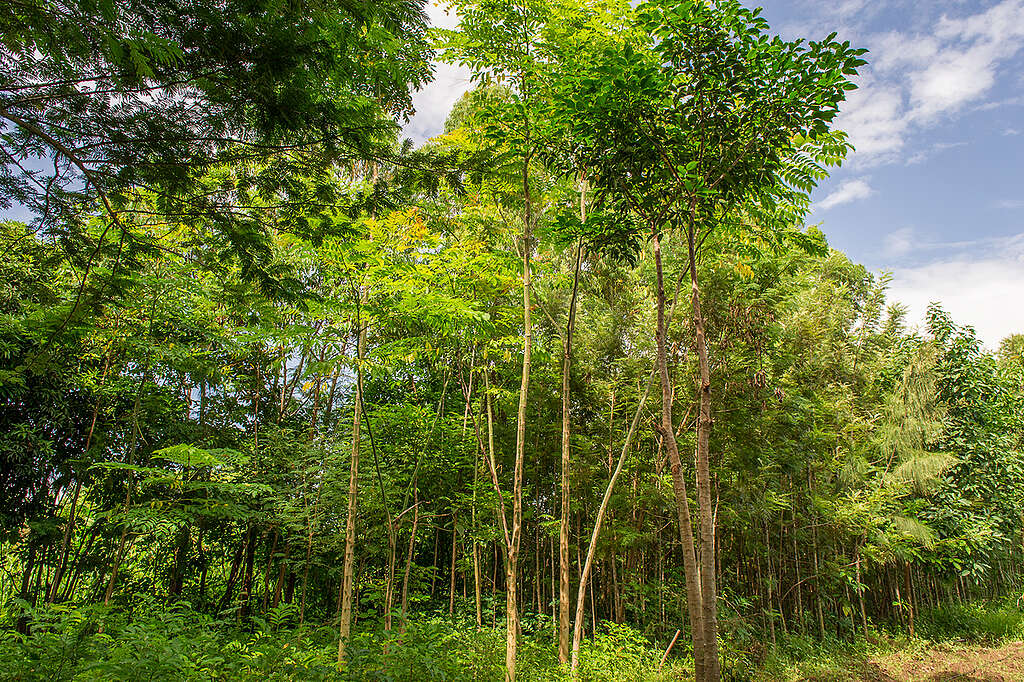
A commercial plantation can be valuable precisely because it is managed for a particular purpose. Trees may be planted at regular spacing, harvested on a rotation and replanted. A natural forest operates differently. Its value may lie in functions that are not captured by the price of timber: habitat, genetic diversity, soil formation, water regulation, carbon storage, pollination and cultural significance. Therefore, the choice of species matters enormously.
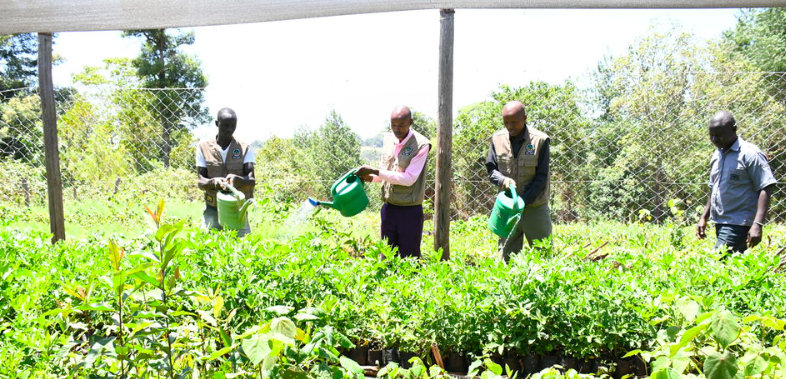
Kenya’s restoration programme includes indigenous trees, agroforestry and other tree-based systems alongside commercial forestry. KEFRI has been working with communities on species selection, seed supply, agroforestry and nature-based enterprises, recognising that the right tree depends on the landscape and the purpose of planting. Its JazaMiti system, for example, is designed to help users select suitable tree species according to location and to track trees after they are planted. That last part is particularly important. A seedling being planted is the beginning of a restoration project, not the end of one.
The national programme itself has recognised the need to monitor whether trees actually grow. The JazaMiti system was developed to document planting and track growth over time, while Kenya’s national planning documents have incorporated an assumed survival rate when calculating how many seedlings need to be produced. This changes the question from ‘How many trees did we plant?’ to something much more useful: how many survived, what did they become, and what changed around them?
Restoration also takes time. A nursery can produce thousands of seedlings in a season, but a functioning forest develops over years and decades. Some trees need decades to mature. Soil communities have to recover. Wildlife has to return. Canopies have to develop. Streams and slopes respond to changes in vegetation over time. The fact that a landscape looks green a few years after planting does not necessarily mean that its ecological functions have been fully restored.
The United Nations’ principles for ecosystem restoration make this point in another way. Restoration is not a substitute for conservation. It should address the causes of degradation, use knowledge from science and local communities, establish measurable ecological and social goals, and adapt as evidence emerges. The principle is particularly relevant to tree planting because it reminds us that restoring an ecosystem begins with understanding what caused it to disappear in the first place.
If trees were removed because of uncontrolled grazing, planting without managing grazing may accomplish little. If a riverbank was cleared for cultivation, planting seedlings without addressing erosion or land-use pressures may not restore the river system. If a forest is repeatedly cut for fuelwood, planting more trees without addressing household energy needs may simply recreate the same cycle. And there is an even more uncomfortable possibility: sometimes we plant trees to compensate for forests we have failed to protect.
It is much easier to organise a tree-planting day than to prevent illegal logging, resolve competing land claims, regulate extraction, protect a water catchment or maintain a forest for decades. Planting produces photographs, numbers and a visible sense of action. Protection is slower and less glamorous. It requires institutions, enforcement, community participation, monitoring and patience. Kenya needs both.
The country’s 15 billion-tree ambition is not insignificant, and tree growing can play an important role in restoring degraded landscapes, providing wood products, improving livelihoods and increasing ecological resilience. But the success of the programme should ultimately be judged by what happens to the landscapes, not simply by the number of seedlings distributed or planted.
A seedling is a promise. A forest is what happens when that promise is given time, protection, the right conditions and enough ecological diversity to become something larger than the tree itself. That is why planting trees should never become an excuse for losing forests in the first place. We should grow trees where trees are needed, restore forests where forests have been degraded, allow nature to regenerate where it can, and protect the forests that are still functioning. The objective goes beyond simply making Kenya greener. It is to make its landscapes healthier, its ecosystems more resilient and its forests capable of continuing the work that only functioning forests can do.
References
• Food and Agriculture Organization of the United Nations, Forest and Landscape Restoration.
• Food and Agriculture Organization of the United Nations, Forest Restoration.
• Food and Agriculture Organization of the United Nations, Assisted Natural Regeneration of Forests.
• FAO, Principles for Ecosystem Restoration to Guide the UN Decade 2021–2030.
• Kenya Law, Forest Conservation and Management Act, 2016.
• Republic of Kenya, National Landscape and Ecosystem Restoration Strategy 2023–2032.
• Republic of Kenya, Medium Term Plan IV National Indicator Handbook 2023–2027.
• Kenya Forestry Research Institute (KEFRI), JazaMiti and National Tree Growing Programme resources.
• State Department for Environment and Climate Change, Strategic Objectives.
RELATED: