Njoki Kangethe

When we talk about protecting forests, the conversation can become strangely abstract. We talk about hectares restored, tree cover targets, carbon stored and biodiversity protected. We talk about illegal logging and charcoal burning, licences and moratoriums, water towers and climate change. All of these things matter, but somewhere inside the statistics are people whose relationship with a forest is much more immediate. For them, the forest is not simply an ecosystem to be conserved. It can be a source of food, medicine, fuel, income, building materials, grazing land, cultural identity and, sometimes, a place of spiritual significance.
This is what makes forest conservation complicated. The same forest we want to keep standing can also be part of someone’s household economy.

A 2025 study of communities living around Kenya’s Kakamega Forest gives a useful glimpse of what this dependence can look like. Researchers surveyed 631 households across five sub-counties bordering the forest and found that firewood was the most frequently used forest product, accounting for 49% of the foraged products reported. The researchers estimated the annual monetary value of tangible ecosystem services drawn from the forest at about US$283,000, including firewood, fruits, medicinal plants, vines, timber and mushrooms.

The study also found a cultural dimension to the relationship: 93% of respondents expressed willingness to pay within a specified range to support cultural ecosystem services associated with sacred groves.

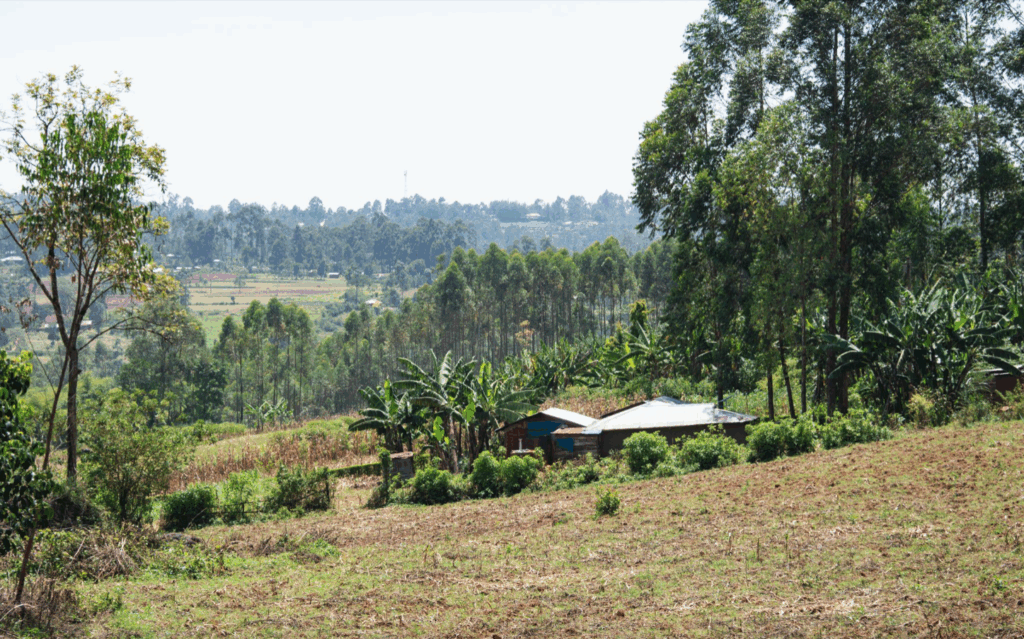
The numbers are useful because they make visible something that is easy to overlook. A forest can contribute to a household without a single shilling changing hands. Firewood collected for cooking does not necessarily appear as income. A medicinal plant gathered for a sick family member is not recorded as a market transaction. A fruit picked from the forest and eaten at home may never appear in national economic statistics. Yet each represents something the household would otherwise have to obtain, purchase or go without.
This is particularly important in a country where woodfuel remains a significant part of household energy use. KEFRI has estimated that around 90% of rural and peri-urban households use fuelwood energy, while the wider formal forest sector supports hundreds of thousands of direct and indirect jobs. In the Mt Elgon and Cherang’any Hills water towers, KEFRI research has found that many households depend on woodfuel for their energy requirements. That dependence, however, does not mean that communities are inherently destructive of forests. It means that conservation policies have to reckon with how people actually live.

Kenya’s participatory forest management system attempts to do precisely this by giving communities organised roles in managing forests while allowing specified user rights. Community Forest Associations can participate in activities such as beekeeping, ecotourism, tree nurseries, grazing and firewood collection, provided these uses are consistent with management plans and conservation requirements. In Meru County, for example, the Kenya Forest Service has supported participatory management agreements alongside livelihood activities including apiaries, fruit farms, ecotourism sites and tree nurseries.
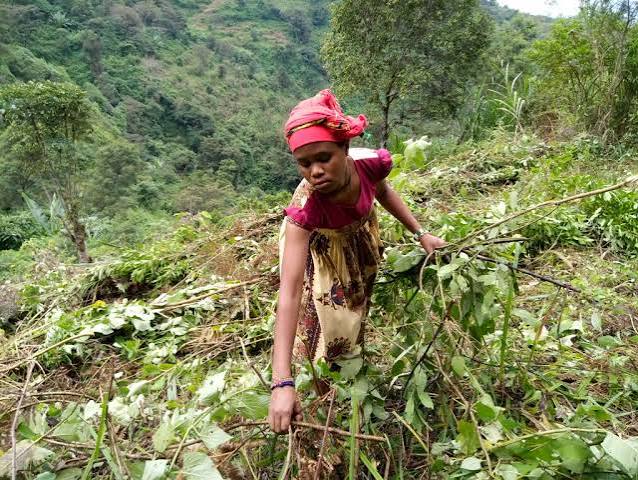
At Arabuko Sokoke, community-based enterprises have included butterfly farming, beekeeping, ecotourism and mangrove boardwalks. The principle is straightforward: if a forest has economic value while it remains standing, some of that value can help create a reason for neighbouring communities to protect it. This is one of the more interesting shifts in modern conservation.
Instead of treating people as a problem that has to be kept away from nature, conservation can recognise them as part of the landscape and look for ways their livelihoods can coexist with ecological limits. But that coexistence is not always easy.
A forest can provide grazing, for example, but too many animals can damage regeneration and compact the soil. Firewood can meet a household’s energy needs, but uncontrolled harvesting can degrade woodland. Honey production can provide income while depending on healthy vegetation and pollinators. Tourism can create jobs while bringing roads, buildings and visitors into sensitive environments. Even a seemingly benign activity can become damaging when it exceeds the forest’s ability to recover.
KEFRI’s recent work on grazing illustrates this tension. Forest-adjacent communities and forest user groups may have rights to graze livestock, but the institute has also documented cases where unmanaged grazing and large herds have contributed to forest degradation. Its response has included developing sustainable grazing thresholds and management plans for particular forests. The lesson is that use needs to be governed by ecological realities. A livelihood built around a forest that is gradually disappearing is not a sustainable livelihood, however valuable it may be in the short term.
There is also a deeper relationship between people and forests that cannot be reduced to income. For some communities, forests hold histories, traditions, sacred places and knowledge passed between generations. The Ogiek of Kenya are one of the clearest examples. Their traditional relationship with the Mau forests has involved hunting, gathering, beekeeping and detailed knowledge of forest plants and landscapes. FAO has documented the challenges the community has faced through displacement, changing government policies, commercial agriculture and the erosion of traditional knowledge.
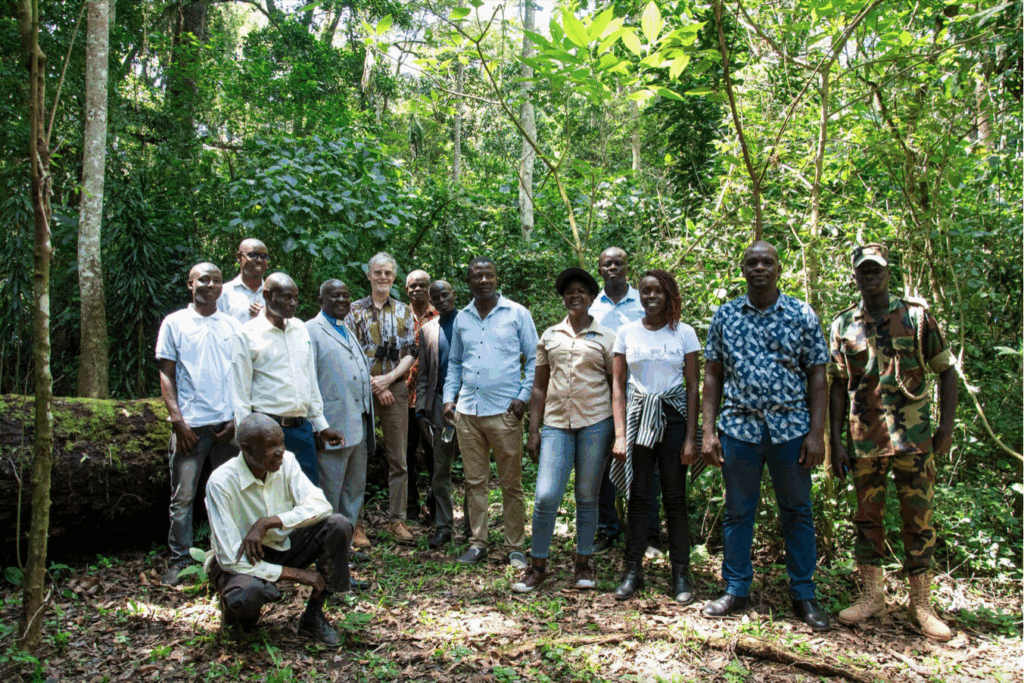
That knowledge matters because forests are not only repositories of biological diversity. They are also repositories of human knowledge about that biological diversity. Someone who has spent generations knowing which plant can be used for medicine, where bees are likely to swarm, when particular fruits appear or which areas should not be disturbed possesses a form of ecological knowledge that may never appear in a forestry inventory.
This is why conservation that ignores people can lose something important even when it succeeds in keeping trees standing.
At the same time, romanticising traditional knowledge is not useful either. Communities are not uniform, and traditional practices are not automatically sustainable simply because they are old. Population pressure, changing markets, poverty, climate change and new technologies can alter how people use landscapes. The challenge is to preserve useful knowledge while allowing communities to adapt and to ensure that conservation decisions are based on both local experience and ecological evidence.
There is an economic opportunity here too. Kenya’s forestry researchers are increasingly looking beyond timber towards non-wood forest products such as honey, indigenous fruits, gums, resins, dyes, tannins and medicinal plants. KEFRI’s 2025 review of non-wood forest products identified opportunities for livelihood diversification, while its research and development work has helped develop products from indigenous fruits and plants and connect them with small and medium-sized enterprises.
This matters because the future of forests may depend partly on our ability to make standing forests economically meaningful to the people living around them. A forest that produces honey, tourism income, medicinal products, fruits, employment, water and other benefits has a different economic story from one valued only for the timber that can be extracted from it.
Ultimately, the people living around forests are neither simply guardians nor threats. They are households making decisions about food, energy, income and the future, often under difficult economic conditions. Good forest policy has to recognise that reality rather than asking people to choose between conservation and survival.
The more useful goal is to make those two things reinforce each other. If communities can earn from forests without destroying them, if their knowledge is taken seriously, if their rights are clear, and if the ecological limits of the forest are respected, then conservation stops being something imposed on people and becomes something they have a tangible reason to sustain.
A forest can survive without producing timber for a while. It cannot survive indefinitely if the people around it have no viable way to live alongside it. Protecting forests, therefore, is also about building livelihoods that do not require forests to disappear.
References
• Osewe, E.O. et al. (2025), Unlocking pathways to livelihood improvement through valuation of ecosystem services in Kakamega Forest, Kenya, Trees, Forests and People.
• Kenya Forestry Research Institute (KEFRI), Our Publications and research on forest livelihoods, non-wood forest products and forest-dependent communities.
• Kenya Forest Service, Participatory Forest Management Plans, 2024.
• Kenya Forest Service, Nanyuki Community Forest Association, 2024.
• Kenya Forest Service, Gede, Sokoke and Jilore Forest Stations CFA Elections.
• FAO, Caretakers of life: How the Ogiek forest people in Kenya are revitalising ancestral practices, 2025.
RELATED: