Faith Nyasuguta

Ghana’s government has turned down a GH¢20 million ($1.8 million) support offer from MTN Ghana for citizens affected by xenophobic attacks in South Africa, saying it has already secured funding for their evacuation and reintegration.
The decision comes as Ghana continues bringing home nationals caught in a renewed wave of anti-foreigner violence in South Africa. About 1,600 Ghanaians have so far been evacuated since May, with another group expected to return as the second phase of the exercise continues.

This is not simply a government turning down corporate money. It is also a statement about who should carry responsibility when citizens are forced to flee danger abroad.

Ghana’s Foreign Affairs Ministry says the government has already made adequate financial provisions for the operation. Foreign Affairs Minister Samuel Okudzeto Ablakwa had also communicated the government’s position directly to MTN Ghana’s board chairman and CEO during a meeting on August 14.

MTN had proposed GH¢20 million to help returning Ghanaians rebuild their lives. The company initially set aside GH¢10 million but later doubled the amount after recognising that returnees would need more than immediate assistance. The proposed fund was intended to support longer-term recovery and livelihoods. MTN’s chairman, Dr Ishmael Yamson, also acknowledged that the company should have engaged the Foreign Affairs Ministry earlier.
Ghana, however, says it already has its own reintegration programme.

What Ghana Is Already Providing
Returnees have received financial assistance, transport support, psychological counselling and reintegration assistance. The government has also provided a GH¢5,000 reintegration grant and GH¢500 travel and transport allowance, alongside efforts to connect returnees with employment and business opportunities.
That distinction is important. Evacuation gets people out of danger. Reintegration determines what happens next.
A person returning home after losing a business, job, home or savings cannot simply be handed a plane ticket and considered safe. They need somewhere to live, money to restart, access to healthcare, psychological support and, crucially, a way to earn a living.
Ghana appears to recognise that the humanitarian response therefore has to continue after the aircraft lands in Accra. And the need is real.
The latest violence has affected African migrants in several South African communities, with Ghanaian nationals reporting harassment, intimidation and attacks. Ghana has linked the crisis to activities by anti-immigration groups including Operation Dudula and March and March, whose campaigns have increasingly focused on foreign nationals.
South Africa, however, has rejected the broader characterisation of the situation as systematic xenophobic attacks, saying it condemns intimidation and that law-enforcement agencies have a responsibility to protect citizens, residents and visitors.
That disagreement matters because South Africa’s immigration problem and xenophobia problem are not exactly the same thing.
A country has the right to enforce immigration laws. But when nationality becomes the basis for harassment, collective punishment, violence or the destruction of businesses, immigration enforcement crosses into a much more serious human-rights issue.
Why This Keeps Happening
South Africa has experienced recurring waves of xenophobic violence for nearly two decades, including major outbreaks in 2008 and 2015. Economic frustration, unemployment, competition for scarce opportunities and political rhetoric around migration have repeatedly been cited as factors that can turn migrants into convenient targets.
Operation Dudula has become one of the most visible organisations associated with this anti-migrant mobilisation. In a 2025 judgment, the Gauteng High Court described the group as a prominent and violent proponent of xenophobia, noting its targeting of people perceived to be foreign.
But there is another uncomfortable reality: African migrants are often blamed for problems that are much larger than migration itself.
Unemployment, crime, overstretched public services and inequality do not suddenly appear because a Ghanaian, Zimbabwean, Nigerian or Mozambican migrant enters a neighbourhood. Yet migrants can become the easiest political target when communities are angry and governments are struggling to deliver.
That is why Ghana’s response has moved beyond simply protecting its citizens. The crisis has become a Pan-African diplomatic issue.
Ghana has taken the matter to the African Union, arguing that repeated attacks, deaths, destruction of businesses and displacement of African migrants undermine continental solidarity and the principle of African integration.
And Then There’s MTN
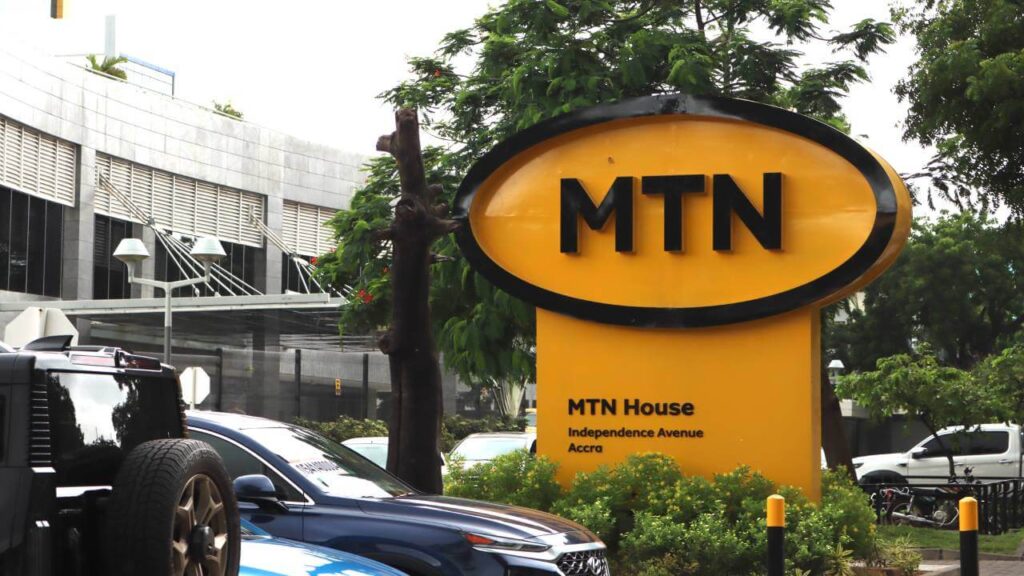
Interestingly, Ghana’s rejection of MTN’s money does not appear to signal hostility toward South African companies.
MTN Ghana is part of the South African-founded MTN Group, making the proposed donation particularly interesting against the backdrop of Ghana–South Africa tensions. Yet Ghana’s Foreign Affairs Ministry specifically reassured international businesses that it would continue providing a favourable environment for companies regardless of where their parent companies originated.
In other words, Accra appears to be separating the actions of individuals and groups involved in xenophobic violence from the broader economic relationship between Ghana and South Africa.
That is significant.South African companies have substantial commercial interests across Africa, while Ghana itself is deeply integrated into regional and international business networks. Turning a xenophobia dispute into a blanket anti-South African campaign could therefore punish businesses and workers who had nothing to do with the violence.
Ghana is instead putting the responsibility for its citizens’ protection on the state.
And now comes the accountability test. The government has promised to publish a comprehensive account of the total cost of the evacuation exercise once it is completed.
That disclosure will be important. If Ghana can demonstrate that it has adequately funded evacuation and reintegration, rejecting MTN’s contribution becomes a defensible decision based on state capacity and responsibility.
If the costs prove much greater than anticipated, however, questions will naturally follow about whether accepting corporate assistance—or creating a broader public-private support mechanism—could have helped returning families.
For Ghana, the message is clear: when its citizens are driven from danger abroad, the government intends to bring them home and pay for their recovery.
But the bigger African question is much harder. Why should Africans keep evacuating Africans from other African countries?
Evacuation treats the consequence. It does not cure the disease. Until African governments tackle the economic frustrations, political exploitation, weak law enforcement and anti-foreigner mobilisation that repeatedly fuel xenophobia, the cycle can continue—and the next evacuation may simply be a matter of time.
RELATED: