Njoki Kangethe

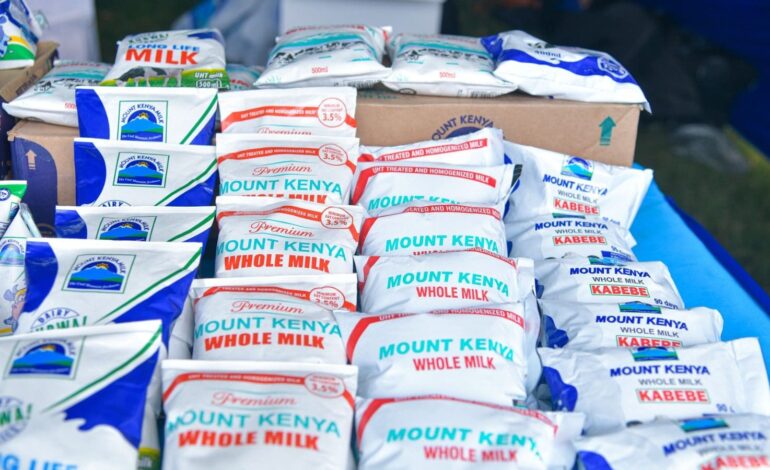
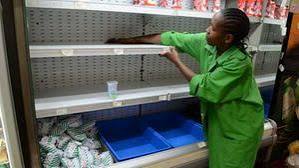
For many Kenyans, the shortage became real in a surprisingly ordinary place: the supermarket milk aisle. Packets that are usually so familiar that shoppers barely notice them began disappearing from shelves. Some supermarkets started limiting how much customers could buy, while others struggled to restock popular brands. In parts of the country, the price of a 500-millilitre packet rose by several shillings as retailers tried to cope with shrinking supplies. By early September, the problem had moved beyond an inconvenience at the supermarket and into a much bigger conversation about the resilience of Kenya’s food system.
The Kenya Dairy Board has been careful to describe the situation as temporary supply constraints rather than a complete national shortage. But the numbers tell a story of their own. Formal milk deliveries to processors fell by 3.7 per cent, from 84.4 million litres in June to 81.3 million litres in July 2026, with preliminary indications pointing to a further decline in August. The Board attributes the disruption largely to dry and cold conditions in key milk-producing areas, which have reduced pasture and fodder availability.

For a country where milk is part of the everyday diet, the implications are immediate. Milk goes into morning tea and children’s porridge, but it is also an important input for bakeries, cafés, restaurants and food manufacturers. When supply falls, the effects travel through the economy, from the farmer struggling to feed a cow to the family paying more for breakfast. Kenya’s current milk shortage is therefore more than a dairy industry problem. It is another illustration of a question that has run through this series from the beginning: how resilient is the system that is supposed to turn what African farmers produce into food that people can reliably afford and access?

The Cow Is Not The Problem
It would be easy to look at empty supermarket shelves and conclude that Kenya simply needs more cows producing more milk. But the current crisis demonstrates why agricultural production cannot be separated from the systems that support it. A dairy cow cannot produce milk without adequate feed and water. When pasture dries up and the cost of purchased fodder rises, farmers face an uncomfortable choice: spend more money keeping their animals productive, reduce the number of animals they keep, or accept lower milk yields.
The current dry spell has made that choice particularly difficult. Farmers in some producing areas report sharply reduced deliveries to cooperatives, while the cost of animal feed and hay has risen significantly. In Nandi County, one cooperative’s daily deliveries reportedly fell from around 10,000 litres to less than 2,000 litres.
The economics of dairy farming make this even more complicated. Farmers are doing more than just producing milk; they are running businesses with costs for feed, veterinary care, labour, water, electricity and transport. If the price they receive does not adequately cover those costs, increasing production becomes difficult to sustain. In other words, asking farmers to produce more milk without addressing the economics of producing that milk is unlikely to solve the problem.
Kenya’s own agricultural data illustrates how closely dairy production follows environmental conditions. The Ministry of Agriculture’s National Agriculture Investment Plan reports that national milk production increased from 3.98 billion litres in 2019 to 5.33 billion litres in 2024, with improved rainfall contributing to production gains in the later years. The same report shows that only a fraction of total production enters the marketed and formal processing system. That distinction matters.
Kenya Produces More Milk Than The Shelves Suggest
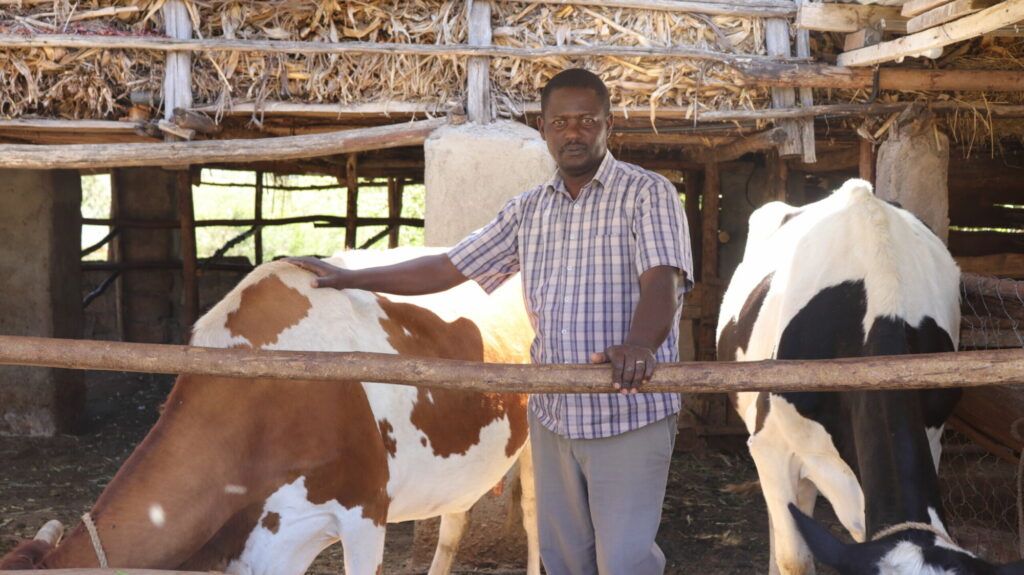
The milk shortage also exposes an interesting feature of Kenya’s dairy industry: the milk that reaches formal processors is only part of the country’s total production. The East African reports that roughly 15 to 20 per cent of Kenya’s milk production goes through formal processors under the Kenya Dairy Board’s oversight, while the majority moves through informal channels, including direct sales and cooperatives. This means that when formal processor deliveries fall, the impact can appear particularly dramatic in supermarkets even though milk continues to circulate through informal markets.
But it also reveals a structural challenge. A food system cannot be truly resilient if a large share of a perishable product moves through fragmented channels with limited capacity to store, process and redistribute it. Milk has an especially unforgiving timetable. Unlike maize or wheat, it cannot simply sit in a warehouse until the market improves. It has to be collected, cooled, processed and consumed within a relatively short period.
This is where the lessons from earlier articles in this series become relevant. We have already considered what happens when food is lost because storage and processing systems that are inadequate. We have examined how climate change is making agricultural production less predictable.
What Happens When The Rain Returns
There is an irony in Kenya’s dairy system: the country can struggle with too much milk in one season and too little in another.
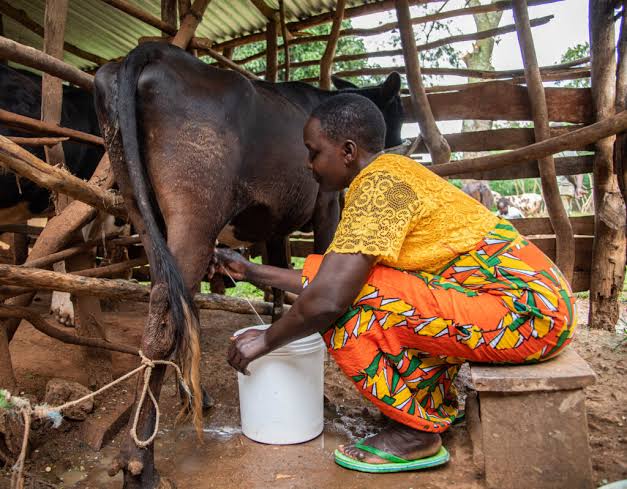
When rains return and pasture recovers, milk production can rise rapidly. Farmers may then find themselves producing more milk than processors can immediately absorb. Prices can fall, farmers can struggle to find buyers and some milk may go to waste. When the dry season arrives, the situation reverses. Production falls, processors compete for scarce raw milk and consumers face higher prices. The problem, then, is seasonality.
Kenya has spent years trying to increase milk production, and the growth in national output demonstrates that progress has been made. But increasing the amount produced during good seasons does not automatically guarantee reliable supply throughout the year. The country needs systems capable of carrying abundance forward into periods of scarcity.
That means greater investment in processing technologies that can extend milk’s shelf life, including milk powder and other shelf-stable products. It means stronger cold chains and collection infrastructure. It means improving fodder production and storage so farmers can prepare for dry periods rather than responding to them once animals are already underfed. It means better access to affordable finance so farmers can invest in water, feed and resilient production systems before the next drought arrives. It also means thinking regionally.
The East African reports that Uganda currently has surplus milk but faces restrictions that limit exports into Kenya. Ugandan dairy officials have questioned why producers in one East African Community country should face barriers when attempting to sell milk to a neighbouring country experiencing shortages. This is precisely the kind of contradiction that a more integrated regional food system should address. If Uganda has milk while Kenya has a shortage, the logical response would seem obvious: move the milk across the border.
Yet food does not always move according to logic. Trade rules, permits, national policies and protectionist interests can stand between a farmer and a consumer who may be only a few hundred kilometres away.
From Reacting to Shortages to Designing Resilience
Kenya’s government has announced measures aimed at easing the immediate pressure, including efforts to improve access to animal feed and ensure farmers receive fair prices. Agriculture officials have also pointed towards rainfall as an important part of the recovery. These interventions matter, particularly for farmers who are already under financial pressure. But the longer-term lesson from the shortage is that waiting for the rains to restore the system cannot be the entirety of the strategy.
Climate change is making precisely that kind of predictability more difficult. A food system designed around the assumption that rainfall will arrive when expected will become increasingly vulnerable as seasons shift and extreme weather becomes more frequent. Resilience therefore requires preparation during the good seasons for the difficult ones.
Farmers can produce and store fodder when it is abundant. Cooperatives can strengthen cooling and collection infrastructure. Processors can invest in technologies that extend shelf life and allow milk from high-production periods to be stored for later use. Financial institutions can develop products suited to the seasonal realities of agriculture. Governments can invest in water infrastructure, animal health services and climate information while ensuring that regional trade rules allow food to move to where it is needed.
None of this is particularly revolutionary. In fact, much of it is simply about making the dairy system work better. Kenya needs to build a system capable of absorbing the shocks that it already knows will come. The current shortage is a reminder that food security is achieved when people can still access nutritious, affordable food when the rains fail, feed becomes expensive and production falls.
The cow in the field is only the beginning of that story. Between her and the glass of milk on a Kenyan breakfast table are farmers, fodder systems, water, cooperatives, cooling centres, processors, transporters, retailers, trade policies and consumers. If one part fails, everyone feels it.
Perhaps, then, the real question is not ‘Where is the milk?’ It is: ‘Why have we built a food system in which a change in rainfall can make it disappear?’ And if the answer is that climate change is making the old system increasingly unreliable, then the solution cannot simply be to wait for the next rains. It has to be to build a dairy system, and a food system, that can keep feeding us whether they come or not.
References
• The EastAfrican, “Milk shortage persists in Kenya, Rwanda,” September 5, 2026.
• The Star, “Supermarkets ration milk as drought affects supplies,” September 9, 2026.
• Kenya Dairy Board statements on the 2026 milk supply constraints, as reported by The Star and other Kenyan media.
• Kenya National Bureau of Statistics, Leading Economic Indicators, including formal-sector milk intake data.
• Ministry of Agriculture and Livestock Development, National Agriculture Investment Plan, including national milk production and marketed milk data.
• Kenya News Agency, “Govt Proposes Maize Imports, Price Fixes to Address Milk Shortage,” September 2026.
• Reuters, reporting on drought conditions affecting Kenyan pastoralists and livestock production.
RELATED: