Njoki Kangethe

WHO OWNS THE DATA THAT FEEDS US?
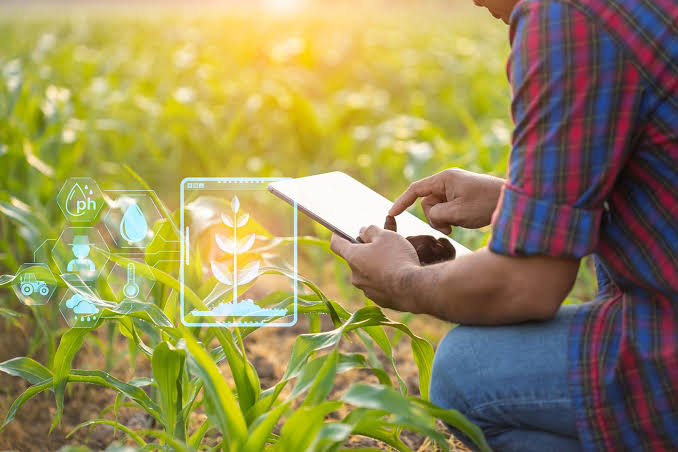
For centuries, knowing what was happening on a farm depended on being close enough to see it. A farmer could walk through a field and inspect the colour of the leaves, feel the moisture in the soil, look at the sky and make a judgement about whether the crop was thriving or struggling. Governments, meanwhile, relied on agricultural officers, field surveys and reports from farmers to estimate how much food a country was likely to produce.

Today, a satellite can look down from hundreds of kilometres above the Earth and tell a very different story. It can identify where crops have been planted, distinguish between crop types, detect signs of stress, estimate yields and monitor changes in vegetation across enormous areas. Artificial intelligence can then process that information at a speed and scale that would be impossible for teams of people working in the field. For countries confronting drought, unpredictable rainfall and growing pressure on food supplies, this technology is potentially transformative.

But it also raises a question that Africa will have to confront sooner than it may realise: who owns the data that tells us what Africa is growing?
The question has become particularly relevant in Namibia, where the government has terminated a US$2.4 million agreement with American agricultural technology company 6th Grain Corporation to deploy an AI- and satellite-driven crop monitoring system. The one-year agreement, signed in June, was designed to monitor staple crops including maize, mahangu, millet, sorghum, cowpea and wheat. It would have produced crop maps, crop-health assessments, national production forecasts, drought-risk analyses and land-suitability information, alongside a geo-tagged farmer survey database. The project also included technology and skills transfer to Namibia’s Ministry of Agriculture.
The agreement did not last long. In August, Namibia’s Ministry of Agriculture formally terminated it after a review concluded that the arrangement did not meet the legal and procedural requirements applicable to government contracts. The ministry said the decision was intended to safeguard the interests of the state and ensure that public contracts comply with established laws and procedures. (The Namibian)

The termination is therefore not, at least according to the government’s stated explanation, a rejection of artificial intelligence or satellite technology in agriculture. And that highly matters. Namibia still needs better agricultural intelligence. It still needs to know where crops are being grown, how they are performing, how drought is affecting production and how much food is likely to be available before shortages become crises.
The technology itself may be precisely what countries like Namibia need. The more difficult question is how that technology is acquired, governed and controlled.
The New Infrastructure of Food Security
Our previous articles in this series have followed food through some of the systems that determine whether Africa can feed itself. We have looked at food lost between farm and market, the complicated question of who owns agricultural land, the growing effects of climate change and the economic opportunity of processing more of Africa’s agricultural commodities at home. Digital agriculture increasingly sits across all of these issues.
Consider climate change. A farmer deciding whether to plant maize needs information about rainfall. A government deciding whether to import grain needs information about expected production. A humanitarian agency preparing for drought needs to know which regions are likely to experience crop failure. A bank financing farmers needs information about agricultural risk. Better data can improve every one of these decisions.
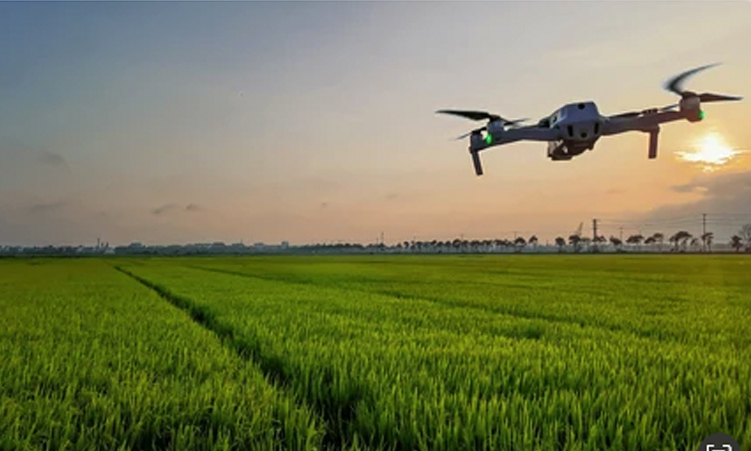
This is why AI-driven agricultural monitoring is becoming increasingly attractive to governments. Traditional field surveys are expensive, slow and difficult to scale. Satellite imagery can cover vast areas repeatedly, while AI can analyse enormous quantities of information and identify patterns that might otherwise remain invisible. The potential applications include yield forecasting, drought monitoring, land-use planning and early warning systems. (namport.com.na)
For Africa, where climate variability is making agricultural planning more difficult, this could be a significant advantage, but food data is not ordinary data. Knowing where a country’s maize is growing, how much wheat is likely to be harvested or which regions are experiencing crop failure can influence food imports, commodity prices, government subsidies and emergency interventions. Information about agricultural land and production is therefore closely connected to national economic planning and, ultimately, food security. That is why Namibia’s experience is worth watching.
When Technology Meets Sovereignty
The controversy surrounding the 6th Grain agreement went beyond procurement. Reports also raised questions about data sovereignty and whether a foreign company should play a central role in monitoring Namibia’s agricultural production. (News Minimalist)
These concerns are not necessarily an argument against international partnerships. Africa will continue to need technology, capital and expertise from around the world. In fact, international collaboration can accelerate technological development in countries where domestic capacity is still emerging.
The more important question is what happens after the partnership begins. Where is the data stored? Who can access it? Who owns the algorithms? Can the government audit how the system reaches its conclusions? What happens if the contract ends? Can local officials operate the technology without the original company? Can the system be transferred to another provider? And, perhaps most importantly, does the country have enough technical capacity to understand and challenge the technology it has purchased?
These questions become even more important when the technology concerns something as fundamental as food. 6th Grain had said that the Namibian government would receive software, AI models and intellectual property and that ministry officials would be trained to operate and expand the system independently. The company also maintained that the project was donor-funded rather than financed by Namibian taxpayers. (Informante) Those provisions point towards an important principle for Africa’s digital future: technology transfer must mean more than handing over a dashboard. A country should leave a technology partnership with greater capacity than it had when the partnership began.
That means trained people, accessible systems, transferable knowledge, clear data ownership and institutions capable of maintaining and improving what has been built. Otherwise, what looks like technological independence can become another form of dependency, only this time, the resource being imported is not machinery or fertiliser, but intelligence.
Africa Shouldn’t Choose Between Innovation & Control
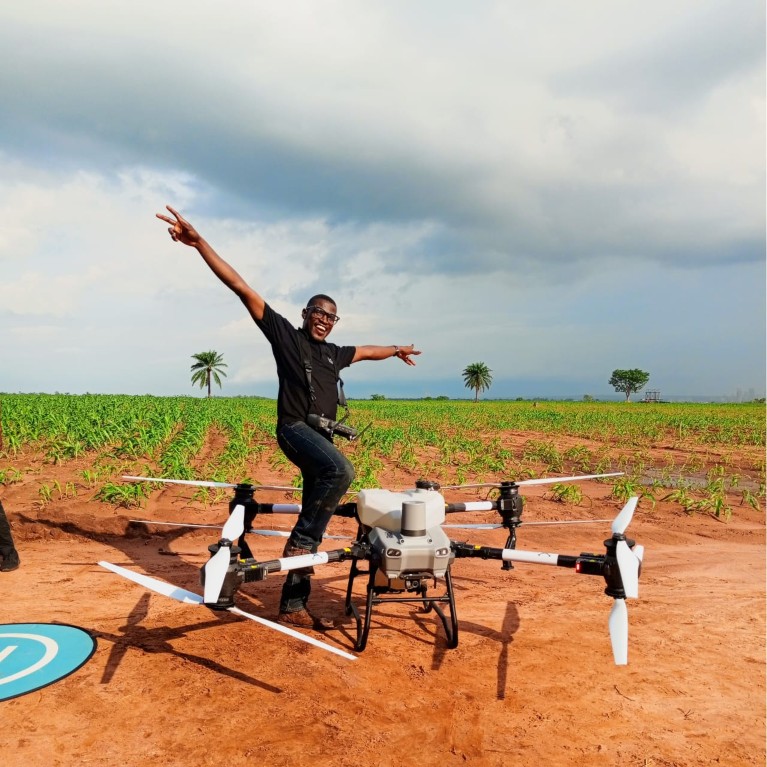
There is a temptation to frame debates like Namibia’s as a choice between foreign technology and African sovereignty. That is too simplistic. Africa does not need to reject global technology in order to control its future. Nor does it need to reinvent every technological solution domestically. What it needs are partnerships designed around African priorities, African institutions and African ownership.
That could mean governments procuring international technology while retaining ownership of national agricultural data. It could mean requiring technology providers to train local teams and transfer sufficient intellectual property to prevent long-term dependence. It could mean regional African institutions developing shared agricultural data infrastructure rather than every country building completely separate systems.
It could mean stronger procurement rules for technologies that affect strategic sectors. It could also mean investing much more seriously in Africa’s own scientists, engineers, geospatial specialists and agricultural researchers.Because the ultimate goal should not be to have the most sophisticated AI system monitoring African farms. It should be to have African institutions capable of using sophisticated technology on their own terms.
Namibia’s cancelled contract may therefore prove useful beyond the controversy surrounding one US$2.4 million agreement. It provides an opportunity to ask what responsible digital transformation should look like when the technology being adopted sits at the heart of national food security.
And this brings us back to the question at the centre of this series. Africa cannot feed itself simply by producing more food. It needs functioning supply chains, secure land rights, climate-resilient farms, domestic processing industries and markets that allow value to remain within the continent.
Increasingly, it will also need the information systems that allow governments and farmers to understand what is happening across those food systems in real time. AI can help build that future. But technology should be treated as infrastructure, not magic. And infrastructure must ultimately serve the people and institutions that depend on it.
The next agricultural revolution may happen partly in the soil, partly in factories and increasingly in the cloud. The question Africa must ask is whether it will merely consume that revolution, or whether it will own enough of it to shape its own food future.
References
• Business Insider Africa, Namibia terminates $2.4 million AI crop monitoring contract with US firm, August 2026. (Business Insider Africa)
• The Namibian, Cabinet blocks US AI crop-monitoring tender, August 2026. (The Namibian)
• Namibia Press Agency (NAMPA), Govt pulls the plug on US agricultural technology firm contract, August 2026. (NAMPA)
• Informanté, US company secures N$39.5 million contract to boost Namibia’s agricultural monitoring, July 2026. (Informante)
• United Nations, Technology and Innovation Report 2025: Inclusive Artificial Intelligence for Development. (namport.com.na)
RELATED: