Faith Nyasuguta
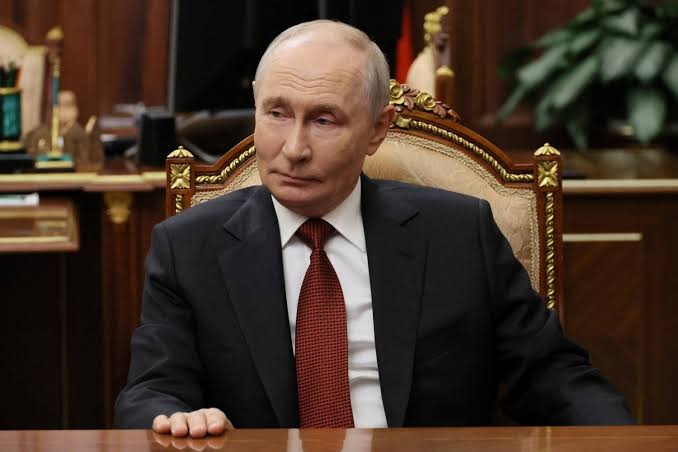
Russian President Vladimir Putin has renewed calls for a major overhaul of the United Nations Security Council, arguing that Africa, Asia and Latin America deserve greater representation in a global system whose most powerful structure still largely reflects the outcome of the Second World War.
Speaking at the BRICS summit in New Delhi, Putin said expanding the Security Council would make the United Nations more effective and bring its leadership structure closer to today’s political and economic realities. He also called for reforms at the International Monetary Fund, World Bank and World Trade Organization, arguing that global institutions must better reflect the growing weight of emerging economies and the wider Global South.

For Africa, however, the demand for reform did not begin with Putin’s latest intervention. The continent has spent decades arguing that the world’s most powerful security institution cannot claim to represent the international community while permanently excluding Africa from its inner circle. With 54 of the UN’s 193 member states, Africa accounts for nearly 28% of the organisation’s membership. Yet no African country has a permanent seat on the Security Council, and no African state has the power to veto its decisions.
That contradiction has become increasingly difficult to defend, particularly because African countries and conflicts frequently dominate the Council’s work. The Security Council regularly considers peacekeeping operations, armed conflicts, sanctions and political crises across Africa, meaning the continent can become the subject of major international decisions without having a permanent representative among the five countries with the greatest power to shape or block them.

A Council Built For The World Of 1945
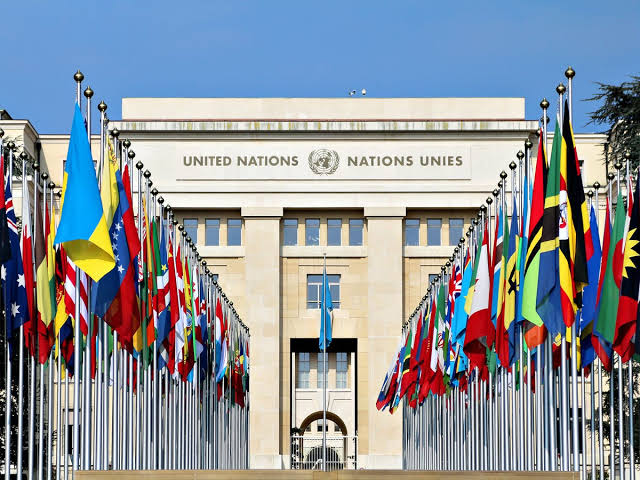
The current structure of the UN Security Council was created in 1945, at the end of the Second World War. The United States, Britain, France, the Soviet Union and China were granted permanent seats, largely reflecting the global balance of military and political power at the time. Russia inherited the Soviet Union’s seat following the collapse of the USSR.

These five countries, now known as the P5, were also given a privilege unavailable to every other UN member: the veto. A single permanent member can block a substantive Security Council resolution, even if the overwhelming majority of other members support it.
The Council currently has 15 members: five permanent members and 10 non-permanent members elected for two-year terms. Africa has three of those rotating seats, allowing African countries to participate and vote during their terms. But those seats are temporary and do not provide veto powers.
The Council has changed remarkably little since the UN was founded. In 1965, the number of non-permanent seats increased from six to 10, expanding the Council from 11 to 15 members. The five permanent seats, however, have remained unchanged for more than eight decades.
This matters because most African countries were still under colonial rule when the Security Council was created. Africa was therefore largely absent from the construction of the post-war international order, yet African countries later became subject to many of the institutions and rules established during that period.
Today, the UN has grown from 51 founding members to 193 states. The global population, economy and distribution of political power have changed dramatically. The Security Council’s permanent membership has not.
Africa Has Already Agreed On What It Wants
Africa’s demand for reform is not vague. The continent has maintained a common position for more than two decades through the Ezulwini Consensus, adopted by African leaders in 2005.
Under this position, Africa wants at least two permanent seats on an expanded Security Council, together with additional non-permanent seats that would increase Africa’s overall representation. Crucially, Africa has argued that if the veto continues to exist, new permanent members should have the same rights as the existing five.
The logic is straightforward. Creating new permanent seats without veto powers could produce two classes of permanent members: the original powers with full authority and newer members with a more symbolic status. Africa has therefore maintained that genuine reform cannot simply expand the number of countries sitting at the table while preserving the same hierarchy of power.
The question of which African countries would occupy permanent seats remains politically sensitive. South Africa, Nigeria and Egypt are often mentioned because of their population, economies and diplomatic influence, while other African states also have strong arguments based on regional representation and political history.
The African Union has deliberately avoided formally assigning the seats to specific countries. Its position has been that Africa should first secure the seats and determine its representatives through an African process. Maintaining unity has been essential because competition among African states could weaken the continent’s broader negotiating position.
Africa Never Permanently At The Table
One of the strongest arguments for African representation is the extent to which the Security Council deals with African affairs. The Council has spent decades addressing conflicts and political crises in countries including the Democratic Republic of Congo, Sudan, South Sudan, Somalia, Mali, Libya and the Central African Republic.
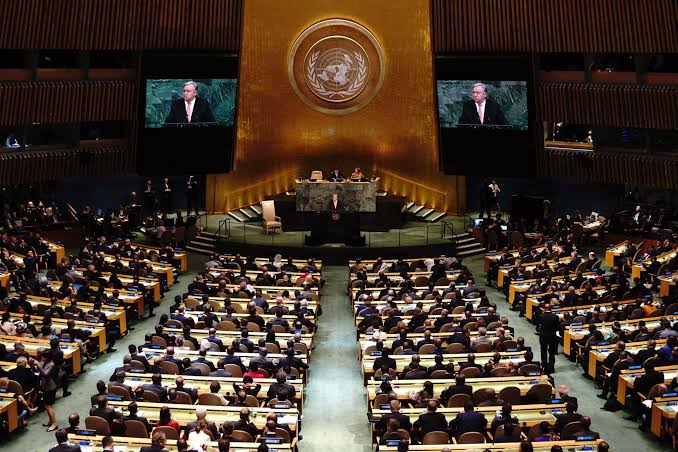
It has authorised peacekeeping operations, imposed sanctions and debated military interventions involving African countries. Yet the permanent membership remains entirely outside Africa.
Oxfam reported in February 2026 that Africa had been the subject of around 80% of UN Security Council resolutions over the previous decade, despite the continent having no permanent seat. That statistic captures the imbalance at the heart of the reform debate.
Africa is not demanding representation simply because of population or geography. It is demanding a greater voice in decisions that directly affect African countries and communities.
Security Council decisions can determine whether sanctions are imposed, whether peacekeeping forces are deployed and how the international community responds to conflicts. These decisions affect governments, economies and ordinary citizens. The countries making them therefore wield significant political power.
For Africa, the issue is fundamentally about who has the authority to make decisions and who is expected to live with their consequences.
Putin’s Support Is Important
Putin’s latest comments are politically significant because Russia is itself one of the five permanent members. Any meaningful Security Council reform will eventually require the cooperation of the countries that currently benefit from the existing structure. However, Africa should also understand the wider geopolitical context behind Russia’s position.
Moscow has increasingly argued for a multipolar world in which the United States and its Western allies exercise less influence over international institutions. Russia has sought closer political and economic relationships with countries in Africa, Asia and Latin America while positioning itself as a supporter of a stronger Global South.
The expansion of BRICS fits into that broader shift. The grouping has expanded beyond its original members—Brazil, Russia, India, China and South Africa—to include other major emerging economies, giving it a wider role in debates about global governance and reform.
A larger and more representative Security Council would fit Russia’s argument that the international order should no longer be dominated by the countries that emerged from the Second World War as the world’s principal powers.
That does not make Russia’s support for African representation invalid. Africa’s case stands independently of Moscow’s interests. The continent’s demand existed before Russia’s latest endorsement and will remain relevant regardless of which global power supports it.
But African governments must avoid allowing their legitimate demand for representation to become attached to the geopolitical agenda of any external power. Africa’s push for reform must remain an African position, supported by whoever genuinely supports it.
Security Council Just One Part Of A Bigger Global Debate
Putin’s call also extended to the IMF, World Bank and World Trade Organization, highlighting a wider argument about who controls the institutions governing the global economy.
For African countries, this debate is deeply familiar. The IMF and World Bank were created in 1944, before most African nations gained independence. Their voting structures have historically given greater influence to wealthier economies, while developing countries have often had less power over decisions that affect international lending, debt and economic policy.
African governments have frequently criticised the conditions attached to international loans and adjustment programmes. The continent’s debt problems have also renewed debate over whether the existing international financial system adequately serves developing economies.
At the WTO, African countries have raised concerns about global trade rules, agricultural subsidies and the difficulties developing economies face when competing with heavily subsidised industries in richer countries.
The institutions are different, but the underlying complaint is similar. Africa participates in the international system, follows its rules and is affected by its decisions, but often has limited influence over how those rules are created. The Security Council debate is therefore part of a larger struggle over global governance.
Why Has Reform Taken Too Long?
The biggest obstacle is not a lack of discussion. Security Council reform has been debated for decades. The problem is that countries disagree sharply about what a reformed Council should look like.
India, Brazil, Germany and Japan have long pushed for permanent membership through the G4 group. Africa wants two permanent seats. Latin America wants stronger representation. Other countries oppose creating more permanent members altogether, arguing that expanding permanent membership could simply create additional privileged states.
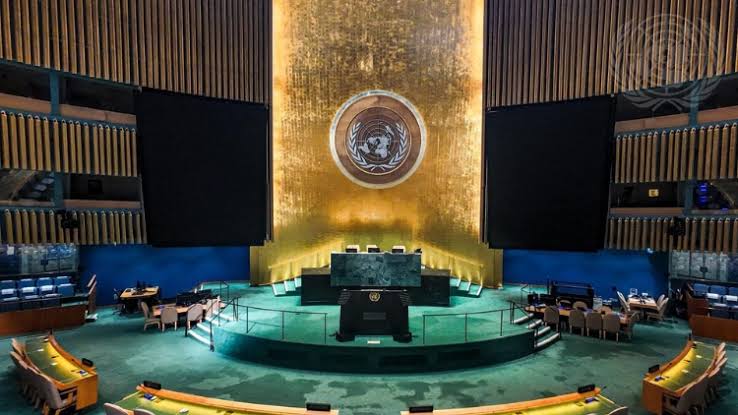
The veto creates an even bigger problem. Some countries believe new permanent members should receive veto powers. Others argue that the veto should be abolished entirely. The existing permanent members have little incentive to surrender a power that gives them extraordinary influence over international decisions.
The legal process for changing the Council is also extremely demanding. Reform requires an amendment to the UN Charter, supported by at least two-thirds of UN member states and subsequently ratified according to national constitutional processes. Most importantly, all five existing permanent members must approve the amendment.
This gives the P5 enormous influence over any effort to reform the system. In simple terms, the countries with exclusive power are being asked to agree to share that power. That is why the argument for reform has repeatedly received widespread support in speeches while producing little structural change.
The World Has Changed Faster Than Its Institutions
The pressure for reform continues to grow because the gap between the modern world and the institutions created after the Second World War is becoming increasingly obvious.
Africa’s population has exceeded 1.5 billion people and is expected to account for an increasingly large share of global population growth in the coming decades. India has become one of the world’s most important economic and political powers. China has emerged as a global economic giant. Latin America remains without a permanent Security Council representative.
At the same time, Asia is represented permanently only by China, while the permanent membership continues to include three European countries—the United Kingdom, France and Russia. This distribution increasingly reflects historical circumstances rather than contemporary demographics and geopolitical realities.
UN Secretary-General António Guterres has also supported the need for global institutions to reflect the realities of today’s world rather than the power structure of 1945.
The UN itself faces a growing credibility challenge. Institutions that fail to adapt risk losing the confidence of the countries they claim to represent. The rise of BRICS and other regional organisations reflects a growing desire among emerging economies to create alternative platforms where their voices carry greater weight.
Africa Must Demand Power
For Africa, the objective should not simply be to place an African country among the permanent members for symbolic purposes. Representation without meaningful influence would not resolve the deeper problem.
An African permanent seat without equal rights could create visibility without power. Africa’s insistence on the Ezulwini Consensus is therefore important because it demands substantive representation rather than ceremonial inclusion.
At the same time, Africa has its own responsibilities. The continent must maintain a united position and avoid allowing competition over the permanent seats to undermine the broader campaign. The demand will carry greater political weight if Africa continues speaking collectively through the African Union.
The continent must also build the diplomatic and institutional capacity required to exercise greater influence. A permanent seat would bring responsibility as well as prestige. African representatives would be expected to take positions on conflicts and international crises far beyond the continent. That requires a strong and coordinated African foreign policy vision.
Africa’s Long Wait
Putin’s remarks in New Delhi have added another powerful voice to a debate that Africa has pursued for decades. They also reflect a broader shift in international politics, as emerging economies and Global South countries demand institutions that better reflect the modern distribution of power.
But Africa should not depend on any foreign leader to validate its case. The numbers and history already speak for themselves. Africa has 54 UN member states, more than 1.5 billion people and a growing role in global economics, security, climate politics and the supply of critical minerals. African conflicts and political crises frequently dominate Security Council discussions, yet the continent remains permanently excluded from the Council’s most powerful membership.
The demand for reform is therefore not about asking for a favour. It is about correcting a historical imbalance. Africa has spent decades at the United Nations, but it is still waiting for a permanent place at the table where some of the world’s most consequential decisions are made.
RELATED: