Faith Nyasuguta

When war tensions exploded across the Middle East and uncertainty gripped one of the world’s most strategic oil corridors, global fuel markets scrambled for alternatives. Few expected the biggest winner to emerge from Nigeria’s Atlantic coastline. But that is exactly what happened.
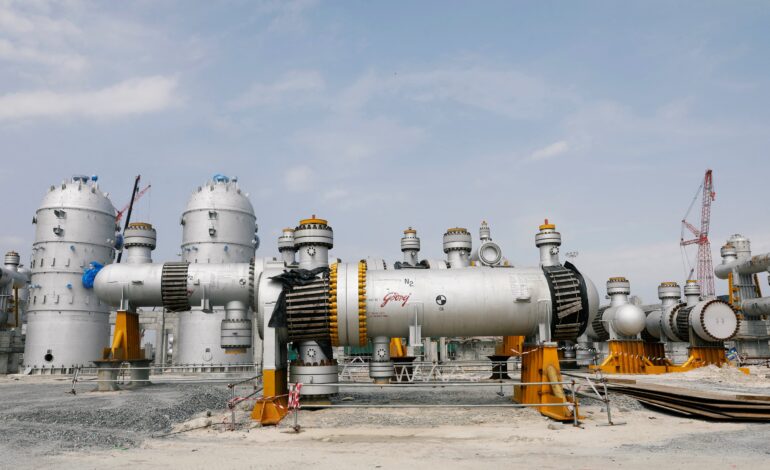
In April 2026, Dangote Petroleum Refinery officially became the world’s largest exporter of jet fuel, according to data cited by S&P Global Commodities at Sea. The milestone marks a dramatic turning point not just for the refinery itself, but for Nigeria’s growing influence inside the global energy system.

For decades, aviation fuel markets were dominated by traditional refining giants in the Middle East, Europe, and Asia. Now, Africa’s largest refinery has forced itself directly into the center of global supply chains.

The shift came as conflict involving Iran, Israel, and the United States disrupted fuel movement through the Middle East, particularly around the Strait of Hormuz, one of the world’s most critical shipping chokepoints. Roughly one-fifth of global oil and fuel supplies pass through the narrow corridor.
As tensions intensified and buyers grew nervous about supply disruptions, global aviation fuel traders began searching for alternative suppliers outside the Gulf region. Dangote moved aggressively.
According to refinery Chief Executive Officer David Bird, the company immediately shifted operations into what he described as “max jet mode,” rapidly increasing aviation fuel production to capitalize on soaring international demand. The strategy worked.

Within weeks, Dangote Refinery had overtaken long-established exporters to become the single biggest supplier of jet fuel globally for the month of April.
The achievement is even more significant considering the refinery only recently reached full operational capacity after years of delays, financing battles, and skepticism surrounding the mega-project.
Located near Lagos, the 650,000-barrel-per-day facility is the largest refinery in Africa and one of the biggest single-train refineries in the world. It was originally designed to reduce Nigeria’s dependence on imported fuel despite the country being one of Africa’s top crude oil producers.
But Dangote’s ambitions have now expanded far beyond Nigeria’s domestic market. Executives say the refinery is transforming itself into a global energy trading powerhouse capable of influencing international crude and refined product flows.
Bird revealed that the company is actively positioning itself not merely as a fuel producer, but as a major international trading hub handling both crude oil and refined petroleum products across global markets. Part of that strategy involves increasing the refinery’s technical flexibility.
The facility currently processes around 40 different crude oil grades sourced from multiple regions. Over time, Dangote plans to significantly expand that number in pursuit of the operational sophistication seen in global refining hubs such as Singapore’s Pulau Bukom refinery, which handles more than 100 crude varieties.
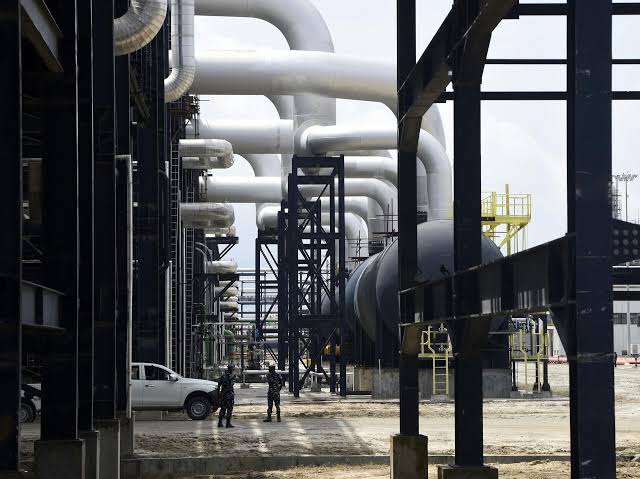
The refinery’s long-term vision is even more ambitious. Dangote aims to eventually double production capacity to 1.4 million barrels per day – a scale that would place the Nigerian facility among the most powerful refining operations anywhere in the world.
To achieve that goal, the company is exploring crude sourcing arrangements stretching across the United States, the Middle East, and South America while simultaneously expanding its African footprint.
Regional infrastructure projects are already under discussion, including proposed storage facilities in Namibia, logistics investments across Central and East Africa, and pipeline negotiations in Zambia.
The refinery is also pursuing long-term fuel supply agreements with governments, national oil companies, and international airlines eager to secure stable aviation fuel access amid growing geopolitical uncertainty.
But Dangote’s growing global influence is also reshaping Nigeria’s domestic economy. Earlier this year, rising aviation fuel prices placed intense pressure on Nigerian airlines, forcing authorities to intervene through temporary pricing guidance and support measures.
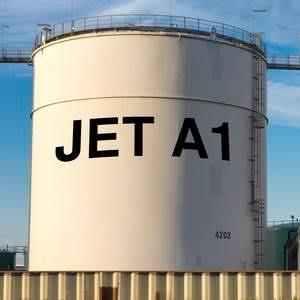
In response, Dangote Refinery reduced its ex-depot Jet A1 price from N1,750 to N1,650 per litre while introducing a 30-day interest-free credit facility for fuel marketers and airline operators.
The company also made another major shift: aviation fuel transactions moved from U.S. dollar pricing to naira-denominated sales, helping reduce foreign exchange pressure on local airlines and stabilize domestic supply. For many analysts, the refinery’s rise represents something much larger than a successful business story.
It signals a broader restructuring of global energy power. For decades, Africa largely exported crude oil while importing refined fuel at premium prices from foreign markets. Dangote’s emergence is beginning to reverse that equation.
Now, as global conflicts redraw trade routes and supply chains, Nigeria is no longer simply feeding the world’s refineries.It is becoming one.
RELATED: