
Faith Nyasuguta

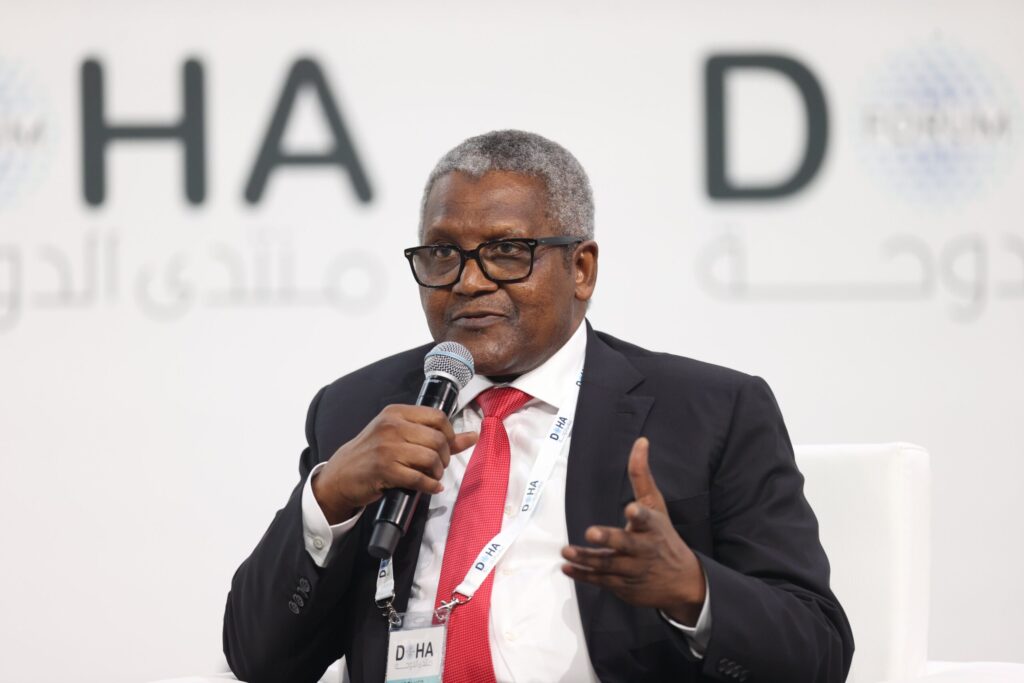
Africa’s next mega energy project has attracted its first high-profile investor. Tanzanian billionaire Mohammed Dewji has announced plans to invest $100 million in Aliko Dangote’s proposed $17 billion oil refinery in Lamu, Kenya, becoming the first major business leader to publicly express interest in backing what could become East Africa’s largest refining project.
Dewji, the founder and Chief Executive Officer of MeTL Group and Tanzania’s richest man, said he is eager to participate in the ambitious project, although discussions with Dangote have not yet taken place.

Speaking in an interview, Dewji revealed that while he would have preferred the refinery to be built in Tanzania, he remains open to investing if Kenya remains the final destination.

“I would lean more toward Tanzania than Kenya,” Dewji said, adding that he intends to reach out to Dangote to discuss a possible partnership.

His interest comes only days after Dangote Group confirmed that Kenya had emerged as the preferred location for its planned East African refinery after earlier evaluating Tanzania as a possible site. The company cited market size, logistics, and infrastructure as key factors behind the decision to settle on Kenya.
The planned refinery is expected to process 700,000 barrels of crude oil per day, surpassing any existing refining facility in East Africa. According to Dangote Industries, the project will take approximately three years to complete once construction begins and will significantly reduce the region’s dependence on imported petroleum products.
Dangote Group says preliminary work is already underway. Soil testing has commenced, engineering and design activities are progressing, and a site has been identified in Lamu, on Kenya’s northern coast. The refinery is expected to become the company’s largest investment outside Nigeria.
The project forms part of Aliko Dangote’s broader strategy to replicate the success of his Lagos refinery across Africa. Nigeria’s 650,000-barrel-per-day refinery reached full production earlier this year and has rapidly become one of the continent’s biggest exporters of refined petroleum products, including gasoline, diesel and aviation fuel.
Unlike the Lagos refinery, which was financed over several years through a combination of equity and borrowing, Dangote plans to fund the Kenyan facility using internally generated cash, corporate bonds and proceeds from a planned initial public offering (IPO) of the refinery business. Company executives have indicated that the overall investment will be comparable to the cost of the Lagos project.
For Kenya, the refinery would represent one of the country’s largest industrial investments, positioning Lamu as a regional energy hub capable of supplying refined fuel across East Africa. It could also strengthen regional energy security by reducing reliance on imported petroleum products from overseas markets.
Dewji’s proposed investment is also significant politically. Rather than viewing Kenya’s selection over Tanzania as a setback, the Tanzanian businessman has signaled a willingness to invest across borders, highlighting a growing trend of African capital supporting major continental infrastructure projects.
While no formal investment agreement has yet been signed, Dewji’s public commitment gives Dangote’s planned refinery an early vote of confidence and underscores rising private-sector appetite for one of Africa’s most ambitious energy projects. If additional investors follow suit, the Lamu refinery could become one of the defining industrial developments on the continent over the next decade.
RELATED: