Faith Nyasuguta

Kenya’s livestock sector could be heading toward a major confrontation over one deceptively simple question: Who gets to decide what meat enters Kenya—and on whose terms?
At the centre of the dispute are American meat exporters and trade interests pushing Washington to challenge Kenyan restrictions on imported meat as the two countries negotiate a new bilateral trade framework.

The argument is being framed in familiar trade language: lower tariffs, fewer barriers and greater market access. But for Kenya’s pastoralists, farmers and food regulators, the stakes are much bigger.

This is about who controls Kenya’s food system, whether local producers can compete with industrial-scale imports, and whether opening a market today could weaken domestic production tomorrow.
What The US Meat Industry Wants
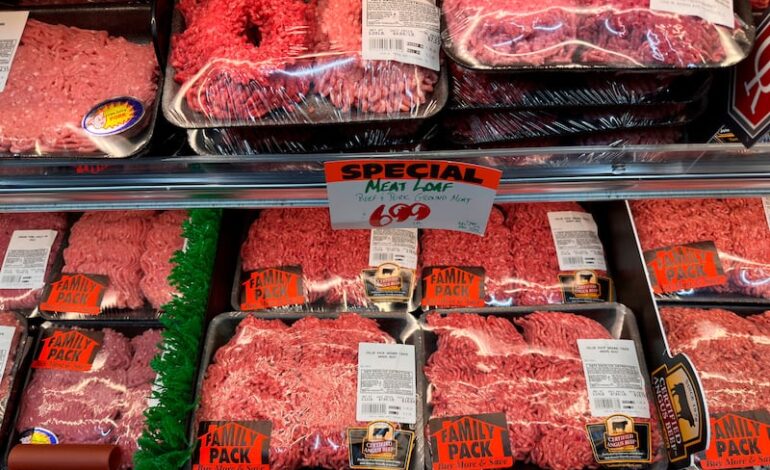
The U.S. Meat Export Federation (USMEF), representing American meat exporters, has raised concerns about Kenya’s agricultural import restrictions, including tariffs and sanitary and veterinary requirements.
American meat interests want greater access to Kenya’s growing consumer market. Kenya, meanwhile, has traditionally maintained protections around agricultural imports, partly because livestock is not simply another commercial commodity.
For millions of Kenyans, a cow, goat or sheep can represent food, savings, household wealth and a livelihood.
The dispute has therefore brought Kenya’s Ministry of Agriculture, livestock authorities and trade negotiators into a much larger conversation about agricultural sovereignty.
One of the contentious issues is Kenya’s system for controlling meat imports when local supply is considered sufficient or when imports could threaten domestic market stability.
American trade interests have pushed for changes to what they regard as unnecessary non-tariff barriers, including aspects of Kenya’s sanitary and phytosanitary, or SPS, requirements.
SPS rules are essentially the safety rules governments use to determine whether imported food and agricultural products are safe for humans, animals and the environment. That sounds technical, but it isn’t. SPS rules can determine who gets to sell food in your country.
Why Meat Is Different
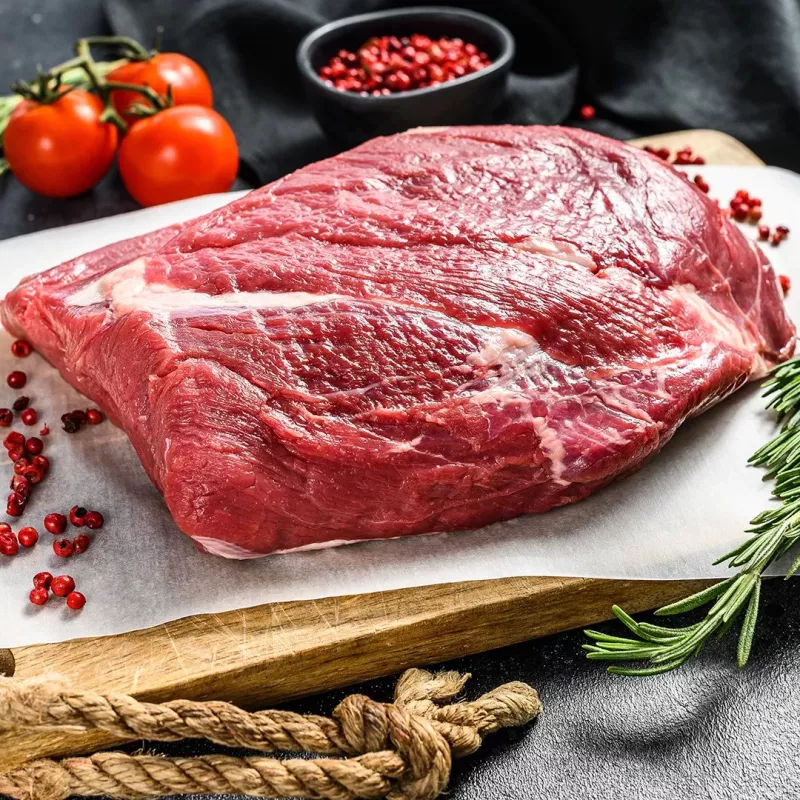
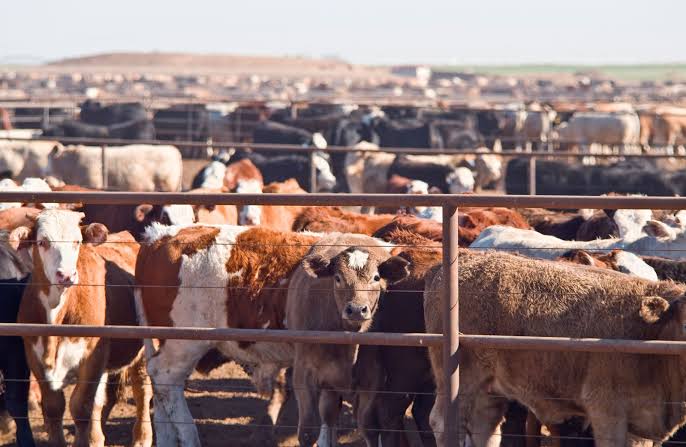
Kenya’s livestock economy is fundamentally different from America’s industrial meat system. Large sections of Kenya’s cattle production are based on pastoral and smallholder systems, particularly across the country’s Arid and Semi-Arid Lands.
Animals are often moved across large distances in search of pasture and water.
The U.S. system, by contrast, has developed around enormous commercial farms, feedlots, processing facilities and highly integrated supply chains capable of producing meat on a scale individual African farmers cannot easily match. That difference creates a potential problem.
Imagine a Kenyan farmer spending years raising cattle under local environmental and regulatory conditions. Then imagine highly processed frozen beef or pork arriving at the Port of Mombasa through an industrial supply chain capable of producing millions of tonnes of meat.
If the imported product is significantly cheaper, consumers may naturally choose it. That is how markets work. But markets do not always account for what happens to the producer who disappears from the market.
And this is where Kenya’s history becomes important.
Kenya Has Seen This Movie Before
The concern is not simply theoretical. Kenya’s experience with liberalisation in other sectors offers an uncomfortable historical precedent. During the 1970s and 1980s, Kenya had a much stronger domestic textile and cotton-processing industry.
Factories such as Rivatex in Eldoret and KICOMI in Kisumu were part of an industrial ecosystem connecting manufacturing to local cotton farmers.
Then came the era of structural adjustment. Across Africa, governments were pushed toward trade liberalisation, reduced protection for domestic industries, removal of subsidies and greater exposure to international competition.
Cheap imported goods increasingly entered African markets. In Kenya, the textile industry suffered a dramatic decline while second-hand clothing—mitumba—became dominant. The lesson is not that every imported product destroys a local industry. It is deeper than that.
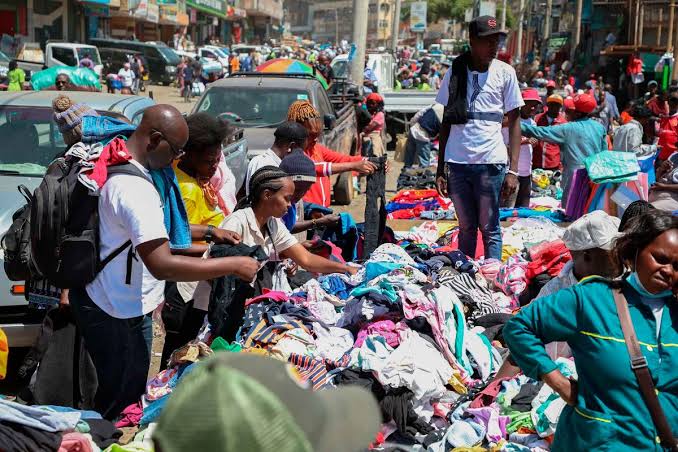
The lesson is that opening a market can have very different consequences depending on whether local producers have the capital, technology and scale to compete. That same question now hangs over livestock.
Ghana’s Poultry Warning
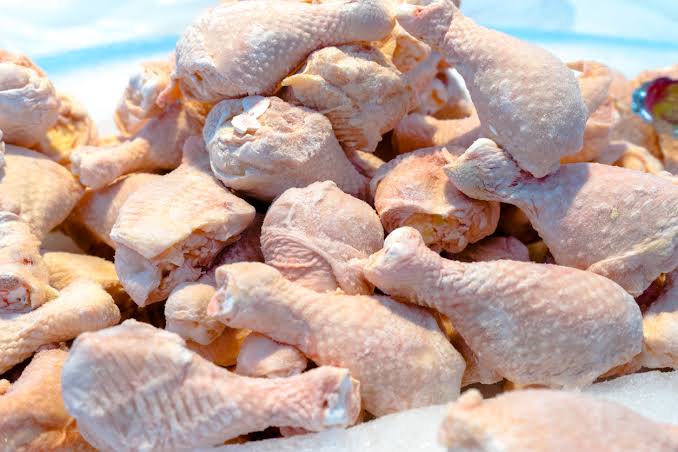
Ghana offers another example frequently cited in debates over agricultural liberalisation. Its poultry industry once supplied most of the domestic market. As heavily competitive imported frozen chicken became increasingly available, domestic producers struggled to compete on price. Ghana subsequently became heavily dependent on imported poultry.
The debate remains contentious, because domestic production also faces challenges involving feed costs, infrastructure, finance and productivity.
But the broader lesson is difficult to ignore: Once domestic production capacity disappears, rebuilding it can be far harder than protecting it in the first place.
A similar dynamic has affected dairy markets in parts of West Africa, where imported milk powder has competed with locally produced fresh milk.
For pastoral communities, the consequences go beyond the price of milk. They affect the entire chain of collection, transportation, processing and livestock ownership.
The Chemical Question
There is another part of the U.S.–Kenya meat debate that deserves careful attention: production standards. The United States permits the use of certain veterinary drugs and growth-promoting technologies that are restricted or prohibited in some other countries.
One example is ractopamine, a beta-agonist used in some livestock production systems to promote lean muscle growth. Hormonal growth promoters are also permitted for cattle production in the United States under regulated conditions.
Kenya and other countries have different approaches to some of these substances.
That creates an important policy concern: Should Kenya lower its regulatory requirements to accommodate imported meat produced under a different system?
The answer should not be driven by slogans on either side. Food safety regulators need scientific evidence. But neither should Kenya be pressured into accepting standards that undermine its own ability to regulate what its citizens eat.
If Kenyan farmers must meet a particular standard, imported producers selling into the same market should meet an equivalent standard. Otherwise, regulation can become an unfair competitive disadvantage for local producers.
The Real Battle : Price Vs Production
This is where the meat dispute gets interesting. American meat exporters can argue that cheaper imports benefit Kenyan consumers. And they have a point. Lower prices can help households, restaurants, hotels and food businesses.
Import competition can also encourage local producers to become more efficient.
But there is another side. If imported meat becomes so competitive that Kenyan livestock producers begin leaving the industry, Kenya could gradually lose domestic production capacity.
The country would then become more dependent on foreign meat. And food security is not simply about whether food is available today. It is about whether a country can continue feeding itself when international prices rise, shipping routes are disrupted, currencies weaken or geopolitical crises interrupt supply chains.
The COVID-19 pandemic, the Russia-Ukraine war and disruptions to global food and fertiliser markets demonstrated how quickly supposedly reliable international supply chains can become vulnerable.
The Pastoralists
Kenya’s livestock sector is not just an economic statistic. For pastoral communities in places such as Turkana, Garissa, Kajiado, Narok, Isiolo and Laikipia, livestock can be the foundation of household survival.
Cattle, sheep and goats provide meat and milk while also functioning as assets that can be sold during emergencies. That means a policy that weakens livestock prices can have consequences far beyond slaughterhouses and supermarkets.
If farmers receive lower prices for their animals, household incomes fall. If incomes fall, herders may reduce herd sizes. If production becomes unprofitable, younger generations may abandon livestock altogether. Once that happens at scale, Kenya does not simply lose animals.
It loses skills, breeding knowledge, markets, transport networks, traders, processors and an entire economic ecosystem.
Kenya Cannot Just Close The Door
There is an important counterargument. Kenya cannot protect every domestic industry indefinitely. Consumers deserve affordable food. Local producers must become more productive. And international trade can bring technology, investment and competition.
The answer, therefore, is not necessarily banning American meat. The real concern is whether Kenya negotiates from strength.
If Washington wants greater access to Kenya’s livestock market, what does Kenya receive in return? Can Kenyan beef and other agricultural products receive greater access to American consumers? Can Kenya secure technology and investment for local meat processing?
Can trade agreements support Kenyan exporters instead of simply creating a larger market for American exporters? Can local producers be given time and support to become competitive? Those are the questions that should be sitting on the negotiating table.
WHO CONTROLS THE RULES?
This is why the dispute over tariffs and veterinary regulations matters. A tariff is simply a tax placed on an imported product. If Kenya imposes a 35% tariff on an imported product, for example, that product becomes more expensive relative to a domestic equivalent.
Removing the tariff can make imports cheaper. But tariffs also give domestic producers a degree of protection while they develop.
SPS regulations work differently. They are supposed to protect food safety and animal health. The danger comes when legitimate safety rules are weakened simply because a foreign exporter considers them inconvenient.
At the same time, Kenya must ensure that its regulations are genuinely science-based and not simply disguised protectionism. That is the balance Nairobi must defend.
The African Problem
And this is where the Kenyan debate connects to a much larger African problem. For decades, African economies have exported raw materials and imported finished products.
Cotton leaves Africa and clothes return. Cocoa leaves Africa and chocolate returns. Crude oil leaves Africa and refined petroleum returns. Minerals leave Africa and manufactured products return.
The concern now is whether the same pattern could emerge in food. Africa produces livestock. Foreign industrial systems process enormous quantities of meat. Africa imports the finished product.
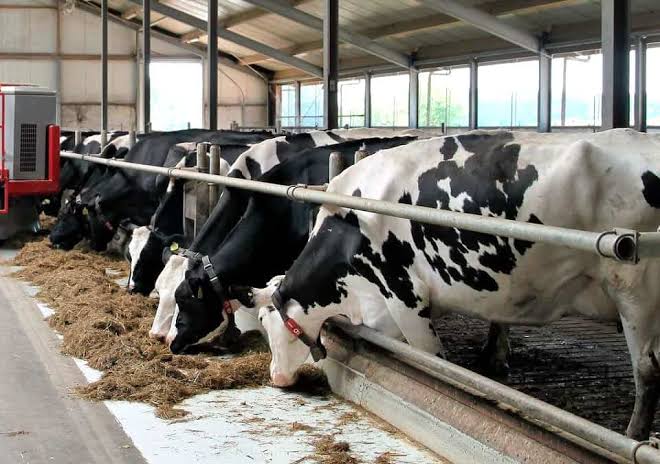
That may be commercially efficient in the short term. But it does little to build African processing capacity. And that is precisely why countries across the continent are increasingly demanding local value addition.
The objective should not be isolation.It should be moving up the value chain.
Kenya should be able to produce livestock, process meat, package it, certify it and export it competitively. That creates jobs at every stage.
Way Forward?
Any bilateral trade agreement affecting agriculture should therefore face serious public scrutiny. Kenya’s Constitution provides for public participation in parliamentary processes, while major international agreements are also subject to Kenya’s treaty and legislative framework.
Parliament and the public should know exactly what Nairobi is offering—and what it is receiving.
The country’s veterinary authorities should retain the ability to enforce legitimate animal-health and food-safety standards. And Kenya’s trade policy should remain compatible with its commitments under the East African Community (EAC) and the African Continental Free Trade Area (AfCFTA).
That matters because Kenya is not negotiating in isolation. What happens to Kenyan livestock production affects regional markets stretching from Uganda and Tanzania to Rwanda, South Sudan and beyond.
If Kenya weakens its domestic livestock base while becoming a major entry point for foreign meat, the consequences could extend across East Africa.
Kenya needs trade. Africa needs trade. But the history of global commerce shows that trade is never simply about buying and selling. It is about who has the power to set the rules.
The U.S. meat industry wants access to Kenya. Kenya wants greater access to American markets for its own exporters. That is a perfectly legitimate basis for negotiation. But Nairobi must avoid negotiating as though market access itself is the prize, it is the bargaining chip.
The real prize is whether Kenya can use international trade to build a stronger domestic economy. If cheaper imported meat lowers prices without destroying local production, consumers win.
If foreign investment helps Kenya develop world-class meat-processing and export capacity, Kenya wins. But if the result is a flooded market, collapsing livestock prices and the gradual disappearance of domestic producers, Kenya may discover the cost of “cheap” meat only after the local industry is gone. And once that happens, bringing it back will not be cheap at all.
RELATED: