Faith Nyasuguta
West Africa’s decades-long dream of a single regional currency is once again gathering momentum.
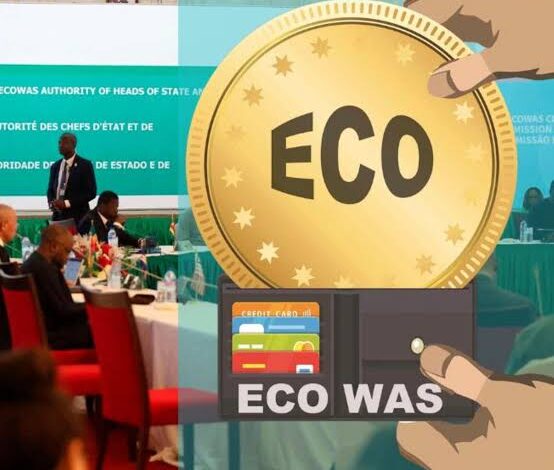
The Economic Community of West African States (ECOWAS) has reaffirmed its commitment to launching the long-awaited ECO in 2027, describing the project as one of the most important pillars of regional economic integration. The renewed push came during the 69th Ordinary ECOWAS Summit held in Freetown, Sierra Leone, where leaders reiterated their determination to strengthen trade, financial stability and economic cooperation across the bloc.

The initiative will now be steered under the leadership of Senegal’s President Bassirou Diomaye Faye, who officially assumed the rotating chairmanship of the ECOWAS Authority of Heads of State and Government during the summit. Faye inherits one of the region’s most ambitious economic projects at a time when ECOWAS is navigating political divisions, military-led withdrawals by some member states and global economic uncertainty.

Although discussions around the ECO date back more than two decades, the project has repeatedly missed its launch dates. The original target of 2020 was abandoned after member states failed to meet key macroeconomic convergence criteria, with the COVID-19 pandemic further disrupting regional economies. Subsequent inflationary pressures, rising public debt, currency instability and uneven economic performance across West Africa forced ECOWAS to revise its roadmap, settling on 2027 as the new target.
Unlike earlier proposals that envisioned all member states adopting the currency simultaneously, ECOWAS is now embracing a phased implementation strategy.
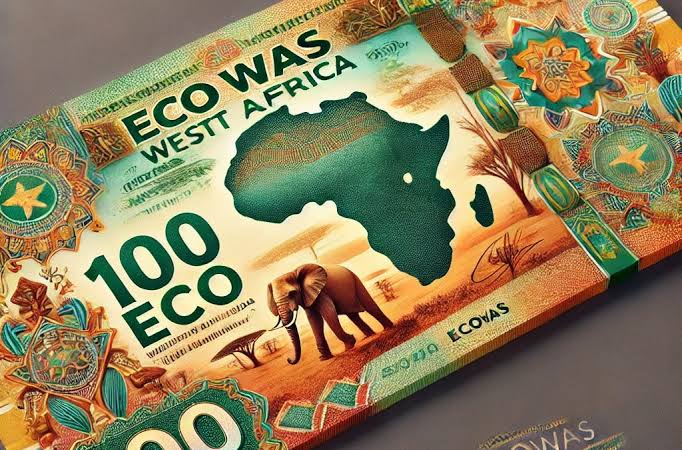
Under the revised approach, only countries that satisfy agreed macroeconomic benchmarks—including inflation, fiscal deficits, public debt, foreign reserves and exchange-rate stability—will participate in the first phase. Member states that are not yet ready will be supported to join later rather than delaying the entire project.

The shift reflects lessons learned from both the European monetary union and previous ECOWAS delays.
Officials say the ECO is intended to eliminate currency conversion costs, reduce exchange-rate risks, simplify cross-border payments and encourage greater investment across the 15-member regional bloc. Supporters argue that businesses trading between countries such as Nigeria, Ghana, Senegal, Côte d’Ivoire and The Gambia would benefit significantly from a common monetary system.
The currency is also expected to complement existing ECOWAS integration initiatives, including free movement protocols and the African Continental Free Trade Area (AfCFTA), by making commerce across West Africa faster and more predictable.
Nigeria, the region’s largest economy, is expected to play a decisive role in determining whether the project succeeds.
President Bola Ahmed Tinubu, who previously chaired the ECOWAS Authority before handing over to President Faye, has consistently supported deeper regional economic integration. Nigerian Finance Minister Wale Edun has also repeatedly urged member states to strengthen fiscal discipline and accelerate convergence reforms, warning that monetary union cannot succeed without stable national economies.
ECOWAS leaders insist that the ECO is not simply about replacing national currencies.
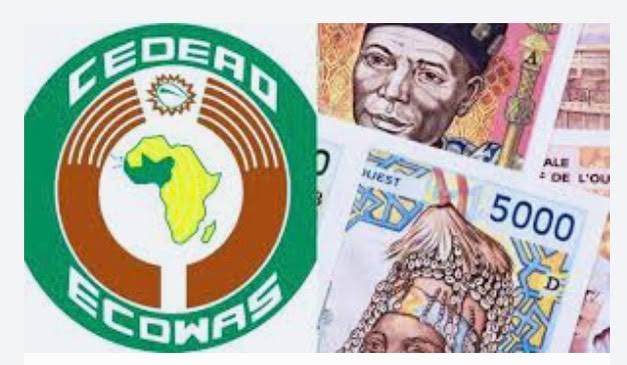
Instead, they describe it as the foundation for a more integrated regional financial architecture capable of boosting intra-African trade, attracting investment and improving monetary cooperation among member states. Officials believe a successful launch would position West Africa as one of the world’s largest monetary unions by population.
Despite the renewed optimism, substantial hurdles remain. Several member states continue to struggle with high inflation, widening fiscal deficits, rising debt burdens and exchange-rate pressures. Political instability across parts of the region has also complicated coordination, while the withdrawal of Burkina Faso, Mali and Niger from ECOWAS has added fresh uncertainty to the bloc’s long-term integration agenda.
Even so, regional leaders argue that delaying the project indefinitely would undermine West Africa’s competitiveness in an increasingly integrated global economy.
For now, the message from Freetown is clear: the ECO remains very much alive. Whether 2027 finally becomes the year West Africans begin sharing one currency will ultimately depend not on political declarations alone, but on whether member states can meet the demanding economic conditions required to turn one of Africa’s oldest integration dreams into reality.
RELATED: