Faith Nyasuguta

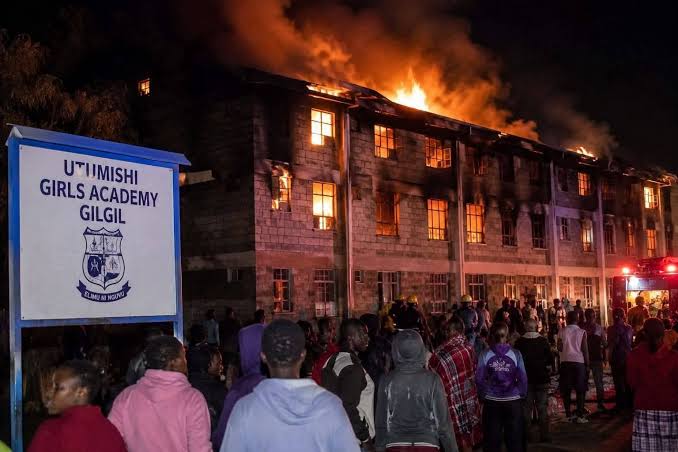
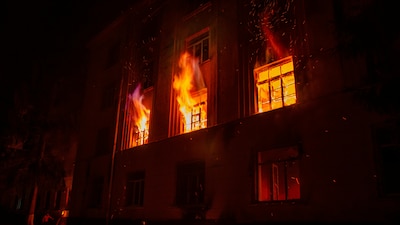
Kenya is once again in national mourning after a devastating fire ripped through Utumishi Girls Academy in Gilgil on Thursday morning, killing at least 16 students and injuring dozens more. The blaze broke out shortly after midnight while students were asleep inside the dormitory, turning a place meant for safety and learning into a deadly trap of smoke, panic, and fire.
Survivors describe scenes of chaos: screams echoing through corridors, students breaking windows, and desperate leaps from upper floors as flames consumed the building. By dawn, the compound had become a centre of grief as parents searched for missing children and emergency teams ferried the injured to hospitals across Nakuru County.

Authorities have since confirmed a disturbing twist: several students have been arrested as investigations explore a suspected arson angle. Early forensic indicators suggest the fire may not have been accidental, a detail that has intensified national shock and reopened painful questions about Kenya’s long-running crisis of school fires.

But Utumishi is not an isolated tragedy. It is part of a 25-year pattern of deadly school fires in Kenya, a cycle that repeats with alarming similarity: nighttime outbreaks, overcrowded dormitories, delayed response, and mass casualties.

A Pattern That Refuses To Break
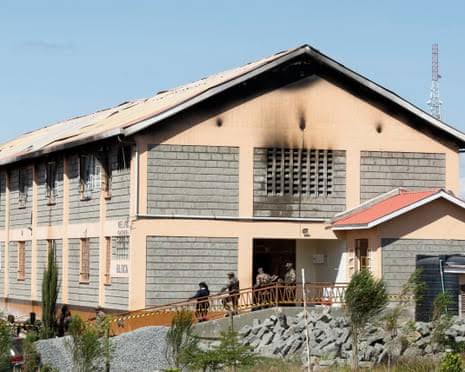
Kenya’s most infamous school fire remains the Kyanguli Secondary School tragedy of March 24–25, 2001 in Machakos County. In that incident, 67 students died and 19 were injured when a dormitory was deliberately set on fire by students reportedly angered by school administration policies. The dormitory doors were locked, and metal grilles on windows trapped students inside.

That tragedy became a national turning point. Investigations exposed systemic failures: lack of fire drills, poor dormitory design, and weak enforcement of safety standards. Yet more than two decades later, the same structural weaknesses continue to reappear.
2017: Moi Girls Nairobi & The Return of Arson Fears
On the night of September 1–2, 2017, Moi Girls High School in Nairobi became another national trauma site when a dormitory fire killed 10 students. The blaze broke out around 2 a.m., similar to Utumishi’s timing, when most students were asleep.
Government investigations at the time concluded the fire was caused by arson linked to student unrest over school administration issues. The incident highlighted a recurring theme in Kenyan school fires: not just structural failure, but also deep-seated tensions within boarding school systems.
The tragedy sparked national debate on discipline methods, overcrowding, and mental health pressures in schools — but reforms remained inconsistent.
2024: Nyeri Fire & The Scale of Overcrowding Risks
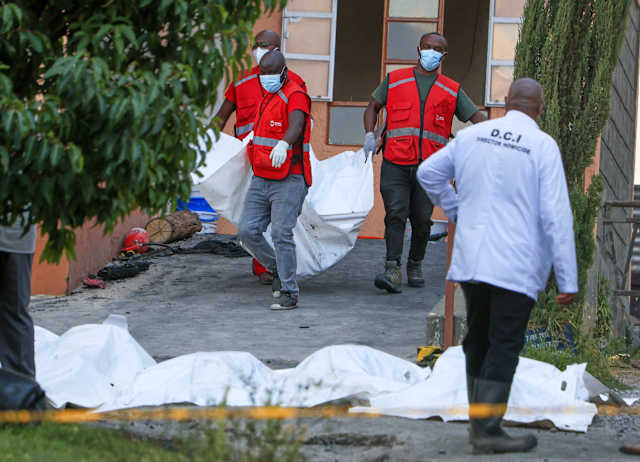
On September 5, 2024, another devastating blaze struck Hillside Endarasha Academy in Nyeri County, killing 21 students and leaving dozens injured or missing in early reports.
The dormitory reportedly housed over 150 children, raising serious concerns about overcrowding and evacuation capacity. Investigations pointed to blocked or limited escape routes, echoing patterns seen in earlier tragedies.
By this point, Kenya had already recorded over 100 school fire incidents in previous years, many linked to poor infrastructure and student unrest, according to national safety monitoring reports cited in media investigations.
The Utumishi Fire (2026): A Familiar Script
The Utumishi Girls fire fits painfully into this timeline:
- Time of outbreak: Shortly after midnight
- Victims: At least 16 dead, dozens injured
- Dormitory conditions: Students asleep, rapid smoke spread
- Escape failures: Reports of students jumping from upper floors
- Investigation direction: Suspected arson under probe
- Response: School temporarily closed, investigations ongoing
This sequence mirrors past tragedies almost point-for-point: late-night ignition, rapid escalation, and chaotic evacuation conditions.
Why School Fires Keep Happening In Kenya
Experts consistently point to four structural drivers behind Kenya’s recurring school fire crises:

1. Overcrowded School Facilities
Many schools exceed recommended dormitory capacity. In Nyeri (2024), Endarasha Academy housed over 150 children in a single dorm. Overcrowding increases fire load, reduces evacuation speed, and amplifies casualties.
2. Weak Fire Safety Infrastructure
Investigations across multiple incidents have repeatedly identified:
- Locked or blocked exits
- Lack of fire extinguishers or non-functional ones
- Poor electrical wiring
- Absence of sprinkler systems
- Inadequate fire drills
In Kyanguli (2001), locked doors and barred windows were a key cause of mass fatalities.
3. Student Unrest & Arson Cases
Several major fires, including Moi Girls (2017) and Kyanguli (2001), were linked to student anger over discipline, exams, or school management disputes. This introduces a behavioural dimension often ignored in policy responses.
4. Delayed Emergency Response
In many rural or semi-urban schools, fire engines are far away. By the time responders arrive, dormitories are often already fully engulfed.
The Policy Loop That Never Closes
After every major fire, Kenya typically follows a predictable cycle:
- National shock and mourning
- Government inquiry launched
- Safety recommendations issued
- Temporary enforcement
- Decline in urgency
- Return to baseline conditions
This cycle has repeated from 2001 (Kyanguli) to 2017 (Moi Girls) to 2024 (Nyeri) and now 2026 (Utumishi Girls).
Despite multiple commissions and safety audits over the years, implementation gaps remain the central issue.
The Human Cost
Beyond statistics, the impact is generational. Each fire leaves behind:
- Mass graves or scattered burials
- Psychological trauma for survivors
- Long-term distrust in boarding systems
- Families broken by sudden loss
At Kyanguli, 58 students were buried in mass graves on school grounds. At Nyeri, families struggled to identify burned remains. At Utumishi, parents are once again facing the same nightmare of uncertainty.
The National Question That Never Changes
Every tragedy eventually collapses into one haunting question:
Why are schools still burning in 2026?
Despite advances in infrastructure, emergency systems, and national awareness, Kenya’s boarding schools remain vulnerable spaces where a single spark can escalate into mass casualty events.
The Utumishi Girls fire is not an isolated disaster – it is the latest chapter in a systemic, unresolved national crisis. Until enforcement of safety standards becomes consistent, and school infrastructure is modernised beyond reactive policy cycles, experts warn that these tragedies will continue repeating with devastating predictability.
For now, Kenya mourns again. And once more, the country is left staring at the same uncomfortable truth: This was not just a fire. It was a failure that has been burning for decades.
RELATED:
HORRIFIC FIRE AT KENYA’S HILLSIDE ENDARASHA ACADEMY CLAIMS 17 PUPILS