Broken Systems: Why Waste Management Fails in African Cities

Njoki Kangethe
Introduction: A System Under Strain

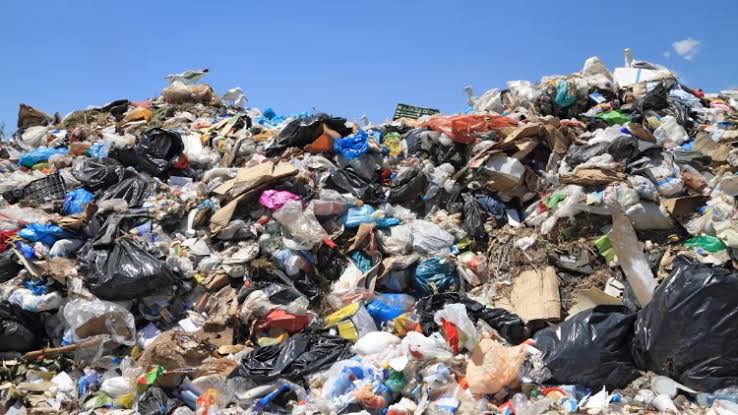
In many African cities, waste is overwhelming the systems designed to manage it. What begins as a missed collection day can quickly escalate into overflowing bins, clogged drainage systems, and expanding dumpsites that stretch beyond their intended limits.

From Nairobi to Lagos and Kampala, the challenge is clearly systemic. Waste management failures are rarely the result of a single breakdown; rather, they reflect a network of structural weaknesses that, over time, compound into visible and persistent urban crises.

Understanding why these systems struggle requires looking beyond the surface; into how cities are growing, how infrastructure is built, and how governance shapes everyday outcomes.

Rapid Urbanization: Growth Without Systems

Africa is urbanizing at an unprecedented pace. Cities are expanding outward and upward, drawing in millions of people in search of opportunity. With this growth comes a shift in consumption patterns; more packaged goods, more disposable materials, and ultimately, more waste.
Yet the systems required to manage this transition have not kept up.
In many cases, waste infrastructure was designed for much smaller populations, at a time when consumption levels were lower and waste streams less complex. As urban populations have grown, these systems have been stretched far beyond their capacity. Informal settlements, in particular, often develop faster than formal infrastructure can reach them, leaving entire communities without reliable waste collection services (World Bank, 2018).
The result is not simply inefficiency, but a structural mismatch: cities generating increasing volumes of waste without the systems required to manage them effectively.
Infrastructure Gaps: The Missing Backbone
Effective waste management depends on a chain of interconnected systems; collection, transportation, sorting, recycling, and disposal. When any part of this chain is weak, the entire system is affected.
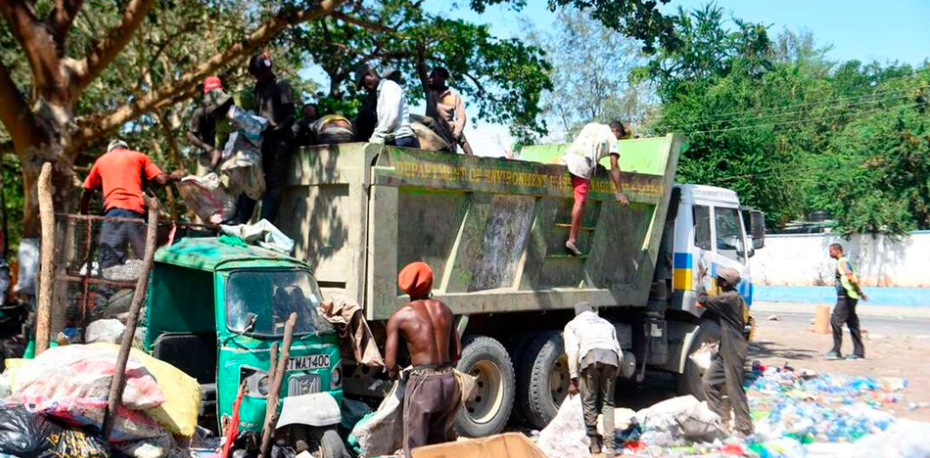
Across many African cities, these gaps are visible at multiple levels. Collection services are often inconsistent, with limited fleets of trucks struggling to cover large and densely populated areas. Transport networks can be inefficient or poorly maintained, slowing the movement of waste from neighborhoods to processing or disposal sites.
At the end of the chain, the challenges continue. Properly managed landfills remain limited, and in many cases, waste is still disposed of in open dumpsites without adequate environmental safeguards. In Dar es Salaam, for example, significant volumes of waste are handled through such systems, raising concerns about long-term environmental and public health impacts (UN-Habitat, 2020).
Without a strong infrastructural backbone, waste management becomes reactive rather than systematic, responding to crises rather than preventing them.
Governance and Policy: The Limits of Implementation
While infrastructure plays a critical role, it cannot be separated from governance. Waste management systems are shaped not only by physical capacity, but by how decisions are made, resources are allocated, and policies are implemented.
In many municipalities, waste management operates within constrained budgets and competing priorities. Limited funding often restricts both the expansion of infrastructure and the maintenance of existing systems. At the same time, responsibilities for waste management can be fragmented across different agencies, leading to coordination challenges and inefficiencies.
Policies may exist, but their implementation is uneven. In some cases, private sector involvement has been introduced in an effort to improve efficiency. However, without strong oversight, these arrangements can result in uneven service delivery, with higher-income areas receiving more consistent collection, while lower-income communities are underserved.
What emerges is not simply a technical failure, but a governance gap: a disconnect between policy intentions and lived realities.
The Informal–Formal Disconnect
As highlighted in earlier discussions, informal waste workers play a critical role in managing waste across African cities. Yet their contribution remains largely disconnected from formal systems.
This separation creates both inefficiencies and missed opportunities. Materials that could be systematically recovered and recycled are instead handled through fragmented channels. Informal workers operate without access to protective equipment, stable pricing, or institutional support, even as they contribute significantly to waste reduction.
Rather than being integrated into formal systems, these workers are often treated as peripheral, or, in some cases, excluded altogether when new systems are introduced.
This approach overlooks a key reality: informal workers are already embedded within the waste economy. Bridging the gap between formal and informal systems could enhance efficiency, improve livelihoods, and strengthen the overall resilience of waste management systems.
Financing the System: The Cost of Inaction
Waste management is inherently resource-intensive. It requires sustained investment in infrastructure, operations, and maintenance. Yet many cities struggle to generate the revenue needed to support these systems.
User fees, where they exist, are often low or inconsistently collected. Public funding is limited, and external financing can be unpredictable. At the same time, waste is rarely treated as an economic asset, meaning that potential revenue streams from recycling and resource recovery remain underdeveloped.
This creates a reinforcing cycle: limited funding leads to weak systems, which in turn reduce service quality and public willingness to pay, further constraining available resources.
Breaking this cycle requires a fundamental shift, from viewing waste purely as a cost, to recognizing its potential as part of a broader economic system.
Consequences: Environmental and Social Impacts
When waste management systems fail, the consequences are immediate and far-reaching.
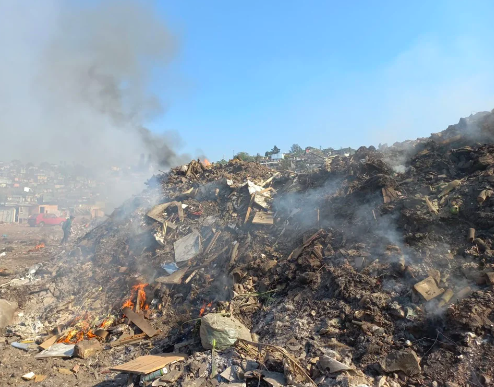
Uncollected waste clogs drainage systems, increasing the risk of flooding during heavy rains. Open burning releases pollutants into the air, contributing to respiratory illnesses. Leachate from poorly managed dumpsites contaminates soil and water sources, posing long-term environmental risks.
These impacts are not distributed evenly. They are felt most acutely in low-income communities, where infrastructure is weakest and exposure is highest.
In this way, waste management becomes not only an environmental issue, but a matter of public health and social equity.
Conclusion: Rebuilding the System
Africa’s waste crisis is not inevitable. It is the result of systems that have not kept pace with rapid urban and economic change.But systems can evolve.
Addressing these challenges will require coordinated investment in infrastructure, stronger governance frameworks, more sustainable financing models, and a deliberate effort to integrate informal workers into formal systems.
The question is not whether solutions exist; many already do. The question is whether they will be implemented in a way that is both effective and inclusive.
In the next article, we turn to those who are already navigating these challenges differently: entrepreneurs who are building businesses within the waste sector and redefining what waste can become.
Because even within broken systems, new possibilities are emerging.
RELATED: