Faith Nyasuguta
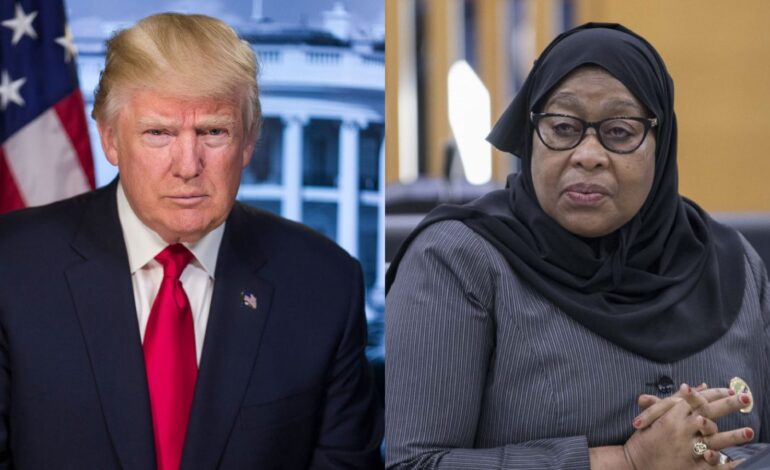
The Government of the United Republic of Tanzania and the United States Government have officially signed a five-year, $3.1 billion bilateral health cooperation Memorandum of Understanding (MOU).
The agreement, signed late Wednesday in Dar es Salaam, marks a fundamental shift in how Washington structures its development partnerships on the African continent.The agreement is implemented under the U.S. “America First Global Health Strategy,”

Unlike historical donor agreements, the new $3.1 billion framework relies on a shared-funding co-investment model. Over the next five years, the United States Government intends to provide more than $1.3 billion, subject to approval by the U.S. Congress. In return, the Government of Tanzania has legally committed to increasing its domestic health sector spending by approximately $1.8 billion over the same period.
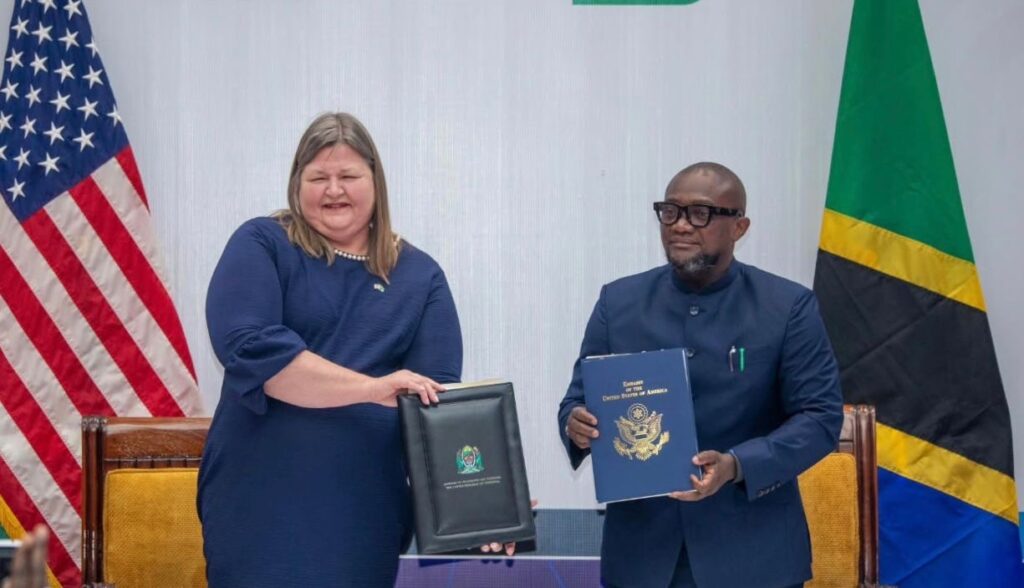
According to joint statements released by the U.S. Embassy and the Tanzanian Ministry of Health, the multi-billion dollar capital deployment will be used to overhaul the nation’s digital health infrastructure, expand disease surveillance networks, train healthcare workers, and strengthen modern laboratory capacities.
Specifically, the funds will support Tanzania’s strategy to build a unified national digital health ecosystem organized around five key areas: clinical care, health financing and insurance, supply chains, public health surveillance, and citizen services. The agreement also outlines the operationalization of the Tanzania National Public Health Institute at both national and regional levels.
Addressing Continental Controversies and Sovereignty
Tanzania’s entry into this global health framework comes amid growing continental debate over the conditions tied to Washington’s updated health strategies. Similar bilateral health pacts previously signed with regional neighbors—including Kenya, Uganda, and Rwanda—have faced intense public and legal scrutiny.
In several African countries, critics have raised serious concerns regarding clauses related to natural resource concessions and the mandatory sharing of national health data and biological materials with foreign entities. For example, Zambia completely rejected proposals for a similar U.S. health pact due to demands tying healthcare assistance to American access to its mineral wealth.
Meanwhile, a Kenyan court recently suspended portions of its respective U.S. health agreement pending a data privacy lawsuit brought forward by a consumer protection group.
Aware of the regional pushback, Tanzanian Health Minister Mohamed Mchengerwa firmly clarified the terms of Tanzania’s agreement during the signing ceremony. Addressing concerns regarding national sovereignty and medical data, Mchengerwa explicitly stated that Tanzania had drawn a hard line regarding its domestic biological assets.
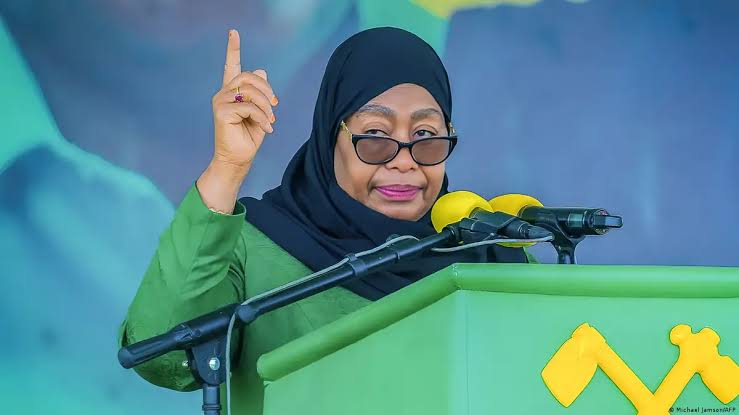
“We did not enter into a specimen-sharing agreement,” Mchengerwa stated in an address broadcast via the ministry’s official channels. “Tanzania’s specimens, including those of outbreak, epidemic, and pandemic potential, will be tested, stored, and governed right here in Tanzania.”
The U.S. State Department confirmed that as of July 2026, it has signed 34 bilateral global health MOUs under this new co-investment framework, totaling more than $24 billion in combined funding.
The agreement represents a high-stakes calculation for Tanzania. While it secures $1.3 billion in American technical expertise, pharmaceuticals, and technology, it simultaneously requires the East African nation to foot the largest share of the bill using its own sovereign resources. Officials from both nations emphasize that the ultimate goal is to facilitate a sustainable transition toward long-term country ownership, allowing Tanzania to eventually independently address public health threats.
RELATED: