Faith Nyasuguta

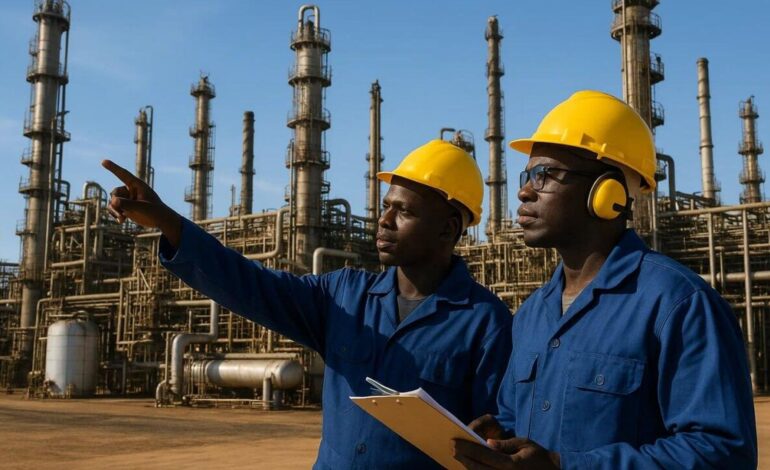
Senegal is moving to expand its refining industry as the country tries to turn its new oil production into a larger domestic industrial economy. The state-owned Société Africaine de Raffinage (SAR) has signed a preliminary agreement with Turkish company Yamata for a second refinery capable of processing 4 million tonnes of crude a year, alongside a major upgrade of the existing Mbao refinery near Dakar.
The agreement was signed in New York on September 23, 2026, on the sidelines of the 81st United Nations General Assembly, in the presence of President Bassirou Diomaye Faye. The proposed refinery is estimated to cost $2 billion to $3 billion, while modernising Mbao is expected to require another $300 million to $500 million. That puts the combined projected investment at as much as $3.5 billion — but this is a project estimate, not money already raised or invested.

The agreement is a step toward the project, not proof that construction is about to begin. Yamata is expected to handle engineering, procurement and construction and mobilise financing through its financial partners without a sovereign guarantee from Senegal. Detailed engineering and the financing structure still have to be completed.

Senegal Now Wants The Industry

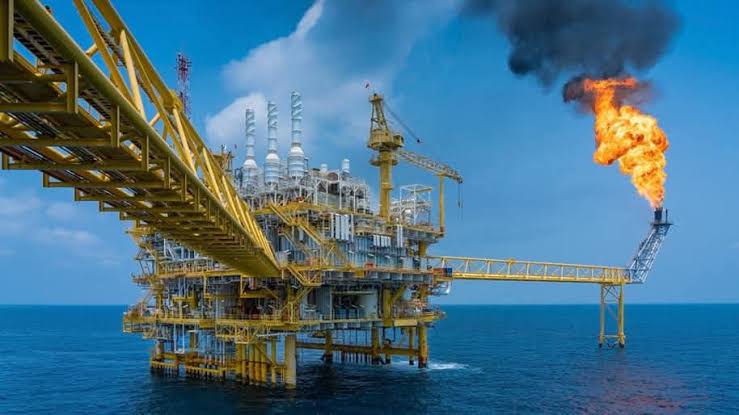
The story begins offshore. In June 2024, Senegal became an oil-producing country when Woodside Energy achieved first oil at the Sangomar field, about 100 kilometres south of Dakar. The field’s first development phase has a nameplate capacity of 100,000 barrels of oil per day, making it one of the most significant industrial projects in Senegal’s modern energy history.
Sangomar crude is already entering Senegal’s domestic refining system. In February 2025, SAR received its first Sangomar cargo under the field’s domestic supply obligation. Woodside reported that Sangomar had produced more than 13 million barrels of oil equivalent by the end of 2024 and had reached nameplate capacity within nine weeks of first production. But producing crude and producing fuel are two very different businesses.


A country can export crude oil and still import petrol, diesel and other refined petroleum products. That is because refining requires separate infrastructure, capital, technology, storage, transport systems and reliable markets.This is the gap Senegal is now trying to close.
SAR’s existing Mbao refinery processes about 180 tonnes of crude per hour and, according to the company, covers roughly half of Senegal’s hydrocarbon needs. The remainder still requires imports.
The proposed 4-million-tonne refinery would therefore represent a major increase. At full continuous operation, its annual capacity would be more than 2.5 times the theoretical annual throughput implied by Mbao’s 180-tonne-per-hour rate. In simple terms, Senegal is trying to move from “we produce oil” to “we produce, refine and sell petroleum products.”
Why The Refinery Matters
The project is designed to process Sangomar crude, but it would not be limited to Senegalese oil. According to the agreement, the refinery would be able to process a range of crude grades from international markets. That flexibility is important.
A refinery cannot operate efficiently simply because a country has oil underground. It needs crude supply, reliable infrastructure, financing, skilled workers, maintenance, storage and access to customers.
If Senegal succeeds in building the plant and producing more refined products than its domestic market requires, the surplus could potentially be sold into neighbouring West African markets. That would push Senegal further into the regional petroleum-products trade rather than leaving it primarily as a crude producer.
The project also includes planned petrochemical activity, creating the possibility of using petroleum feedstocks for products beyond fuel. SAR says the development could create more than 15,000 direct jobs during construction, with local content expected to play a role.
But construction jobs are not the same as permanent industrial employment. The long-term economic value will depend on whether Senegal develops local engineering, maintenance, logistics, petrochemicals and manufacturing around the refinery. That is where the real industrialisation opportunity lies.
Financing
Senegal is pursuing this project at a complicated financial moment. In September, the International Monetary Fund reached a staff-level agreement with Senegal for a proposed $2.2 billion, 36-month Extended Credit Facility to support reforms aimed at restoring macroeconomic stability and debt sustainability. The agreement still requires approval by IMF management and the Executive Board.
The IMF has also highlighted the scale of Senegal’s debt problem. After a government reconciliation exercise, central government debt at the end of 2023 was revised from 74.4% to 111% of GDP, while revised figures put end-2024 debt at 118.8% of GDP. That makes the “no sovereign guarantee” element of the Yamata agreement especially important.
If Yamata and its financial partners can actually mobilise the billions required without placing the project’s debt directly on Senegal’s sovereign balance sheet, the financing structure could reduce some pressure on the government. But there is a catch: private financing still has to be secured.
An MoU does not guarantee that lenders will provide the money, and projected investment figures do not automatically become committed capital.
Senegal Has Been Here Before
There is another useful lesson in the history of SAR 2.0. The idea of a second refinery and petrochemical development is not new. In 2024, SAR signed a protocol with Sedin Engineering, a subsidiary of China National Engineering, to explore a second refinery and petrochemical plant under the SAR 2.0 project.
The new Yamata agreement therefore shows that Senegal is continuing to search for an implementation and financing pathway for an industrial project that has been under development for years.That is worth remembering when African infrastructure announcements make headlines. Signing an agreement is not the same as building an asset.
The real milestones will be financial close, final engineering, construction, commissioning and eventually sustained commercial production.
The African Lesson
Senegal’s refinery push captures one of Africa’s biggest energy questions. For decades, many African economies have exported crude oil while importing refined fuels. This creates a strange economic cycle: crude leaves the continent, is processed elsewhere, and finished products return at higher value.
Building refineries can change that equation — but only if they are economically viable and efficiently operated. The lesson is therefore not simply “Africa needs more refineries.”
Africa needs refineries connected to reliable crude supplies, competitive energy systems, skilled workers, storage, pipelines, ports, regional markets and local manufacturing. Senegal now has an opportunity to build that chain around Sangomar.
Its proposed refinery could help reduce dependence on imported petroleum products, strengthen domestic fuel security and create a platform for petrochemicals and regional exports. But the hardest part starts after the signing ceremony.
Senegal must prove that the $2–$3 billion refinery and $300–$500 million Mbao upgrade can move from projected investment to financed construction, and ultimately from oil production to lasting industrial value. For a new African oil producer, that is the difference between simply having oil — and building an oil industry.
RELATED: