Faith Nyasuguta
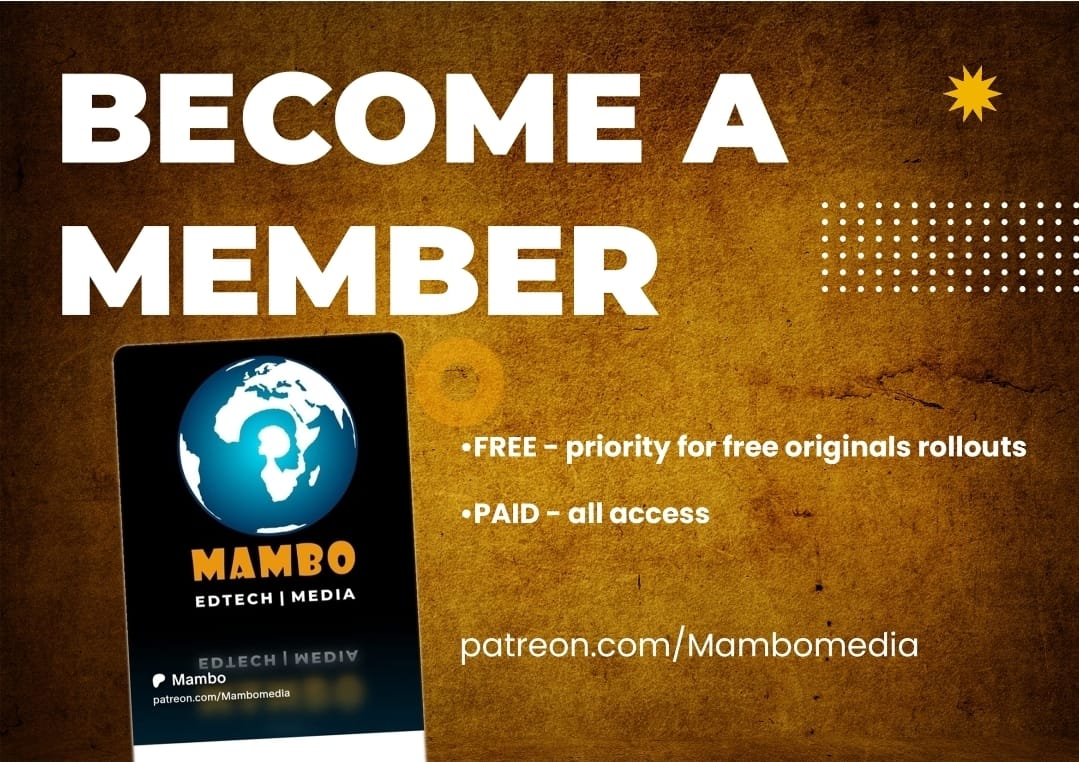
For 80 years, the United Nations has promoted equality between women and men as a founding principle. Yet one of the organisation’s most powerful positions has never been held by a woman. At the 81st Session of the United Nations General Assembly, Namibian President Netumbo Nandi-Ndaitwah placed that contradiction at the centre of the global conversation, calling for a woman to become the UN’s next Secretary-General.
Addressing the General Debate in New York on September 23, Nandi-Ndaitwah pointed to a fact that has remained unchanged since the UN was created in 1945: “Since the establishment of the United Nations in 1945, no woman has served as Secretary-General of the organization.”

Her argument comes at a particularly important moment. Antonio Guterres, who has served as Secretary-General since January 2017, is due to leave office when his second term ends on 31 December 2026. The UN is therefore already in the process of selecting its tenth Secretary-General.
Nandi-Ndaitwah argued that the organisation’s leadership should reflect the principles it asks member states to uphold. “The leadership of the organization has yet to reflect the principle of gender equality that is being promoted across the international system,” she said. Then she made Namibia’s position explicit: “Namibia therefore believes that it’s time that a woman is elected as Secretary-General of our organization.”

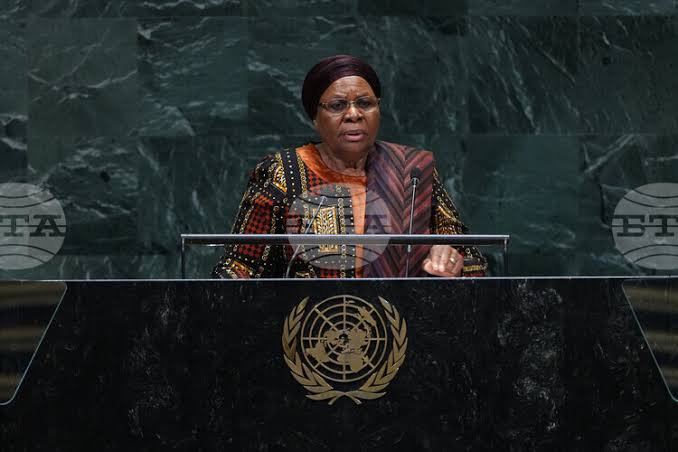
Namibian President Netumbo Nandi-Ndaitwah
Why This Matters
The significance goes beyond whether the next Secretary-General is a woman. It raises a larger question about how international institutions translate principles into leadership.
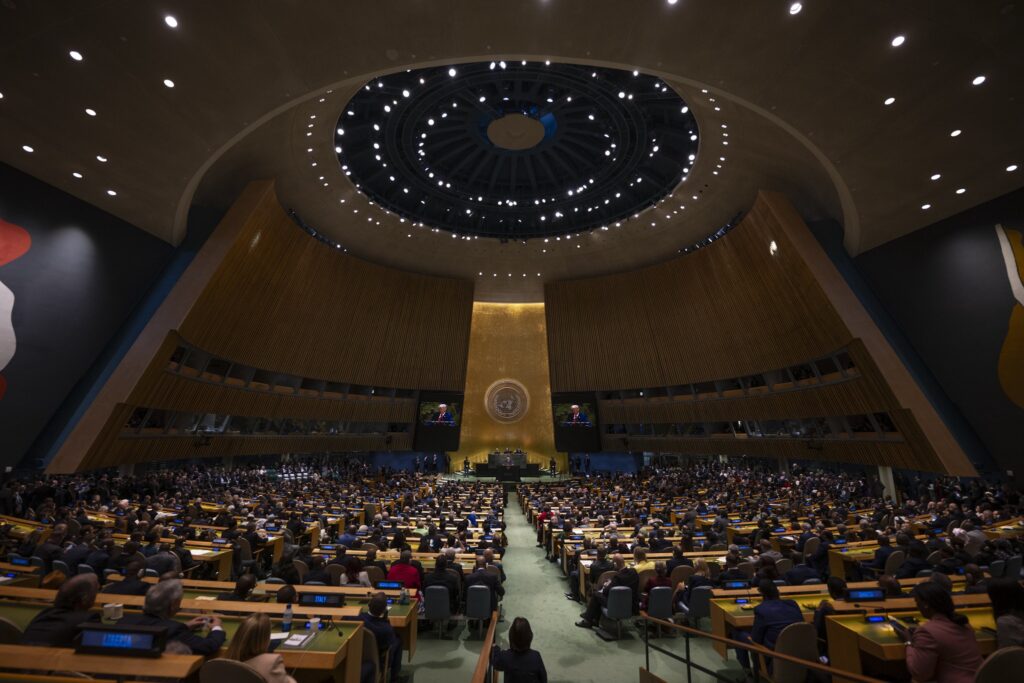
The UN Charter, adopted in 1945, established the organisation around principles including the equal rights of men and women. Yet women were a tiny minority even at the organisation’s founding conference: the UN notes that only six of the 278 delegates at San Francisco in 1945 were women.
Eight decades later, the UN has made substantial progress in some areas. The organisation says it has achieved gender parity among senior leadership, Resident Coordinators and international professional categories. But the Secretary-General position remains an exception. That makes the current succession process unusually important. And the issue is not simply symbolic.
The Secretary-General is the UN’s chief administrative officer and has a political and diplomatic role that extends far beyond managing the bureaucracy. Under Article 97 of the UN Charter, the General Assembly appoints the Secretary-General following a recommendation from the Security Council.
That means the final decision involves both the wider membership and the Security Council — including its five permanent members.
2026 Race Underway
The current selection process has been more open than previous cycles. The General Assembly introduced interactive dialogues with candidates, allowing member states and the wider public to hear candidates discuss their visions for the organisation. The selection process included public dialogues in 2026, where candidates presented their visions for the UN and answered questions from member states.
The field has also included women. Candidates formally nominated during the process include former Chilean president Michelle Bachelet and former UN trade chief Rebeca Grynspan, alongside several male candidates. Additional nominations have also entered the process, including Carolyn Rodrigues Birkett, Olara Otunnu and Ivonne Baki.
This is important because Nandi-Ndaitwah’s argument is not being made in a vacuum. There are already women participating in the formal contest for the position.
The UN’s own General Assembly leadership has also acknowledged the gender imbalance. In March 2026, the President of the General Assembly noted that “there has never been a woman Secretary-General” and described the selection process as a unique opportunity for gender parity.
Why Namibia Is Making The Argument
Nandi-Ndaitwah is not simply speaking as Namibia’s president. Her political history is closely connected to Namibia’s liberation struggle and to the UN’s role in the country’s independence.
Namibia has also played an important role in placing women, peace and security on the international agenda. In 2000, while Nandi-Ndaitwah was serving in Namibia’s government, Namibia’s presidency of the Security Council helped advance what became Resolution 1325 on Women, Peace and Security. The resolution established an international framework for recognising women’s participation in peacebuilding and conflict prevention. That history gives Namibia a particular basis for linking gender equality with questions of peace, security and international leadership.
There is also a broader African dimension. Nandi-Ndaitwah has used UNGA81 to push for a more representative international system, including stronger African representation in global institutions. At a separate UNGA side event, she argued that Africa had taken ownership of implementing the Pact for the Future and called for a more representative and effective international system.
Africa’s Bigger Lesson
The debate is ultimately about who gets to exercise decision-making power. Africa has repeatedly called for reforms to global institutions, particularly the UN Security Council, arguing that the current architecture does not adequately reflect the world that exists today. Nandi-Ndaitwah’s intervention adds another layer: representation is not only about geography. It is also about gender.
For African countries, this creates an opportunity to connect two longstanding demands — greater African representation and greater participation by women — rather than treating them as separate issues. The concern now is whether member states will translate decades of commitments to gender equality into the selection of the person who will lead the UN Secretariat from 2027.
Nandi-Ndaitwah has put Namibia’s position clearly on record. “Namibia therefore believes that it’s time that a woman is elected as Secretary-General of our organization.”
Whether that happens will ultimately depend on the formal selection process, Security Council recommendation and General Assembly appointment. But the significance of her intervention is already clear: after eight decades without a woman at the top of the UN, the 2026 succession has turned an old question about representation into an immediate test of the institution’s own commitment to equality.
RELATED: