Faith Nyasuguta

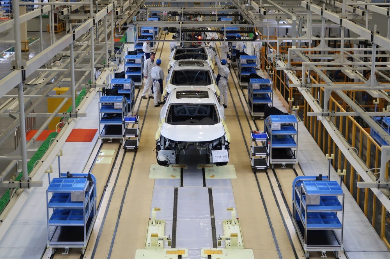
Rwanda is moving closer to becoming an electric-vehicle manufacturing base after its Cabinet approved a Strategic Investment Agreement with Chinese automaker Chery Holding Rwanda Ltd for the establishment of an electric vehicle assembly plant. The decision was made on September 18, formally advancing discussions that have been underway between Rwanda and the Chinese group since 2025. It is another sign that Africa’s electric-mobility story is beginning to move beyond importing finished vehicles toward local assembly, manufacturing and the development of supporting industries.
The agreement follows a Memorandum of Understanding signed in April 2025 between the Rwanda Development Board and Chery Holding Group, covering cooperation in electric mobility, green energy, agriculture and mining. The discussions gained further momentum in April 2026, when President Paul Kagame met Xu Hui, Chery’s vice president and board secretary, to discuss investment opportunities including a possible EV assembly plant.

Chery already has a commercial presence in Rwanda through its Kigali showroom, giving the company an existing foothold in the market before manufacturing begins.

There is, however, an important detail that should not get lost in the excitement. Rwanda’s Cabinet announcement does not publicly disclose the plant’s investment value, location, production capacity, construction start date or completion date.

Rwanda Development Board investment material separately identifies electric-car assembly as an opportunity with an indicative investment value of about $39.25 million and 2,000 direct jobs, but those figures should not be attributed to Chery’s project unless the government or company confirms they apply to it. The next stage will therefore be about turning an investment agreement into an actual factory, production lines, jobs and a local supplier network.
Why Rwanda Wants Electric Vehicles

Rwanda has been building its electric-mobility policy deliberately rather than waiting for the market to develop on its own. Electric vehicles, batteries, spare parts and charging equipment have benefited from tax incentives, while companies establishing charging infrastructure can access government land under specified arrangements.
Rwanda has also used tax policy to make EVs cheaper to import, with fully electric vehicles currently exempt from import duty and electric vehicles, batteries and charging equipment retaining VAT exemptions until June 2028. For a country that imports virtually all of its petroleum, reducing dependence on petrol and diesel is not simply a climate-policy decision; it is also an energy-security and foreign-exchange issue.
The government is also creating demand. Rwanda’s electric-mobility policy requires public institutions to ensure that at least 30% of newly procured vehicles are fully electric. That matters because governments can become early customers for a new technology, giving manufacturers predictable demand while charging networks and consumer confidence develop. In effect, Rwanda is trying to build both sides of the market at once — incentives and procurement on the demand side, and assembly and investment on the supply side.
That approach is particularly significant in Africa because electric mobility does not have to begin with luxury electric cars. In many African cities, the bigger opportunity may be electric motorcycles, buses, three-wheelers and commercial vehicles, because these vehicles often travel much more each day than private cars. A petrol motorcycle used as a taxi or delivery vehicle can consume fuel every day, making the economics of switching to electric potentially more compelling when charging or battery-swapping infrastructure is available.
Africa’s EV Transition
Africa is still at an early and uneven stage of electric-mobility adoption. The UN Economic Commission for Africa says the continent has the lowest overall EV adoption globally, with unreliable electricity infrastructure, limited technical capacity and weak regulatory frameworks remaining major obstacles. But the same assessment identifies countries including Egypt, Kenya, Morocco, Rwanda and South Africa as advancing policies and infrastructure. The transition therefore should not be understood as a single African race with one winner; different countries are pursuing different parts of the EV value chain.
Ethiopia is perhaps one of the clearest examples of aggressive policy-driven adoption. The country launched its National E-Mobility Strategy for 2025–2030 in May 2026, targeting policy reform, charging infrastructure, public-transport electrification, local manufacturing and battery development. Ethiopia’s EV numbers have risen sharply, from about 7,000 vehicles in 2023 to a projected 115,000 by the end of 2026, helped by the country’s abundant renewable electricity. Its strategy also targets having 30% of newly registered EVs locally produced or assembled by 2030.
Kenya is taking a different but equally important route. In February 2026, Kenya launched its National Electric Mobility Policy, linking EV adoption directly to energy security and the country’s petroleum import bill, estimated by the government at about $5 billion annually. Kenya has introduced incentives including zero-rated VAT for electric buses, bicycles, motorcycles and lithium-ion batteries, as well as zero excise duty on electric bicycles, motorcycles and batteries.
In August, the government and the International Finance Corporation signed an agreement to help develop regulations, targets and investment frameworks for EV manufacturing, assembly and charging infrastructure.
Morocco is operating at another level altogether. Its strategy goes beyond vehicle assembly into the battery supply chain. In July 2026, the African Development Bank approved a €100 million loan for Gotion Power Morocco to develop an integrated lithium-iron-phosphate battery gigafactory, with Phase One designed for 10 GWh of battery cells and packs and eventual expansion to 100 GWh. Morocco’s automotive industry is already deeply integrated into global supply chains, and the country’s Stellantis facility in Kenitra is expanding vehicle production, electric three-wheelers, charging equipment and other components.
The continent is also seeing rapid growth in electric two-wheelers. In the first half of 2026, African imports of Chinese electric motorcycles and three-wheelers increased 60% to $114.6 million, with Morocco, Egypt and Algeria leading consumer imports while East and West African markets increasingly focus on commercial motorcycles, local assembly and battery swapping. That distinction is important because Africa’s EV transition may look very different from Europe’s or China’s: motorcycles and public transport could become the mass-market entry point rather than private electric cars.
Why Chery Is Looking At Africa
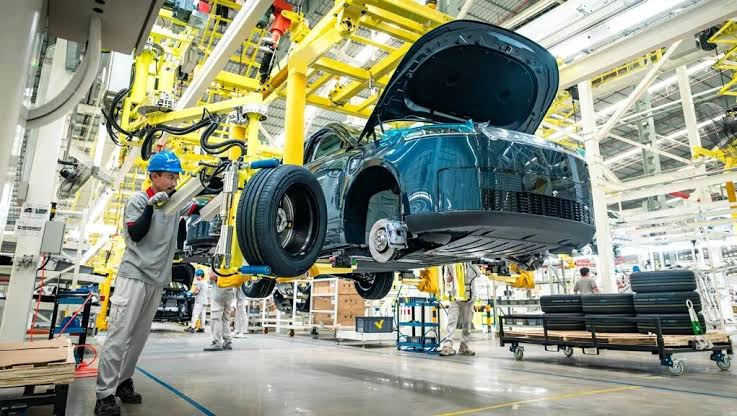
Chery’s Rwanda project also fits into a broader change in the global automotive industry. Chinese automakers are increasingly moving from simply exporting vehicles into African markets to assembling vehicles on African soil. The strategy can reduce shipping costs, improve access to local and regional markets and help manufacturers work around trade barriers while benefiting from government incentives. Africa’s growing urban population and demand for more affordable vehicles make the continent an increasingly important future market for Chinese automakers.
For Rwanda, Chery brings something potentially valuable: technology, manufacturing experience and access to a global automotive network. But the real economic prize is bigger than the number of vehicles coming off an assembly line.
A successful plant could create jobs for technicians, engineers, logistics workers and suppliers. It could encourage businesses producing seats, wiring, tyres, electronics, batteries, software and charging equipment to establish operations nearby. Rwanda could also use its position inside the East African Community, whose customs union connects it to a regional market, to make the plant more than a facility serving Kigali alone.
Assembly is not the same as manufacturing. If Rwanda imports almost every major component, assembles vehicles and sends them into the market, the country gains jobs and some industrial capability but captures only part of the value. If, over time, the project develops local suppliers, technical skills, battery services, software, charging infrastructure and component manufacturing, the economic impact becomes much deeper.
The Bigger Opportunity

Electric vehicles could give African countries an opportunity to build parts of the automotive industry without simply reproducing the old internal-combustion model. The continent does not have to wait until it has built the same century-old industrial ecosystem that exists in Germany, Japan or the United States before participating in the next generation of transport.
Africa also possesses resources critical to batteries and clean technologies, although possessing minerals is not the same as controlling their value. The strategic opportunity is therefore to connect minerals, electricity, technology, vehicle assembly, battery manufacturing, charging infrastructure and regional markets rather than continuing the pattern of exporting raw materials and importing finished products.
Rwanda’s Chery agreement is therefore significant, but the factory itself will not determine whether the project becomes an industrial success. The real measure will be how much technology is transferred, how many Africans are trained, how much of the vehicle is made locally, how many suppliers emerge around the plant and whether the vehicles can compete across East Africa.
RELATED: