Faith Nyasuguta

For decades, one of the most frustrating features of infrastructure development across Africa has been the unfinished project.
A road is announced. A groundbreaking ceremony is held. A contractor arrives. Then funding problems emerge. Payments are delayed. Governments change. Contracts are renegotiated. Construction slows down or stops altogether. Years later, citizens are left with a half-built road and a project that has become another line item in a government budget.

Ghana is now attempting something different — and the latest milestone on its Accra–Kumasi Expressway is worth watching precisely because it is still only the beginning.

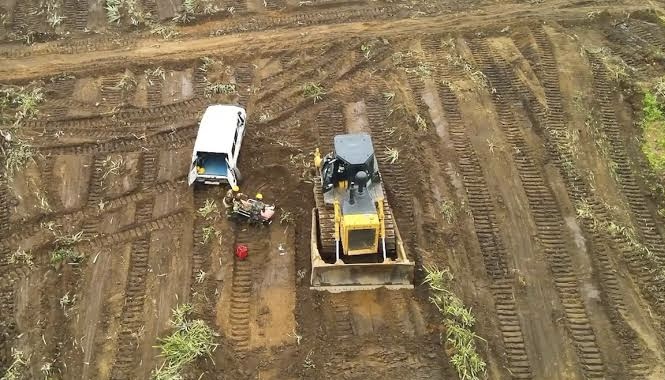
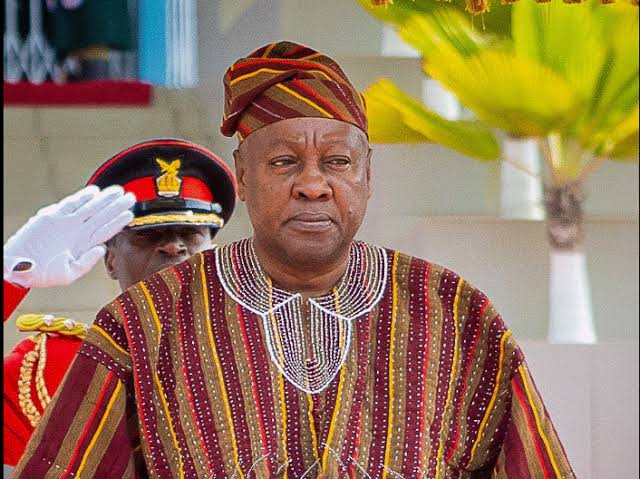
On September 14, President John Dramani Mahama received the cleared right-of-way for the planned expressway after Ghana’s 48 Engineer Regiment completed the preparatory work in 19 weeks instead of the scheduled 20. The military engineers cleared 175.6 kilometres of the legally acquired corridor between Ablekuma in Greater Accra and Sewua in the Ashanti Region, working through forests, rivers, streams, agricultural land and areas affected by illegal mining.

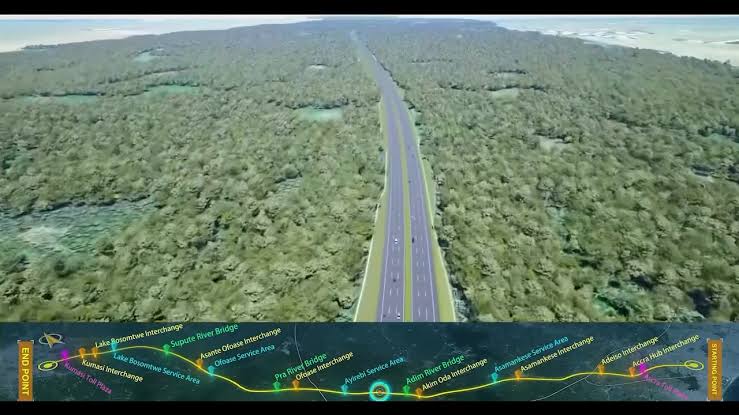
The planned highway itself is approximately 198.7 kilometres, including the main expressway and connector roads. The government says the project will create a modern six-lane Class A highway and could reduce travel time between Accra and Kumasi from roughly five or six hours to about two hours.
But perhaps the most important part of this story is not the road. It is the deadline. The government says about US$2 billion in domestic funds has already been placed in a special account at the Bank of Ghana, with Finance Minister Cassiel Ato Forson saying the full funding required will be mobilised by December 2026 without new borrowing for the construction. The government has also said the project’s costs will be subjected to value-for-money scrutiny.

That addresses one of Africa’s most familiar infrastructure problems: announcing projects without securing a credible financing mechanism.
Africa Has A Project-Completion Problem
It would be unfair to say African countries simply cannot build infrastructure. Africa has produced major highways, railways, airports, dams, ports and power projects. The problem is continuity and delivery.
Kenya provides a useful example. The Arror, Kimwarer and Itare dams became symbols of projects that were planned, financed and then stalled. Itare construction stopped in 2018 after reaching about 25% completion, while Arror and Kimwarer never progressed to meaningful construction. Under later arrangements, Kenya was still facing billions of shillings in costs associated with the stalled projects.
Nigeria has its own history of projects surviving multiple administrations. The Second Niger Bridge was conceived decades ago, formally launched under President Goodluck Jonathan in 2013 and initially targeted for completion in 2017. A change of government, funding problems and contractual complications contributed to prolonged delays. An academic case study described how the project became entangled in political promises and insufficient financial assurances.
These examples reveal an important lesson: a project can fail even when everyone agrees that the project is necessary.
The reasons can include financing, procurement, land acquisition, contractor capacity, political transitions, corruption, unrealistic timelines or simply the absence of an institution powerful enough to keep pushing the project forward. Ghana’s approach with the Accra–Kumasi corridor is attempting to remove several of those obstacles before the major construction begins.
That does not mean the expressway is guaranteed to succeed. Clearing the right-of-way is a milestone, not a completed highway. The real test begins when construction starts.
Ghana Not Alone
There are African countries that have demonstrated that major infrastructure can be delivered when projects are treated as national priorities with strong institutional coordination.
Morocco has built a particularly strong reputation for long-term transport planning. Its high-speed rail network, launched in 2018, has been incorporated into a broader expansion strategy ahead of the 2030 FIFA World Cup. Morocco is planning further rail expansion toward Marrakech and eventually Agadir, while upgrading airports, roads and stadium infrastructure. The African Development Bank has also been preparing financing support for transport infrastructure.
Rwanda has similarly focused on relatively disciplined execution of roads, urban infrastructure and public-service projects, although its model operates on a much smaller geographic and population scale than Ghana, Kenya or Nigeria.
Ethiopia has also demonstrated the ability to execute large infrastructure projects, particularly in aviation, industrial parks and major transport infrastructure, although several projects have experienced delays and financing challenges.
The lesson is not that one African country has discovered a magic formula. It is that African governments already have examples of what stronger project management can look like.
And Then There Is Mahama
John Dramani Mahama’s infrastructure reputation did not begin with the Accra–Kumasi Expressway. During his previous presidency from 2012 to 2017, projects associated with his administration included the Atuabo Gas Processing Plant, which entered commercial operation in 2015, and major health infrastructure such as the upgraded Ridge Hospital. The Ministry of Health lists the Ridge expansion among Ghana’s major capital projects. His return to power in January 2025 has brought a much broader infrastructure agenda.
The flagship is the Big Push Infrastructure Programme, under which Ghana says construction has commenced on 50 projects covering approximately 1,144 kilometres, while 77 projects across all 16 regions were advancing as of the government’s latest progress reporting. Parliament approved nearly GH¢50 billion for the wider multi-year road and bridge programme.
Mahama’s government has also absorbed 23 previously awarded projects worth GH¢14.88 billion into the Big Push programme after they were abandoned or stalled because of inadequate funding. That is an important distinction: infrastructure development is not always about starting something new; sometimes the fastest way to create value is to finish what previous governments started.
Beyond roads, Mahama has launched the Sheapark Resource Hub in Wa, designed to move Ghana’s shea industry from raw-nut exports toward processing, cosmetics, food, nutraceuticals and pharmaceutical products. The project is expected to support more than 7,000 women at maturity.
In Savelugu, his government recently commissioned the Northshore Apparel factory, which currently has more than 2,300 workers and is targeting 10,000 jobs as it expands. The government is linking the project to a wider attempt to rebuild Ghana’s cotton-to-clothing value chain.
Education and healthcare are also part of the agenda. Mahama has committed to completing stalled E-Block schools and has identified 35 health projects already at 70% completion or more for priority completion, with another 20 projects planned for the following phase.
Then there is the 24-Hour Economy, formally backed by legislation in 2026. The programme is intended to encourage round-the-clock manufacturing, agro-processing, logistics and export-oriented production, with GH¢110 million allocated in the 2026 budget for implementation.
And Mahama’s plans go beyond roads. His government has outlined an expanded railway strategy linking industrial areas, ports and lake transport, including an Eastern Corridor railway connecting the Tema–Akosombo line toward Keta.
The Real Test
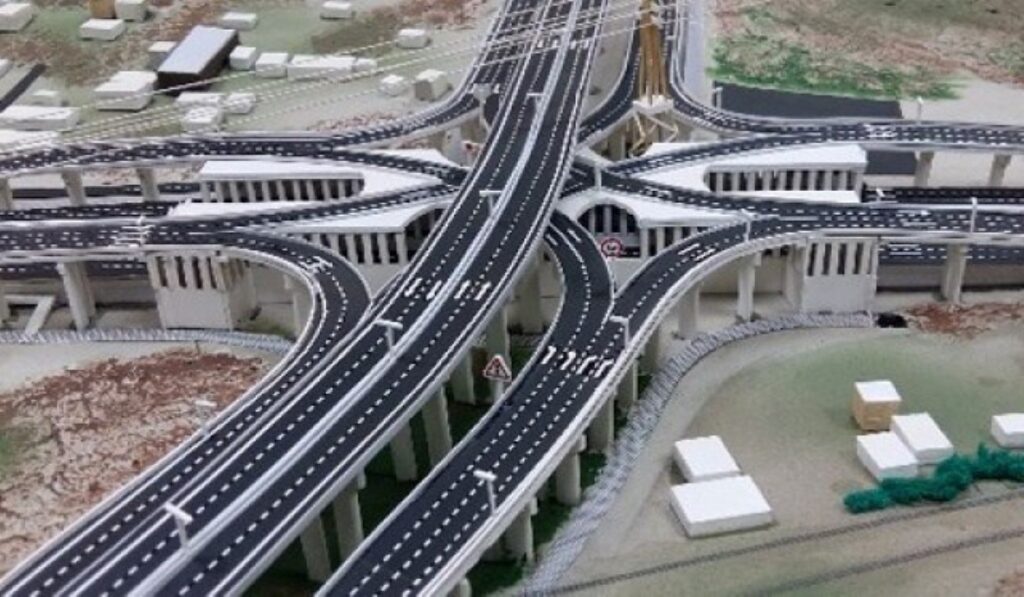
There is a danger in celebrating African infrastructure milestones too early. Africa has seen too many groundbreaking ceremonies become monuments to unfinished promises. So Ghana’s real achievement will not be that its military engineers finished a 175.6-kilometre corridor one week early. It will be if the six-lane highway is actually built, financed transparently, completed within a credible timetable, maintained properly and produces the economic benefits promised.
That is where Ghana can set an example. Because infrastructure is not just concrete and asphalt. A functioning highway connects farmers to markets, manufacturers to ports, workers to jobs and cities to one another. A functioning railway can reduce pressure on roads. A processing hub can turn an agricultural commodity into a higher-value export.
For Africa, the bigger lesson is that development is not measured by how many projects governments announce. It is measured by how many they finish. Ghana has completed the first 19 weeks. Now the continent should watch what happens in the next several years.
RELATED: