Faith Nyasuguta

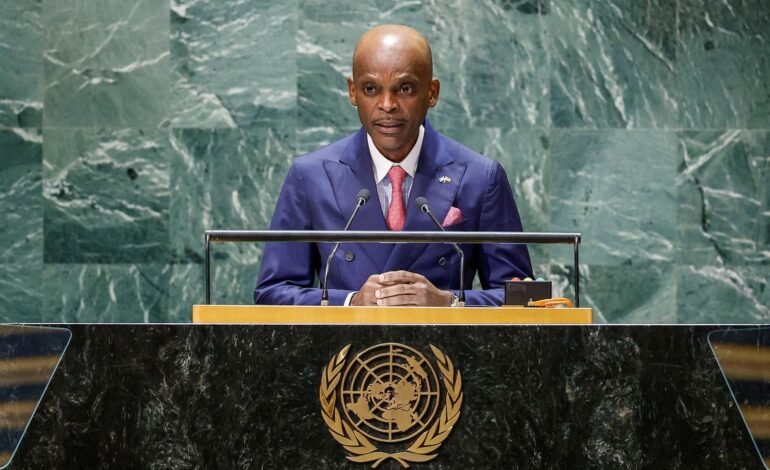
William Ruto has issued a blunt assessment of the African Union, declaring that in its current form, the body is “not fit” to help Africa unlock its full potential.
Speaking during a high-level meeting with intelligence chiefs from across the continent, Ruto called for sweeping institutional reforms, arguing that Africa’s premier multilateral body must urgently evolve to meet growing geopolitical and economic demands.

“The African Union, in its current form, is not fit for purpose,” Ruto said, underscoring the need for stronger leadership structures and more effective delivery mechanisms.

His remarks come at a time when Africa is seeking a more coordinated voice on the global stage, particularly as competition intensifies over resources, trade, and political influence. Ruto emphasized that without decisive reforms, the AU risks falling short of its mandate to drive integration, peace, and development across its 55 member states.

The Kenyan leader, who has taken an active role in championing AU reforms, pointed to structural inefficiencies and slow decision-making processes as key barriers. He stressed that the continent can no longer afford a system that struggles to translate resolutions into tangible outcomes.
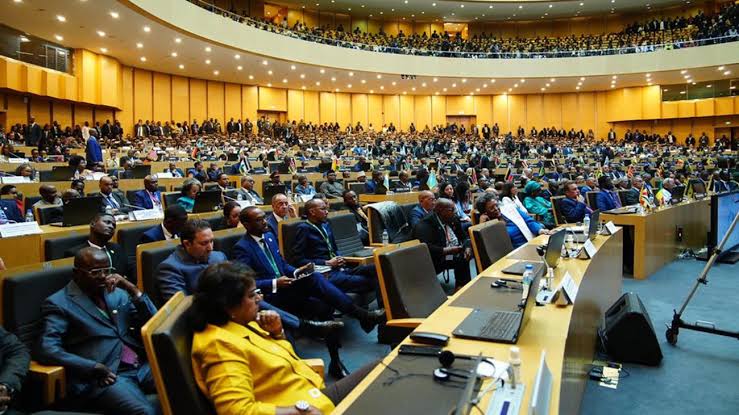
“We must reform our institutions so they can deliver for the people of Africa,” he said, highlighting the urgency of aligning the AU’s operations with the continent’s rapidly changing needs.

Ruto’s intervention follows recent frustrations within the bloc, including its inability to rally behind a unified African candidate for the United Nations Secretary-General position. The deadlock exposed divisions among member states and raised fresh concerns about the AU’s cohesion and strategic direction.
Analysts say the failure to present a common front on such a high-profile global role reflects deeper challenges within the organization – ranging from competing national interests to limited enforcement power.
Beyond diplomacy, Ruto also linked AU reform to broader issues of security and governance, particularly in a context where parts of the continent continue to grapple with conflict, terrorism, and political instability. He argued that intelligence coordination and collective security frameworks must be strengthened to respond more effectively to emerging threats.
The push for reform is not entirely new. Over the years, several initiatives – most notably the institutional reform agenda led by Rwanda’s President Paul Kagame – have sought to streamline the AU’s operations, improve financial independence, and enhance accountability. However, progress has been uneven.

Ruto’s latest comments signal a renewed push to accelerate these efforts, positioning reform not as an option, but as a necessity.
As Africa navigates an increasingly complex global landscape, the question now is whether the African Union can transform itself into a more agile and decisive institution – or risk being outpaced by the very challenges it was created to address.
RELATED: