
Faith Nyasuguta

For decades, many African economies have struggled with a familiar challenge: importing finished products while possessing the labour, raw materials and market demand needed to manufacture some of those goods locally. Ethiopia is attempting to change that pattern.
According to the country’s Ministry of Industry, the Made in Ethiopia initiative, also known as Ethiopia Tamirt, helped bring 1,115 factories back into operation and supported the creation of approximately 1.58 million jobs between 2021 and 2025.

The ministry also reports that domestic manufacturers produced goods valued at approximately $5.96 billion that would otherwise have been imported. The figures, reported by Ethiopian authorities, illustrate the scale of the government’s effort to rebuild industrial capacity, reduce dependence on foreign products and strengthen domestic manufacturing.

The programme is now preparing to move beyond reviving factories and replacing imports, with greater emphasis on exports and international competitiveness.

Bringing Idle Factories Back to Life
One of the central objectives of the Made in Ethiopia initiative has been to restore production at factories that had closed or were operating far below their installed capacity.

Manufacturers in Ethiopia have historically faced challenges including shortages of foreign currency, unreliable access to industrial inputs, financing constraints and infrastructure limitations.
These difficulties have prevented some factories from operating efficiently, even when machinery, buildings and workers were available.
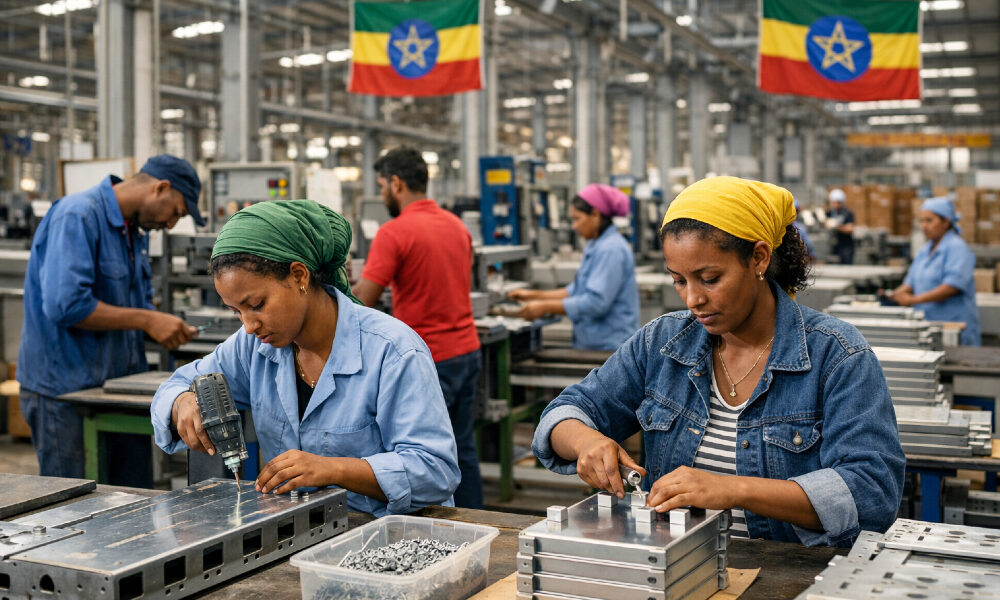
Rather than relying exclusively on constructing new industrial facilities, the government has sought to restore existing manufacturing operations. According to the Ministry of Industry’s reported figures, 1,115 factories were revived during the 2021–2025 period.
Earlier government reporting also documented the reopening of hundreds of previously inactive factories, alongside the establishment of new manufacturing enterprises.
Restoring production at existing factories can be particularly important because it allows countries to make better use of infrastructure and equipment in which substantial investments have already been made.
Factory Capacity Utilisation Rises to Nearly 70%
Ethiopia has also reported significant improvements in how effectively its factories use their available production capacity. Industrial capacity utilisation reportedly increased from approximately 46% to 69%.
In practical terms, this means manufacturers are producing more goods using a greater proportion of their existing machinery, facilities and other productive resources. The improvement is consistent with earlier government updates.
In February 2026, Industry Minister Melaku Alebel reported that manufacturing capacity utilisation had increased from 46% to 66.3%. By October 2026, State Minister of Industry Hassan Muhammed reported that the figure had reached 69.2%.
The increase suggests that Ethiopia’s industrial recovery has involved not only reopening factories but also improving production at facilities already in operation. Higher utilisation can help manufacturers spread fixed costs across greater output, potentially improving efficiency and competitiveness.
However, actual profitability and productivity depend on additional factors, including energy costs, input prices and market demand.
$5.96 Billion Worth of Imports Replaced by Local Production
Perhaps one of the most significant reported achievements is the expansion of import substitution. The Ministry of Industry says Ethiopia has increased the value of goods produced domestically instead of being imported from approximately $340 million to $5.96 billion.
Import substitution involves manufacturing products locally that a country would otherwise purchase from foreign suppliers.
For Ethiopia, this strategy is particularly relevant because foreign currency shortages have historically constrained economic activity. When domestic manufacturers can competitively supply goods previously imported, the country may reduce demand for foreign exchange while supporting local businesses and employment.
The government has identified industries such as textiles, leather products, food processing, chemicals, pharmaceuticals and construction materials as important areas for domestic manufacturing development.
Earlier official reports provide context for the latest figures. In February 2026, Prime Minister Abiy Ahmed reported approximately $3.4 billion in import substitution. By May, government figures placed the value at approximately $4.85 billion. Subsequent Ministry of Industry statements reported import substitution of around $5.9 billion.
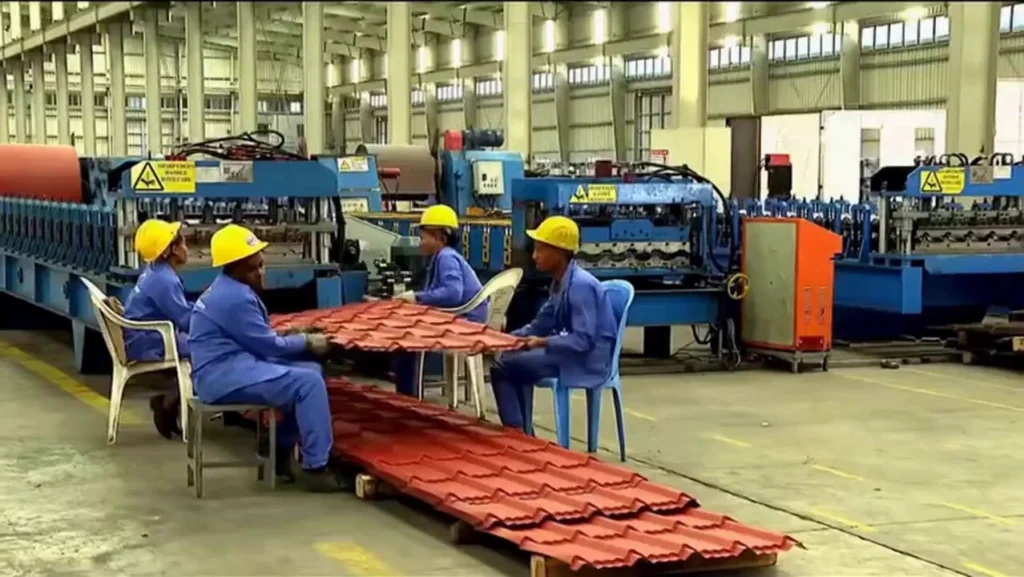
The figures reflect successive government announcements, although differences in reporting periods and measurement methods mean they should not automatically be treated as a single cumulative series.
Import substitution values also represent the estimated value of goods replacing imports, not necessarily equivalent cash savings or government revenue.
Ethiopian Products Gain a Larger Domestic Market Share
The programme has also sought to encourage Ethiopian consumers and businesses to purchase more locally manufactured products. According to the latest figures attributed to the Ministry of Industry, domestic products now account for approximately 46% of the local market, compared to 30% previously.
Earlier government reporting had placed the share at 41%, indicating a continued increase in the reported presence of Ethiopian-made products. This development matters because a strong domestic customer base can provide manufacturers with the demand needed to expand production.
It can also create opportunities for businesses supplying packaging, transportation, machinery maintenance, agricultural inputs and other industrial services. However, increasing domestic market share is only one measure of industrial progress.
Long-term success will also depend on whether Ethiopian products can compete on price, quality and reliability without excessive dependence on protective policies.
1.58 Million Jobs Reported
Employment creation has been another major focus of Ethiopia’s industrialisation strategy. The Ministry of Industry attributes approximately 1.58 million jobs to the Made in Ethiopia programme between 2021 and 2025.
The reported figure is substantial, particularly for a country with a large and growing working-age population. Manufacturing can generate employment directly through factory operations and indirectly through transportation, agriculture, logistics, maintenance and other supporting industries.
In May 2026, Ethiopian authorities had reported approximately 1.4 million jobs associated with industrial investment expansion. The latest figure therefore broadly follows the direction of previous official announcements.
Nevertheless, the publicly available statements do not fully establish how many of the reported jobs are permanent, temporary, newly created or retained through factory reopening. These distinctions will be important when assessing the programme’s long-term employment impact.
The Next Challenge: Selling Ethiopian Products to the World
Having concentrated on restoring production and replacing imported goods, Ethiopia is now preparing to expand its ambitions. The Ministry of Industry says the next phase will prioritise manufactured exports, additional production capacity and improvements in services supporting industrial activity.
This represents an important transition.Producing goods for domestic consumption can help manufacturers establish operations and build experience.
Competing in international markets introduces additional demands, including consistent product quality, competitive pricing, efficient logistics and compliance with foreign market standards.
Ethiopia’s manufacturers will also need reliable access to electricity, raw materials, machinery and financing. Government officials have acknowledged that shortages of foreign currency, industrial inputs and equipment remain challenges.
The country’s export ambitions will therefore depend partly on its ability to address these constraints. Improved access to regional and international markets could create opportunities for Ethiopian manufacturers to increase production beyond domestic demand.
What Ethiopia’s Industrial Push Means for Africa
Ethiopia’s manufacturing strategy reflects a wider debate across Africa about how countries can retain more economic value within their borders.
Several African governments are pursuing policies intended to expand local processing and manufacturing rather than relying heavily on imported finished products or exports of unprocessed raw materials.
Ghana, for example, has outlined plans to increase domestic mineral processing, while Zambia has recently showcased additional gold-refining infrastructure. Ethiopia’s approach places particular emphasis on reviving existing factories, strengthening domestic production and gradually expanding exports.
The strategies differ, but they address a common economic challenge: how African countries can develop more competitive industries and create greater value from their resources, labour and markets.
For Ethiopia, the reported reopening of 1,115 factories and the expansion of domestic manufacturing represent measurable progress according to government figures. The next test will be whether those gains translate into sustained productivity, internationally competitive products and durable employment.
RELATED: