Wayne Lumbasi

The Democratic Republic of Congo has recorded more than 8,000 confirmed Ebola cases in its ongoing outbreak, with the death toll approaching 4,000 as the disease continues to spread across multiple provinces.
The latest situation report from the country’s public health institute puts the number of confirmed cases at 8,067, while 3,901 people have died. The figures make the current outbreak the largest and deadliest Ebola epidemic ever recorded in the Democratic Republic of Congo, surpassing the country’s previous major outbreak between 2018 and 2020.

The outbreak is being caused by Bundibugyo virus, a species of Ebola for which there is currently no licensed vaccine or specific treatment. The World Health Organization says the outbreak has been particularly difficult to control because of insecurity, population displacement, limited access to healthcare and high levels of movement between affected communities.

The scale of the outbreak has expanded rapidly in recent months. On August 26, the country had reported 5,794 confirmed cases and 2,786 deaths. By September 23, the World Health Organization recorded 7,890 confirmed cases and 3,799 deaths. The latest national figures show that cases have now moved beyond the 8,000 mark.

The disease has spread across 63 health zones in seven provinces, according to the World Health Organization’s latest detailed assessment. The affected provinces are Ituri, North Kivu, South Kivu, Haut Uélé, Bas Uélé, Tshopo and South Ubangi. Two of the newest affected areas, Dungu in Haut Uélé and Bulu in South Ubangi, have raised concern because of their proximity to international borders.
Ituri remains the centre of the outbreak, accounting for 6,032 confirmed cases as of September 23. North Kivu is the second most affected province, with 1,480 confirmed cases at that point. WHO reported that North Kivu had recorded the highest case fatality ratio among the affected provinces, at 59.7%.

The mortality associated with the outbreak remains particularly serious. WHO reported 3,799 deaths among 7,890 confirmed cases as of September 23, giving a crude case fatality ratio of 48.1%. The latest national figures of 8,067 cases and 3,901 deaths indicate that the death toll has continued to rise as transmission persists.
Health authorities are also dealing with a large number of people who may have been exposed to the virus. As of September 23, more than 32,000 contacts were under follow up, with 26,980 successfully monitored during the previous 24 hours. WHO says the scale of contact monitoring reflects the extent of potential exposure across affected communities.
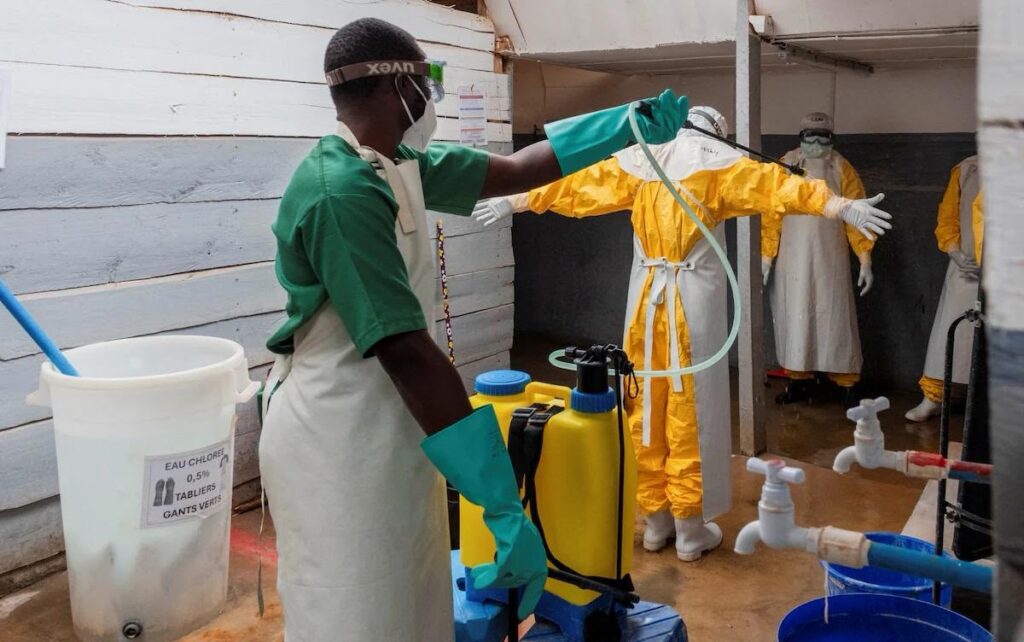
Containing the outbreak has been made harder by the humanitarian situation in eastern and northern parts of the country. Conflict and insecurity have restricted access for health teams, while displacement and limited access to basic services have complicated case detection, contact tracing, infection prevention and timely treatment. WHO has also warned that movement through formal and informal border crossings could facilitate further regional spread.
The outbreak has also affected Uganda, where cases linked to the same Bundibugyo virus outbreak have been reported. WHO has strengthened cross border surveillance and preparedness as the virus has moved closer to international borders. However, the organization continues to emphasize surveillance, early detection, contact tracing and community engagement as key measures for limiting further transmission.
The current outbreak began in 2026 and initially centred on the Mongbwalu health zone in Ituri Province. From there, transmission expanded to other parts of the country. WHO reported only 4,665 confirmed cases and 2,184 deaths as of August 12, showing the speed at which the outbreak grew over the following weeks.
With confirmed infections now above 8,000 and deaths nearing 4,000, the Democratic Republic of Congo is facing its most extensive Ebola outbreak on record. The continuing spread across dozens of health zones means the response remains focused not only on treating infected patients, but also on identifying cases early, monitoring contacts and preventing transmission between communities and across borders.
RELATED: