Faith Nyasuguta

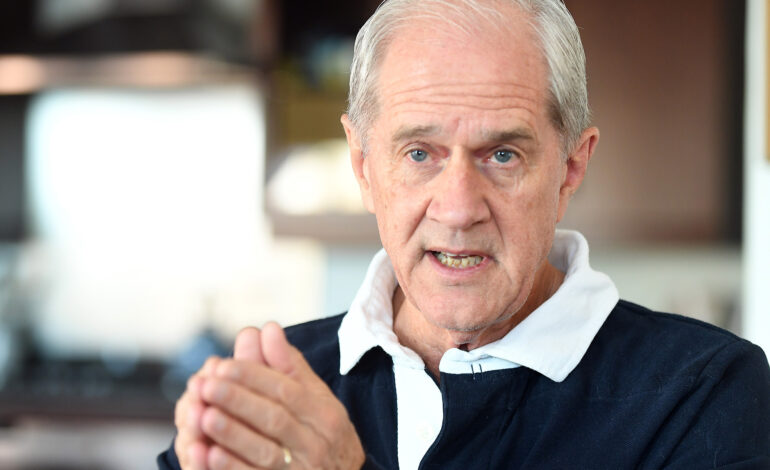
South Africa’s new ambassador to the United States, Roelf Meyer, has delivered one of Pretoria’s clearest rebuttals yet to claims that Afrikaners are facing a “white genocide”, telling the BBC that the alleged campaign of mass attacks against the country’s white minority “does not exist”. Meyer’s intervention is significant not only because he is now South Africa’s representative in Washington, but because he is himself an Afrikaner and was one of the key negotiators who helped dismantle apartheid and establish the democratic South Africa of 1994.
His argument is not that South Africa is safe or that violence against farmers is imaginary. His argument is that the country’s severe crime crisis should not be transformed into evidence of a racially targeted extermination campaign without evidence demonstrating such an intent. “I’m an Afrikaner from South Africa myself, and I can say that I’ve never experienced something of that kind,” Meyer said.

Who Is Roelf Meyer?

Meyer’s personal history makes his appointment particularly notable. He served as a senior National Party politician during the final years of apartheid and became one of the government’s chief negotiators during the negotiations that led to the end of white-minority rule. Across the negotiating table was Cyril Ramaphosa, then a senior African National Congress negotiator and now South Africa’s president.

The two men were central figures in the negotiations that produced the constitutional settlement and paved the way for Nelson Mandela’s election as South Africa’s first democratically elected president in 1994. Meyer later served in Mandela’s government as Minister of Constitutional Development. President Ramaphosa appointed him ambassador to the United States in April 2026, describing him as a “very loyal and patriotic South African” with extensive negotiating and mediation experience.
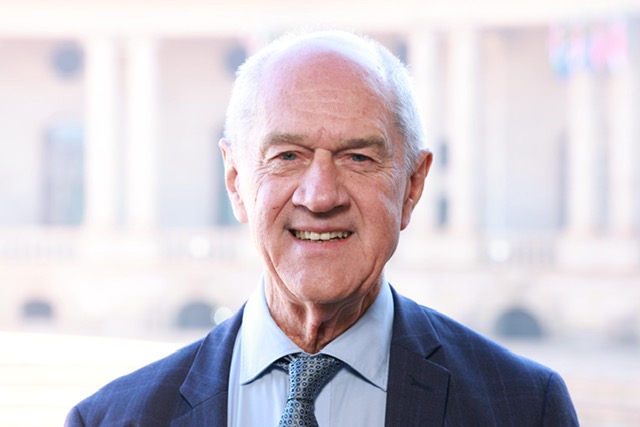
His appointment came after relations between Pretoria and Washington deteriorated sharply during Donald Trump’s second presidency. Former South African ambassador Ebrahim Rasool was expelled from the United States in March 2025 after Washington objected to remarks he had made about Trump and his political movement. Meyer arrived in Washington in May 2026 with a very different diplomatic task: rebuilding communication while challenging American claims about South Africa without allowing disagreements over crime, land reform and foreign policy to destroy broader economic and diplomatic ties. SABC reported that Meyer’s priorities include stabilising relations, countering what Pretoria regards as misinformation and protecting trade and investment links between the two countries.

The Claim That Triggered The Dispute
The “white genocide” controversy became a major diplomatic issue in February 2025, when Trump signed Executive Order 14204. The order accused South Africa of policies that allegedly discriminated against Afrikaners and directed the US government to halt assistance to South Africa while promoting the resettlement of Afrikaners who were described as victims of unjust racial discrimination. The order specifically referred to South Africa’s Expropriation Act and claimed that the law could be used to seize Afrikaner agricultural property without compensation.
South Africa rejected that characterization, arguing that land reform is rooted in the country’s history of colonial dispossession and apartheid, when Black South Africans were systematically denied land ownership and pushed into racially designated areas. The Expropriation Act does allow expropriation in the public interest and contains circumstances in which compensation can be zero, but that does not mean the government can simply seize farms because their owners are white. The law requires legal procedures and attempts at agreement, and Reuters reported in 2025 that there was no evidence of a government programme of violent land seizures targeting white farmers.
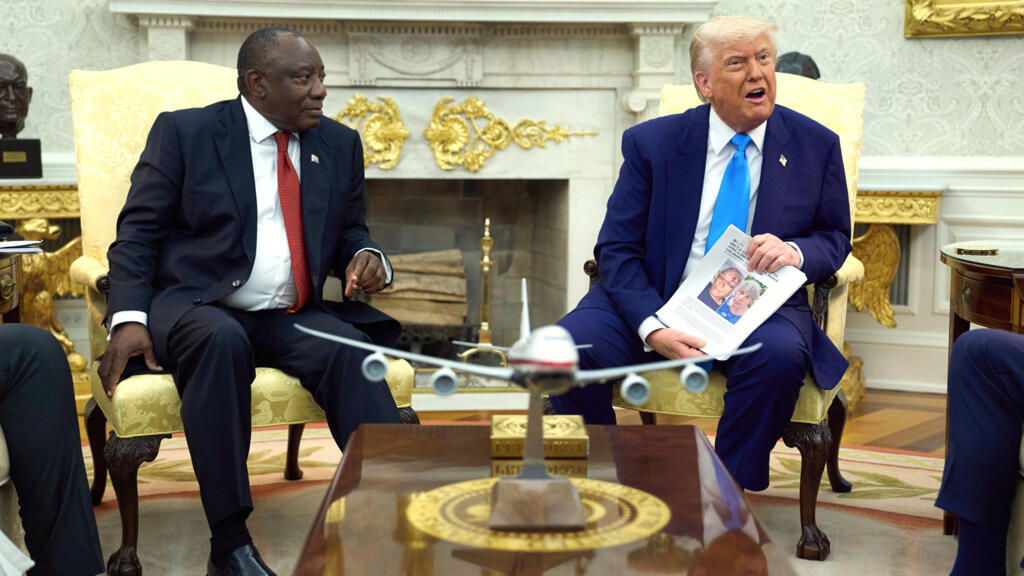
The dispute intensified in May 2025 when Trump hosted Ramaphosa at the White House and again raised allegations of persecution and genocide. Trump displayed material that was presented as evidence of attacks on white farmers, but fact-checking found major problems with some of the material, including an image of bodies that actually came from fighting in the Democratic Republic of Congo rather than South Africa. Reuters also reported that claims about “white genocide” were contradicted by the available crime evidence and expert assessments.
Data From South Africa Crime Crisis
South Africa does have an extraordinary violent-crime problem, and farm attacks are real. But the available evidence does not demonstrate a campaign aimed at destroying Afrikaners as a racial or ethnic group.
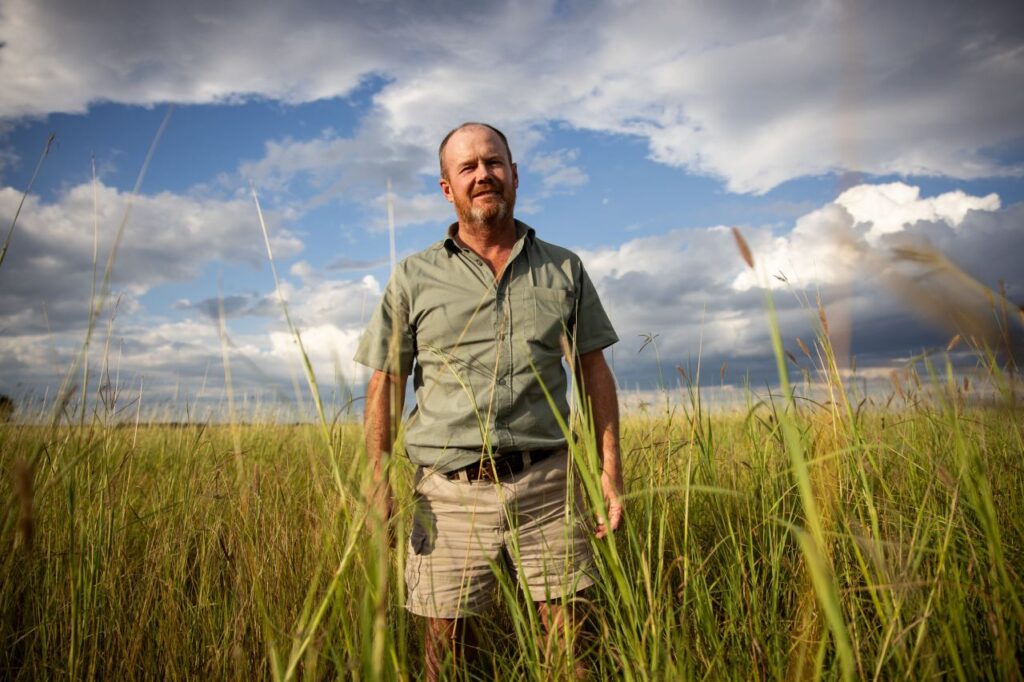
South Africa recorded 25,573 murders during the 2024/25 financial year, according to the South African Police Service. That was down 7.3% from 27,590 murders in 2023/24, but it still represented an enormous human toll. The latest quarterly figures available as of September 2026 show further improvement: between January and March 2026, 5,181 people were murdered, down 9.5% from 5,727 in the same quarter of the previous year. The police nevertheless stressed that this still amounted to approximately 58 murders every day.
The geography of that violence is also important. In the January–March 2026 quarter, Gauteng, Western Cape, Eastern Cape and KwaZulu-Natal accounted for more than 80% of recorded murders. But when population size is taken into account, the Eastern Cape had the highest murder rate at 14.3 per 100,000 people, followed by the Western Cape at 12.8 and KwaZulu-Natal at 8.8. Gauteng had a lower rate of 7.1 despite recording the largest number of murders.
That picture matters because South Africa’s violence is overwhelmingly a national crime problem rather than evidence of one racial group being systematically hunted. The country faces gang violence, organised crime, armed robbery, interpersonal violence, gender-based violence and murders connected to disputes and criminal activity. Statistics South Africa’s 2025/26 Victims of Crime survey also recorded more than 1.5 million incidents of housebreaking and an estimated 515,000 incidents of street robbery, illustrating how deeply insecurity affects ordinary households.
Farm Attacks Are Real
Rejecting the genocide claim should not mean dismissing the danger faced by people living and working in rural areas. Farm attacks remain a serious security issue, and organisations representing farming communities continue to document violent attacks.
AfriForum recorded 184 farm attacks and 29 farm murders during 2025, compared with 176 attacks and 37 murders in 2024. Its research found that 36% of the attacks recorded in 2025 involved what it classified as serious violent acts carrying a substantial risk of death. AfriForum also found that older people were particularly vulnerable, with people aged over 61 accounting for 54% of victims whose ages were known.
Those figures should be taken seriously, but they need to be placed alongside the broader national picture. Importantly, AfriForum’s numbers are independently compiled by the organisation and are not equivalent to the official SAPS national murder statistics. South African police statistics have also shown that victims of rural and farm-related crime are not exclusively white.
In the fourth quarter of the 2024/25 financial year, SAPS recorded six attacks involving people in farming communities: two farm owners, one farm dweller, two farm employees and one farm manager. In its analysis, the police said the victims included both Black and white people and specifically rejected the interpretation that the data demonstrated a racially targeted pattern.
That is the central distinction in Meyer’s argument: farm crime is real; genocide is a different claim requiring evidence of intent to destroy a racial, ethnic, national or religious group.
Afrikaner Representation Is More Complicated

South Africa’s white population is itself a small minority. Census 2022 found that Black Africans accounted for 81.4% of the population, coloured South Africans 8.2%, whites 7.3% and Indians/Asians 2.7%. The white share of the population has fallen from 11% in 1996 to 7.3% in 2022.
But that does not mean all white South Africans — or all Afrikaners — share the same political position. Afrikaner communities include farmers, professionals, business owners, workers, academics and people across the political spectrum. Some strongly support the government’s democratic settlement; others oppose aspects of land reform and affirmative-action policies. Some organisations have made the “white genocide” claim central to their international advocacy, while other Afrikaners have publicly rejected it.
Meyer’s intervention therefore carries a particular weight. He is not dismissing Afrikaners as outsiders or denying their concerns. He is saying that the problems facing his community should be addressed within the broader South African reality.
That position was especially clear when he criticised an Afrikaner lobby group’s recent vigil in Washington, where white crosses were used to highlight farm killings. Meyer said: “It doesn’t help us to raise a voice outside if we are not committed to doing something inside the country.” His message was that rural safety should be fought for through stronger policing and domestic action rather than by presenting South Africa internationally as a country engaged in racial extermination.
The US Refugee Program
Trump’s response to the alleged persecution has produced a policy with very real consequences. In February 2025, his administration created a pathway prioritising Afrikaners for refugee resettlement. In May 2026, the US increased the fiscal-year 2026 refugee ceiling to 17,500, with the additional places allocated to Afrikaners under the policy.
The programme has since become a major point of disagreement between Washington and Pretoria. The Trump administration has continued to argue that Afrikaners face racial discrimination and threats in South Africa, while Pretoria rejects the idea that they constitute a persecuted population requiring a special refugee pathway.
By September 2026, Washington had also announced plans to admit up to another 17,500 refugees in fiscal year 2027, with the majority expected to be Afrikaners. CBS reported that the State Department had notified Congress that the places would “primarily” go to Afrikaners.
Meyer wants that policy reversed. His position is that the United States should work with South Africa to fight the actual crime problem rather than build a refugee programme around a claim that Pretoria says is false.
A Different Message
There is something significant about Meyer’s intervention beyond the immediate argument with Trump. South Africa is not claiming that everything is fine. Its own police leadership says crime remains far too high even as murder rates have fallen. The government has also continued implementing its National Rural Safety Strategy, with 893 of 900 identified rural police stations — 99% — reported as having fully implemented the strategy by the end of the fourth quarter of 2024/25.
The more consequential message from Pretoria is that South Africa wants to define its own problems rather than have them defined abroad. That means acknowledging farm murders, gang violence, township crime and gender-based violence while rejecting the leap from those realities to a claim of racial extermination.
For Meyer, the diplomatic task is particularly delicate because he represents the whole country. “I represent all of South Africa,” is effectively the position behind his intervention: Black South Africans living with gang violence, white farmers facing attacks, coloured communities dealing with crime, Indian South Africans confronting insecurity and every other community affected by a national crisis.
There is also a broader historical irony. Meyer once sat across the negotiating table from Ramaphosa as South Africa moved away from a political system explicitly organised around race. More than three decades later, he is again in Washington trying to explain South Africa — this time against a narrative that Pretoria says reduces a complicated country to a racial conflict.
South Africa still has enormous problems to solve. Its murder rate remains exceptionally high, its rural communities need better protection and its land inequality remains one of the most difficult legacies of apartheid. But the latest crime data also shows measurable declines in murder and serious violent crime.
That is the South Africa Meyer is asking Washington to see: a country confronting a brutal crime problem, but not a country waging a racial extermination campaign.
RELATED: