Faith Nyasuguta

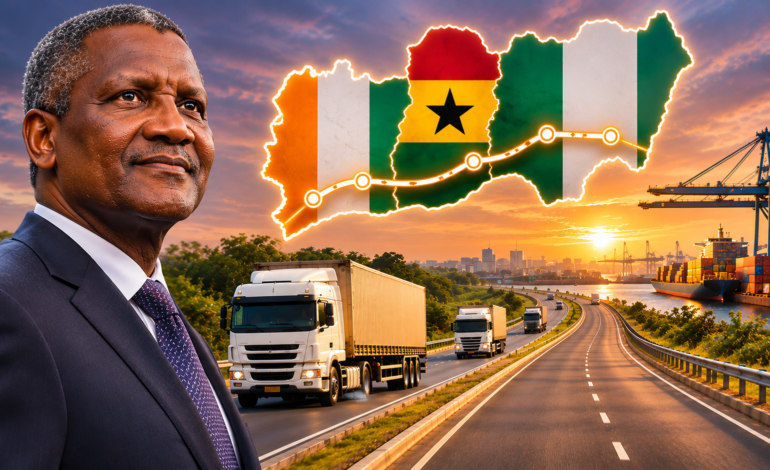
Africa’s richest man, Aliko Dangote, has proposed the construction of a 1,000-kilometre highway linking Nigeria, Ghana and Côte d’Ivoire, in an ambitious push to strengthen regional trade, accelerate industrialisation and improve economic integration across West Africa.
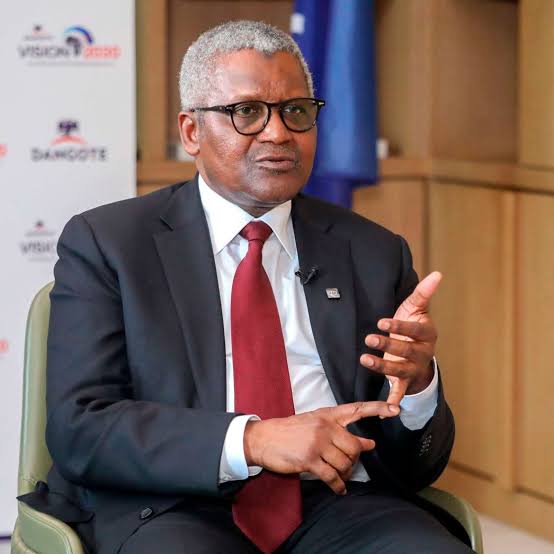
Speaking at the inaugural Invest in Ghana Summit in Accra on November 16, 2026, the Nigerian billionaire identified inadequate transport infrastructure as a major obstacle preventing African economies from realising their full commercial potential.

Dangote argued that improved connectivity between West Africa’s major economies could unlock significant business opportunities within the Economic Community of West African States (ECOWAS), whose market he estimated at approximately 450 million people.

The industrialist urged regional governments to prioritise the proposed road, which would also pass through Benin and Togo, creating a more efficient transport corridor connecting five coastal West African nations.

Unlocking West Africa’s Economic Potential
Despite decades of efforts towards regional economic integration, African businesses continue to face significant challenges when trading across national borders.

Poor road networks, lengthy customs procedures, transportation costs and administrative barriers frequently make moving goods between neighbouring African countries expensive and inefficient.
An improved highway connecting Nigeria, Ghana and Côte d’Ivoire could help address some of these challenges by reducing transportation times, lowering logistics costs and improving access to regional markets.
Nigeria offers an enormous consumer market and substantial industrial capacity, while Ghana and Côte d’Ivoire are important agricultural, manufacturing and commercial centres.
Connecting these economies more efficiently could strengthen regional supply chains, facilitate agricultural exports and encourage investment in manufacturing, warehousing and distribution facilities.
Small and medium-sized enterprises could also benefit from improved access to customers beyond their domestic markets.
Moving Africa From Consumption to Production
Dangote’s highway proposal forms part of his broader vision for transforming Africa from a continent heavily dependent on imported goods into a competitive centre of industrial production.
During the summit, the billionaire encouraged Ghana and other African countries to prioritise local manufacturing, arguing that excessive dependence on imports undermines employment creation, wealth generation and economic stability.
His message was that African entrepreneurs should view the continent’s interconnected markets as opportunities to expand production rather than limiting their ambitions to individual countries.
Dangote also outlined investment ambitions in Ghana’s agricultural sector, including sugar, rice and cocoa processing, reflecting his wider interest in strengthening domestic production and reducing dependence on imported commodities.
Efficient transport infrastructure would be particularly important in supporting these industries, allowing raw materials and finished products to move more easily between producers, processing facilities and consumers.
An Existing Regional Highway Initiative
Dangote’s proposal closely resembles the existing Abidjan-Lagos Corridor Highway Development Project, a major infrastructure initiative supported by ECOWAS and the African Development Bank.
The planned 1,028-kilometre, six-lane highway would connect Abidjan, Accra, Lomé, Cotonou and Lagos, linking major commercial centres, industrial zones and seaports. The project has already progressed beyond technical and feasibility studies into investment mobilisation, with regional governments working towards securing construction financing and acquiring the necessary land.
However, Dangote has not announced a separate financing arrangement, construction timeline or formal commitment to independently develop his proposed highway. His remarks appear to reinforce the urgency of improving connectivity along the same strategic regional corridor.
Building a More Connected Africa
The success of such infrastructure investments would depend not only on road construction but also on cooperation between governments, efficient border management, sustainable financing and the effective implementation of regional trade agreements.
Better transport networks could also complement the African Continental Free Trade Area by helping businesses translate preferential trading arrangements into practical commercial opportunities.
For West Africa, stronger regional connectivity represents an opportunity to expand industrial production, stimulate employment and retain more economic value within the continent.
Dangote’s proposal highlights a fundamental challenge facing Africa: abundant resources and substantial consumer markets cannot deliver their full economic potential without the infrastructure needed to connect them.
Can a 1,000-kilometre highway become the foundation of a more industrialised, interconnected and economically self-reliant West Africa?
RELATED: