Faith Nyasuguta

The African Union is stepping into one of the Horn of Africa’s most dangerous diplomatic moments, urging Ethiopia, Eritrea and Egypt to exercise maximum restraint as relations deteriorate and renewed fighting in northern Ethiopia threatens to pull neighbouring states into a wider confrontation.
In a statement issued on October 1, the African Union Commission said it was “closely following with concern” the heightened tensions among the three countries. It called on all sides to avoid actions or statements that could further escalate the situation and undermine regional peace and stability.

The AU’s message is significant because this is no longer simply a disagreement between governments. Ethiopia and Eritrea have severed diplomatic relations, Ethiopia and Egypt have expelled diplomats from each other’s countries, and fighting involving the Tigray People’s Liberation Front (TPLF) has once again turned northern Ethiopia into a potential regional flashpoint.

The Diplomatic Breakdown

The latest crisis accelerated on October 1, when Ethiopia announced the closure of its embassy in Asmara and ordered 10 Eritrean diplomats to leave within 48 hours, declaring them persona non grata.
Ethiopia accused Eritrea of “direct and indirect acts of hostility and belligerence” and said the diplomats were involved in activities it considered a threat to national security. Eritrea responded by severing diplomatic relations with Ethiopia altogether.

That means the two countries have moved from a serious political dispute to a formal diplomatic rupture. The consequences are substantial: embassies are important channels for communication, consular services and crisis management. Closing them removes one of the mechanisms governments can use to prevent disagreements from becoming military confrontations.
The Ethiopia-Eritrea rupture comes only eight years after the two countries dramatically reversed decades of hostility.
Back To Tension
Ethiopia and Eritrea fought a devastating border war from 1998 to 2000, after Eritrea’s independence from Ethiopia in 1993. Tens of thousands of people were killed.
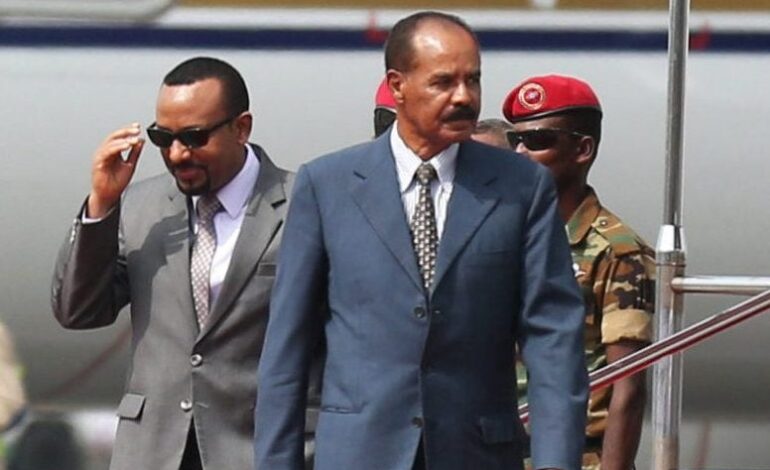
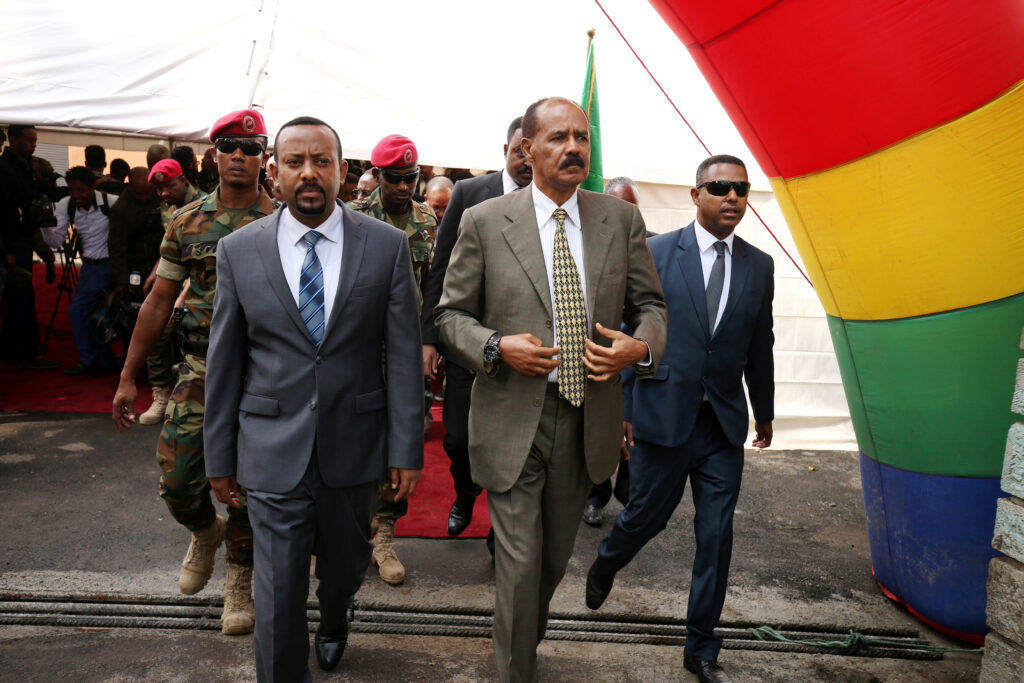
The relationship remained hostile for almost two decades before Ethiopian Prime Minister Abiy Ahmed and Eritrean President Isaias Afwerki signed a Joint Declaration of Peace and Friendship in 2018, restoring diplomatic relations.
The reconciliation was celebrated internationally and helped earn Abiy the 2019 Nobel Peace Prize, with the Nobel Committee recognising his efforts to achieve peace and international cooperation, particularly the rapprochement with Eritrea.
But the peace proved fragile. When war erupted in Ethiopia’s Tigray region in November 2020, Eritrean forces entered the conflict alongside Ethiopian federal forces against the TPLF. The war eventually produced a peace agreement in Pretoria, South Africa, in November 2022.
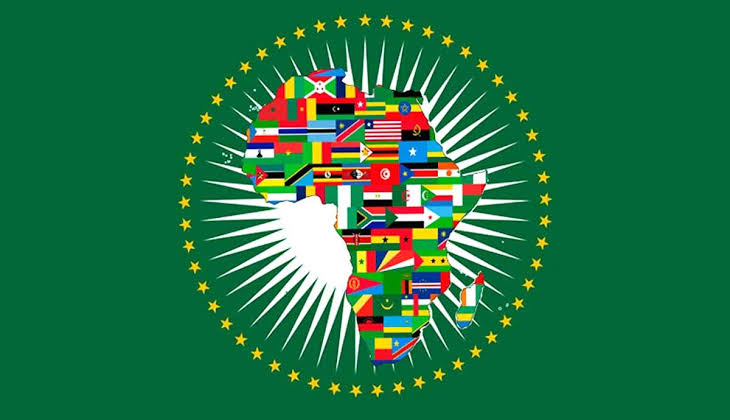
The African Union played a central role in that process. The AU now says the November 2, 2022 Pretoria peace agreement remains the cornerstone of sustainable peace, stability and reconciliation in Ethiopia. That makes the current fighting particularly concerning for the continental body.
Tigray At The Centre
Renewed fighting erupted in northern Ethiopia in September, with the TPLF again confronting federal forces.
The escalation has already become more serious than a conventional political dispute. The TPLF has joined a broader opposition alliance seeking to challenge Prime Minister Abiy’s government, while fighting has spread across parts of northern Ethiopia.
On October 4, government-aligned forces regained control of Mekelle, Tigray’s regional capital, after TPLF forces withdrew. The developments have raised fears that Ethiopia could be sliding back into a conflict resembling the 2020–2022 war.
That previous war caused enormous humanitarian suffering, with estimates of hundreds of thousands of deaths, mass displacement and widespread destruction. The danger now is that the conflict could acquire a regional dimension.
Ethiopia Accuses Neighbours
Addis Ababa has accused Eritrea, Egypt and Sudan of supporting the TPLF-led opposition alliance fighting federal forces. Those governments deny the allegations.
The accusation involving Egypt is particularly sensitive because Cairo and Addis Ababa already have a long-running dispute over the Grand Ethiopian Renaissance Dam (GERD) on the Blue Nile.
Ethiopia views the dam as central to its economic development and electricity generation. Egypt, whose population and economy depend heavily on the Nile, regards the project as a major water-security issue.
The military and diplomatic tensions surrounding Tigray therefore intersect with an older dispute over water, energy and regional influence.
Eritrea presents a different but equally sensitive issue: Red Sea access. Ethiopia is landlocked and has repeatedly stressed the strategic importance of securing reliable access to the sea. Eritrea controls a substantial Red Sea coastline, including the ports of Massawa and Assab.
Any dispute involving Ethiopian access to Eritrean territory or ports therefore carries enormous strategic weight.
The Egypt- Ethiopia Diplomatic Row
The deterioration has also reached Cairo. Ethiopia expelled an Egyptian diplomat, and Egypt responded by expelling an Ethiopian diplomat. The tit-for-tat expulsions came immediately after the Ethiopia-Eritrea diplomatic rupture.
For the AU, this is precisely the kind of escalation that could become dangerous if communication collapses. Diplomatic expulsions do not automatically mean war. But when they happen alongside active armed conflict, accusations of foreign intervention and competing military alliances, they can make negotiations considerably harder.
Why The AU Is Being Careful
The AU’s October 1 statement deliberately avoided assigning blame. Instead, it called on all three countries to exercise restraint and maintain communication.
That approach became even clearer after Egypt expressed concerns about the AU’s statement. On October 4, the AU Commission issued a clarification stressing its commitment to state sovereignty, national unity, territorial integrity and non-interference in internal affairs.
It also said its earlier statement was not intended to attribute responsibility for the developments to any neighbouring state. The Commission explained that its objective was to prevent misunderstanding, escalation and the widening of tensions.
This is important: the AU is positioning itself not as a prosecutor deciding which country is guilty, but as a continental institution trying to keep the crisis from becoming a larger war.
The AU’s Biggest Test
The African Union has experience mediating conflicts, but the Horn of Africa presents an unusually difficult challenge. The organisation must navigate Ethiopia’s internal conflict while maintaining relationships with Egypt and Eritrea — all AU member states with major strategic interests.
The AU is also operating in a region already dealing with Sudan’s devastating war, instability in Somalia, Red Sea security concerns and competition among regional and external powers.
A renewed Ethiopia-Eritrea confrontation could therefore affect far more than the two countries. It could disrupt trade, increase refugee movements, threaten border communities and complicate security cooperation across the Horn. That is why the AU is insisting on something deceptively simple: keep talking.
The Commission has said it is ready, in consultation with the countries involved, to support de-escalation, dialogue and peaceful resolution of differences.
The deeper lesson is that the 2018 Ethiopia-Eritrea peace deal did not erase the political, territorial and security disputes that had accumulated over decades. The Pretoria agreement similarly ended the major phase of the Tigray war but did not eliminate every regional tension surrounding it.
For Africa, the immediate priority is therefore preventing another conflict from becoming internationalised.
The AU’s position is clear: whatever the accusations, military escalation cannot be allowed to become the default answer. The Horn has already paid an enormous price for war. The continental body’s challenge now is to keep the latest crisis from making that price even higher.
RELATED: