Wayne Lumbasi

Islam is projected to overtake Christianity as the world’s largest religion by 2035, according to a new demographic study released by the Pew Research Center, pointing to a major shift in the global religious landscape. The findings show that although Christianity remains the world’s largest religious group, Islam is growing at a faster rate, with its population expected to reach approximately 2.57 billion by 2035, compared with 2.52 billion Christians. In 2020, the global Christian population stood at 2.27 billion, while Muslims accounted for approximately 2.02 billion people worldwide.
The growing Muslim population is largely attributed to higher birth rates and a relatively younger population. Between 2020 and 2025, Muslim women recorded an average fertility rate of 3.1 children, compared with 2.5 among Christian women and 1.6 among women from other religious groups. Researchers say these differences are expected to contribute significantly to the continued expansion of Islam over the coming decades, as younger populations enter their reproductive years and contribute to further population growth.

The study also examines the role of religious conversion, migration and people changing their religious affiliations. However, researchers found that conversion is not the main driver of Islam’s projected growth. Between 2020 and 2070, religious switching is expected to result in a net loss of approximately eight million people for Islam, compared with an estimated net loss of 105 million for Christianity. The difference in population growth is therefore largely linked to births and deaths rather than a mass movement of people from Christianity to Islam.

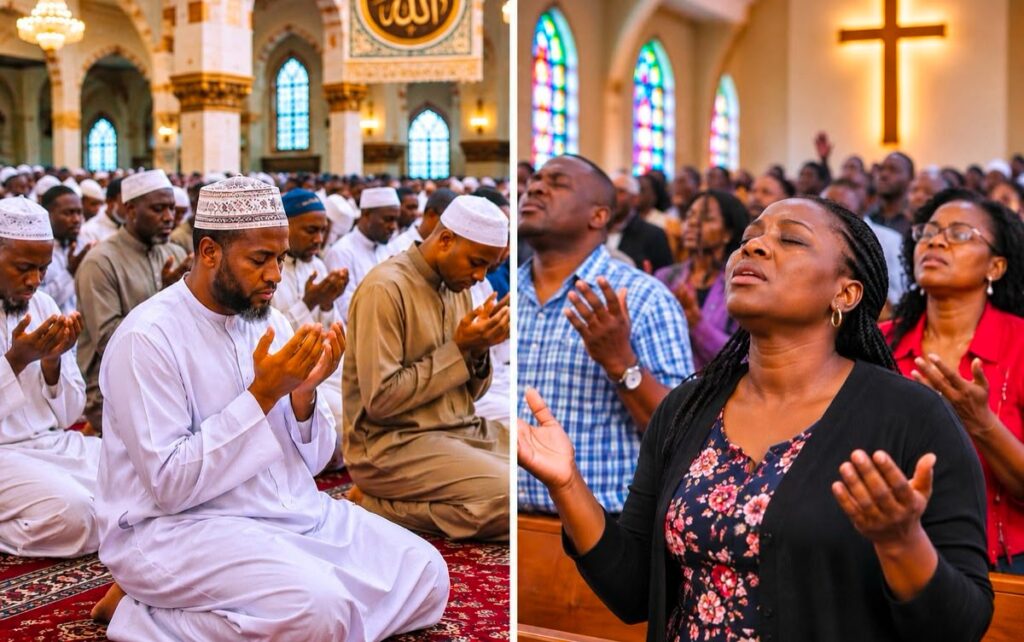
Africa is expected to play a significant role in the changing global religious balance, with sub-Saharan Africa projected to experience substantial growth in both Muslim and Christian populations. The region’s relatively young population, higher fertility rates and improving life expectancy are expected to contribute to the expansion of both faiths. Muslim numbers in sub-Saharan Africa are projected to increase by 166% between 2020 and 2070, while the Christian population is expected to grow by 129%. By 2070, more than half of the world’s Christians are projected to live in the region, highlighting Africa’s growing importance in the global religious landscape.

The projections further suggest that Pakistan could overtake Indonesia as the country with the largest Muslim population by 2070. Pakistan’s Muslim population is expected to increase from approximately 227 million in 2020 to 461 million, while Indonesia, which currently has the largest Muslim population, is expected to rank behind Pakistan. At the same time, the Democratic Republic of Congo is projected to experience significant Christian population growth, potentially overtaking the United States as the country with the largest number of Christians.
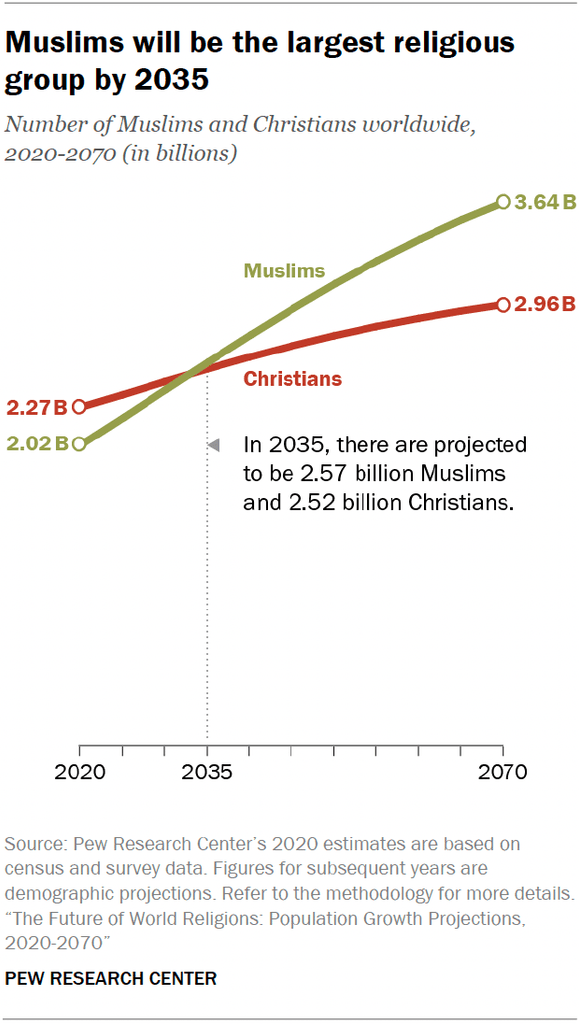
By 2070, the global Muslim population could reach approximately 3.64 billion, accounting for 36% of the world’s population, while Christians are projected to number about 2.96 billion, representing 29%. The study also forecasts changes among other religious groups, with Hinduism expected to grow in absolute numbers but decline slightly as a share of the global population, while Buddhism is projected to experience a decline in both population and global share. The proportion of people identifying as religiously unaffiliated is also expected to fall from 24% in 2020 to 17% by 2070.

Despite the projected change, Christianity is not expected to disappear, with its global population also projected to increase over the same period. Rather, the projections indicate that Islam is expanding at a faster pace, largely because of demographic differences between religious communities. The findings are based on population estimates, fertility rates, mortality, migration and religious switching across 201 countries and territories. Future changes in these factors could influence the eventual outcome.
RELATED: