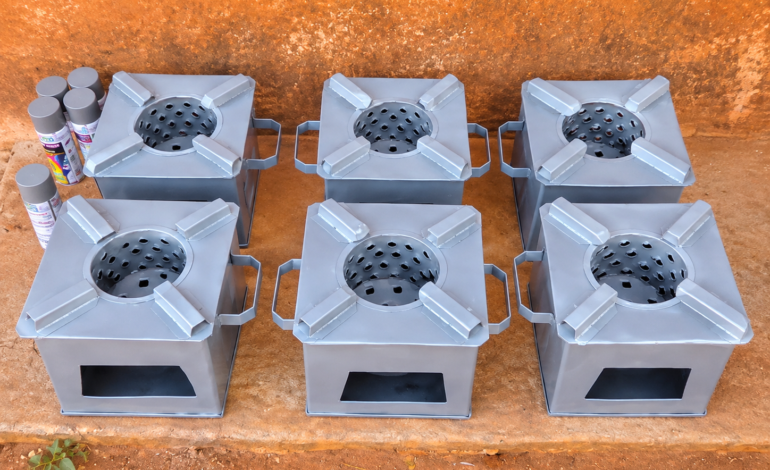
Faith Nyasuguta

Zambian inventor and entrepreneur Arnold Nyendwa is drawing attention to another locally developed cooking innovation: a charcoal-saving stove designed to reduce fuel consumption and household cooking expenses.
The latest model, the AFNON ECO charcoal stove, now available for purchase in Zambia, allows users to cook for between eight and 16 hours using a relatively small amount of charcoal.

The stove achieves 53% thermal efficiency and could reduce charcoal consumption by up to 50% compared with conventional charcoal stoves.

The metal stove features a square body, a perforated charcoal chamber, raised pot supports and two side handles for easier transportation. It is suitable for households, restaurants and small food vendors seeking to reduce their daily fuel expenses.
From the Juvin Stove to Local Manufacturing Ambitions
Nyendwa is no stranger to innovation. The founder of AFNON previously developed the Juvin Stove, a hybrid cooking appliance designed to operate using multiple energy sources, including gas, electricity and charcoal pellets.


His work attracted international recognition, including acknowledgement under the Solar Impulse Foundation’s efficient-solutions initiative. In early 2025, Zambian inventor Arnold Nyendwa officially broke ground on the Landmark Stove Factory in Kabwe, Zambia, marking a significant milestone in the country’s industrialisation and clean cooking sector.
The $16 million to $20 million project is designed to become Africa’s largest stove manufacturing facility, with plans to produce up to one million stoves monthly, create 2,500 to 3,000 jobs, and export approximately 80% of its production to African and international markets.
However, the latest charcoal-saving stove’s availability does not, by itself, establish that the proposed factory has been completed or reached its intended production capacity.
Can This Stove Change Everyday Cooking?
For many African households, charcoal remains an important cooking fuel despite its environmental and health implications. A stove that genuinely reduces charcoal consumption could lower household expenses and improve efficiency for small food businesses.
The charcoal-saving stove delivers 53% thermal efficiency, directing more heat towards cooking while reducing fuel consumption by up to 50% compared with conventional charcoal stoves.
Designed to provide eight to 16 hours of cooking using a small amount of charcoal, the stove offers a practical solution for households, restaurants and small-scale food businesses seeking to reduce their daily expenses.
Its efficient design concentrates heat around the cooking pot, improving cooking performance while reducing fuel waste and smoke emissions.
As with all charcoal-burning appliances, proper ventilation remains essential because charcoal combustion produces carbon monoxide. Beyond household savings, the innovation demonstrates how African ingenuity and local manufacturing can address everyday challenges, reduce dependence on imported technologies and create new economic opportunities.
Where to Buy the Charcoal-Saving Stove
The charcoal-saving stove is now available in Zambia. Customers can purchase the stove for household or commercial use, with bulk orders and delivery services available.
For pricing, orders and delivery arrangements, contact:
📞 Call/WhatsApp: +260 978 164 322
The stove represents another step forward for Zambia’s growing innovation and manufacturing sector, bringing locally developed cooking solutions closer to households and businesses.

As African innovators develop technologies that make everyday life more affordable, could locally manufactured solutions like this transform cooking across the continent?
RELATED: