Njoki Kangethe

The True Cost of Consumption- Part 3
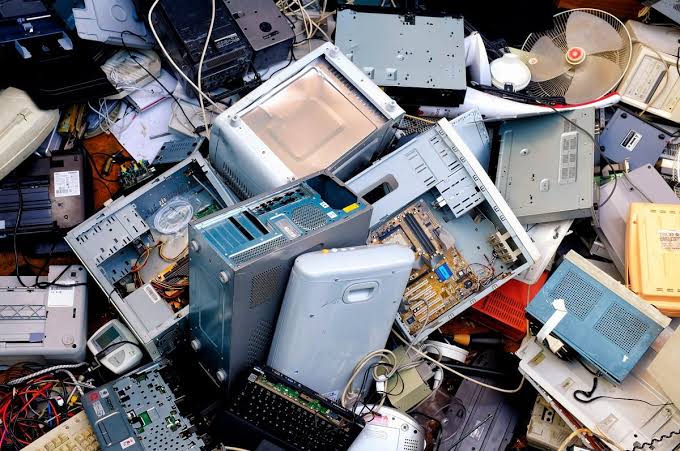
Has your smartphone ever stopped charging suddenly? My aunt’s did a few days ago, and she said, ‘Ah! I’m going to dispose this one!’ What happens when a laptop slows down? A television develops a fault, and replacing it seems easier than finding someone to repair it. A newer model arrives with a better camera, faster processor or a feature that makes last year’s device feel suddenly inadequate. The old one is placed in a drawer, passed on, sold or discarded, joining millions of other electronic products at the end of their useful lives.

This is the less visible side of the digital economy. The devices that make modern life more connected, productive and convenient are also creating one of the world’s fastest-growing waste streams. From smartphones and computers to refrigerators, televisions, batteries and solar panels, electronic products are being discarded at a pace that collection and recycling systems are struggling to match.

The scale is considerable. According to the Global E-waste Monitor 2024, the world generated approximately 62 million tonnes of electronic waste in 2022, equivalent to an average of 7.8 kilograms per person. Only 22.3 per cent was documented as formally collected and recycled in an environmentally sound manner. E-waste generation is growing almost five times faster than documented formal recycling, and projections suggest that annual volumes could reach 82 million tonnes by 2030 if current trends continue.

The challenge goes beyond the fact that some people own too many gadgets. It is that the global electronics industry has become exceptionally good at manufacturing and selling new devices, but has not built equally effective systems for keeping existing ones in use.
The Cost Begins Long Before Disposal

An electronic device carries an environmental footprint long before it reaches a shop. Its production depends on the extraction and processing of metals, minerals, plastics and other materials, followed by energy-intensive manufacturing, assembly and international transportation. A smartphone, for example, may contain dozens of different elements and materials sourced through supply chains spanning several countries. The minerals used in its components may be extracted in one region, processed in another, assembled elsewhere and eventually sold in markets thousands of kilometres away. Each stage requires energy, water, labour and infrastructure.
The global distribution of these activities also means that the benefits and costs of the electronics economy are not always experienced in the same places. Consumers enjoy the convenience of finished products, while communities near mining and processing operations may experience land degradation, water pollution and pressure on local resources. Workers throughout the supply chain face different occupational and environmental risks.
When a device is discarded prematurely, the resources and environmental costs invested in producing it are effectively cut short. Replacing a functional phone or laptop does not erase the footprint of the original manufacturing process. It creates demand for another production cycle, including the extraction and processing of additional materials.
This is why extending the useful life of electronics matters. Repairing a device, replacing a battery or upgrading a component can delay the need for a new product and reduce demand for virgin materials. The environmental value of repair is therefore not limited to the item kept out of a landfill; it also lies in the production that may no longer be necessary.
An Uneven Global Waste Map
Although electronic waste is a global problem, its generation and management are unevenly distributed. The Global E-waste Monitor 2024 found that Asia generated approximately 30 million tonnes of e-waste in 2022, nearly half the global total. Europe generated the most per person, at 17.6 kilograms, followed by Oceania at 16.1 kilograms and the Americas at 14.1 kilograms. Africa generated an estimated 2.5 kilograms per person.
The differences become even more striking when formal collection and recycling are considered. Europe documented the highest collection and recycling rate, at 42.8 per cent, followed by Oceania at 41.4 per cent and the Americas at 30 per cent. Asia recorded 11.8 per cent, while Africa documented just 0.7 per cent.
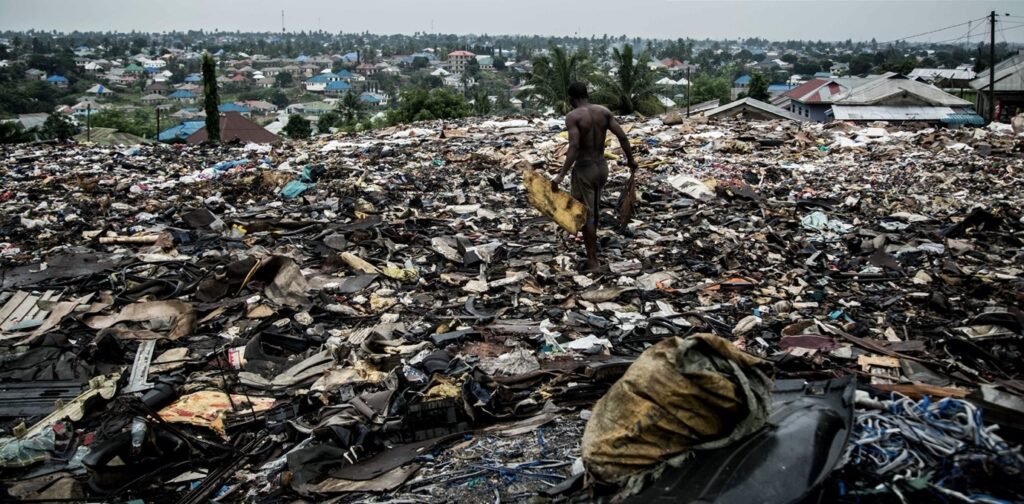
These figures reflect differences in infrastructure, regulation, investment and collection systems, as well as the scale of consumption. They also show why a single global solution cannot adequately address the problem. Countries generating large volumes of electronic waste need effective collection and recycling systems, while countries with limited infrastructure face the challenge of managing growing volumes without exposing workers and communities to additional risks.
International trade complicates the picture further. Electronics are routinely moved across borders as new products, used goods and equipment intended for repair or resale. Some of this trade supports access to affordable technology and extends the useful lives of devices. However, shipments declared as second-hand equipment may also contain products that are already obsolete or beyond economical repair.
The Global E-waste Monitor estimates that approximately 5.1 million tonnes of used electrical equipment and e-waste moved between countries in 2022. Of this, about 3.3 million tonnes involved uncontrolled movements from high-income to middle- and low-income countries. This creates an important distinction between legitimate trade in working second-hand electronics and the movement of waste under the label of reusable goods. The former can help bridge the digital divide; the latter can transfer disposal costs and environmental risks to countries with fewer resources to manage them.
The issue is particularly relevant to African markets, where second-hand electronics remain an important route through which households, schools and small businesses access computers, phones and other equipment. The answer cannot be to treat all used electronics as waste. It must be to ensure that products entering these markets are functional, repairable and supported by systems that can manage them responsibly at the end of their lives.
When Repair Becomes The Harder Option
One of the biggest contributors to electronic waste is the shrinking useful life of consumer devices. Technological progress is not inherently problematic; faster, more efficient and more capable equipment can deliver significant benefits. The difficulty arises when product design, commercial incentives and consumer expectations encourage frequent replacement rather than maintenance and repair.
Some devices are difficult or expensive to repair because components are sealed, batteries are difficult to replace, spare parts are unavailable or repairs require specialised tools and software. In other cases, a relatively inexpensive component failure can make an entire device uneconomical to fix. Software updates and compatibility requirements may also affect how long older products remain useful.
There is a commercial incentive behind this pattern. Manufacturers earn revenue from selling new products, while repairability can extend the period before a customer needs another device. This does not mean every manufacturer deliberately designs products to fail, but it does raise questions about whether durability and repair have received the same attention as product innovation, marketing and sales.
Governments are beginning to respond. In the European Union, the Right to Repair Directive, adopted in 2024, began applying through national legislation on 31 July 2026. It seeks to make repair easier and more accessible for consumers, including by requiring manufacturers to repair certain products covered by EU repairability requirements and improving access to repair services and spare parts. Such measures recognise that consumers cannot make sustainable choices when products are unnecessarily difficult to repair or when replacement is consistently more convenient and affordable. Similar principles could inform product policies and consumer protection frameworks in other regions, adapted to local markets and repair economies.
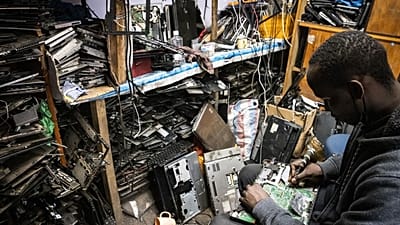
Repair is also an economic opportunity. Across many African, Asian and Latin American cities, independent technicians, small workshops and informal businesses already extend the lives of phones, computers, household appliances and other equipment. These enterprises provide affordable services, create livelihoods and keep valuable materials in circulation. Supporting them through training, access to spare parts, appropriate tools and safer working environments could make repair a more competitive alternative to replacement.
The Human Cost of Discarded Technology
When electronics are not properly managed, their environmental consequences extend well beyond the disposal site. Many devices contain substances such as lead, mercury and other potentially hazardous materials. When discarded equipment is dismantled, burned or processed under unsafe conditions, these substances can enter the air, soil and water. Informal recycling may recover valuable materials, but crude techniques can expose workers and surrounding communities to serious health risks.
The World Health Organization has warned that unsafe e-waste recycling and disposal can release hazardous chemicals, with children and pregnant women particularly vulnerable. Its 2024 fact sheet also highlights the risks faced by millions of women and child workers involved in informal recycling activities globally. It is important, however, not to reduce informal recyclers to the problem itself. In many places, they are part of the system that makes material recovery possible, often collecting, sorting and dismantling equipment that formal waste management networks do not reach. The challenge is to improve working conditions and integrate these workers into safer, better-supported systems rather than simply excluding them.
There is also a considerable economic opportunity being lost. Electronic devices contain recoverable materials, including copper, gold, iron and other valuable metals. The Global E-waste Monitor estimated that metals embedded in the world’s e-waste generated in 2022 were worth approximately US$91 billion. Yet much of this resource value is lost when equipment is dumped, poorly dismantled or processed inefficiently.
Recovering these materials can reduce the need for virgin mining, create employment and strengthen local recycling industries. But doing so requires investment in collection, sorting, safe processing technologies and markets for recovered materials.
Building an Electronics Economy That Lasts
International policy is beginning to acknowledge that electronic waste cannot be managed through disposal systems alone. The Basel Convention’s e-waste amendments, which took effect on 1 January 2025, expanded controls on the transboundary movement of electronic waste. They brought all e-waste shipments covered by the amendments under the Convention’s prior informed consent procedure, strengthening the oversight of international movements.
At the national level, extended producer responsibility policies are also being used to require manufacturers and importers to take greater responsibility for products at the end of their useful lives. These approaches can help finance collection and recycling, but they need clear targets, enforcement and transparent reporting to deliver meaningful results.
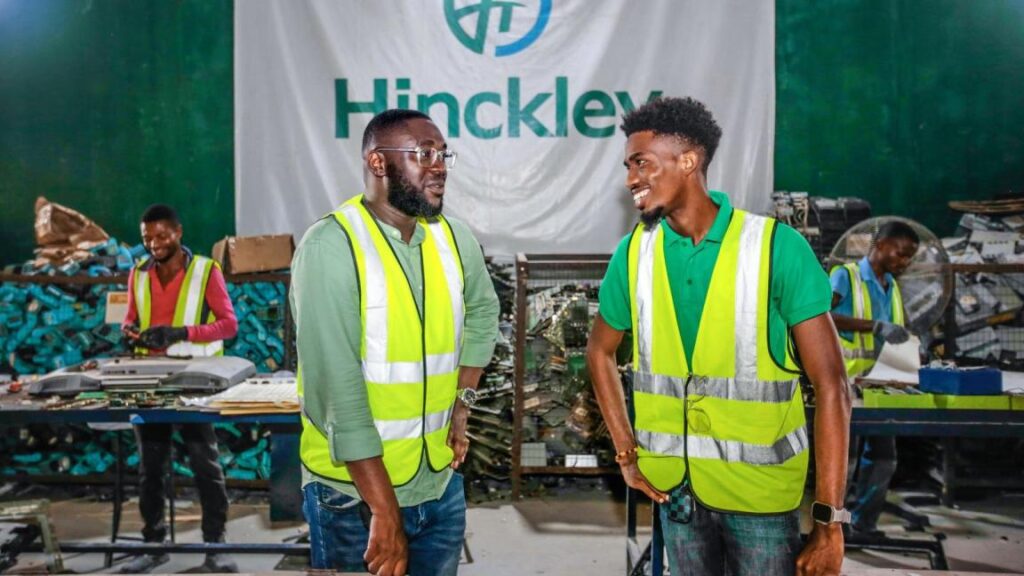
Businesses, too, have a role beyond meeting regulatory requirements. Manufacturers can design products for durability, repair and easier disassembly. Retailers can establish take-back programmes, while technology companies can expand refurbishment and resale models. Organisations replacing equipment can prioritise repair, responsible procurement and certified disposal rather than treating old devices as an afterthought.
For consumers, keeping a device for longer, repairing it where practical, buying refurbished equipment and using recognised collection channels can all make a difference. However, responsibility should not rest entirely on individual purchasing decisions. The systems that determine product design, availability of spare parts, repair costs and disposal options are largely shaped by manufacturers, retailers and policymakers.
The digital economy has transformed how people communicate, learn, work and do business. Its benefits are undeniable, particularly in regions where access to technology can unlock opportunities that were previously out of reach. But technological progress should not be measured only by how quickly new products reach the market. It should also be measured by how responsibly materials are sourced, how long products remain useful and what happens when they are no longer needed.
A phone should not become a waste simply because a newer model has arrived. A laptop should not be discarded because a repair is deliberately made inaccessible. And a country’s development should not come at the cost of becoming a dumping ground for another’s obsolete technology.
The next phase of the electronics economy must move beyond the cycle of extracting, manufacturing, selling and discarding. It must make durability, repair, reuse and responsible recovery part of the business model itself. After all, the most advanced device is not necessarily the one with the newest features. It may be the one designed to remain useful for much longer.
References
• Baldé, C.P. et al. (2024). The Global E-waste Monitor 2024. UNITAR and International Telecommunication Union. Read the report.
• International Telecommunication Union (2024). The Global E-waste Monitor 2024: Key Findings. Read here.
• World Health Organization (2024). Electronic Waste (E-waste). Read here.
• Basel Convention (2025). E-waste Amendments: Questions and Answers. Read here.
• European Commission (2026). Directive on Repair of Goods. Read here.
RELATED: