Faith Nyasuguta

Russian President Vladimir Putin has launched a renewed diplomatic and economic offensive across Africa, promising stronger trade relations, industrial investment and a partnership he insists will be different from those offered by Western powers.
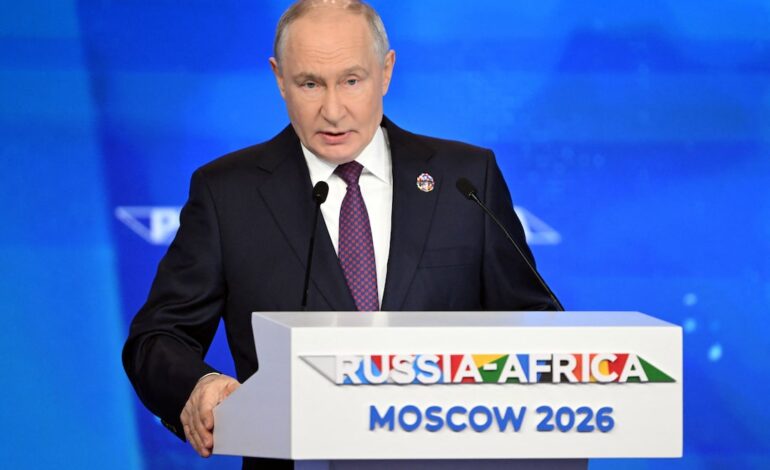
Speaking at the third Russia-Africa Summit in Moscow on Wednesday, October 28, 2026, Putin addressed representatives from 48 African countries, including 22 heads of state. His message was unmistakable: Russia wants a bigger role in Africa’s economic future.

Putin accused Western governments of using debt and restrictive financial arrangements to maintain influence over African economies. He argued that such practices have prevented countries from fully benefiting from their natural resources. However, he offered no specific examples of the countries or financing agreements behind those accusations.

The Russian leader insisted that Moscow’s approach would prioritise cooperation rather than exploitation, promising investment that would allow African nations to retain more value from their resources.
Grain Becomes Russia’s Diplomatic Currency
Food security featured prominently in Putin’s pitch, reflecting Russia’s growing importance as a supplier of agricultural commodities to African markets. According to the Russian president, Moscow delivered approximately 13 million tonnes of agricultural products to Africa during the first nine months of 2026.
He said more than 40 African countries already receive Russian grain and fertiliser, with additional supplies expected as Moscow expands its agricultural partnerships. Kremlin figures indicate that Russia exported more than 18 million tonnes of grain to African markets in 2025. Fertiliser shipments reportedly increased from 1.5 million tonnes in 2025 to over 2.2 million tonnes in 2026.
For African economies grappling with food inflation, rising production costs and dependence on imported wheat, these supplies offer potential relief. Yet they also demonstrate how agricultural trade can become an important source of diplomatic influence.
The challenge for African governments is ensuring that access to affordable food does not translate into excessive dependence on a single foreign supplier.
Putin Promises Factories Instead Of Raw Material Exports
Beyond agriculture, Moscow is presenting industrial development as a central pillar of its proposed partnership with Africa. Putin pledged Russian participation in projects that would process African raw materials locally, potentially creating jobs, expanding manufacturing capacity and increasing government revenue.
The proposals cover mining, energy, nuclear technology, transportation, agriculture and digital infrastructure. For African countries seeking to move beyond exporting unprocessed commodities, such investments could support longstanding industrialisation ambitions.
Many resource-rich nations continue to sell raw materials abroad while importing higher-value manufactured products. Expanding domestic processing could help reverse that imbalance.
However, the economic impact will depend on whether proposed projects secure financing, transfer technology and generate sustainable employment. Without implementation, the announcements risk becoming another collection of ambitious summit commitments.
Russia’s Trade Numbers Tell A Different Story
Despite the expansive promises, Russia’s economic footprint in Africa remains modest compared with that of other major international partners. According to Kremlin figures, trade between Russia and African countries exceeded $27 billion in 2025. That figure remains significantly below the $40 billion target Putin established during the first Russia-Africa Summit in 2019.
The approximately $13 billion shortfall highlights the distance between Moscow’s diplomatic ambitions and its commercial performance. The contrast becomes even clearer when measured against Africa’s other trading relationships.
Trade between Africa and the European Union reached approximately $395 billion in 2025, while China-Africa trade stood at around $348 billion, according to figures cited by Chatham House.
Russia has nevertheless recorded growth in certain sectors. The value of its agricultural exports to Africa reportedly rose by 35% during the first half of 2026, reaching $2.9 billion. These gains suggest expanding commercial opportunities, although Russia remains far behind Africa’s largest trading partners.
Africa’s Growing Importance In Global Power Politics
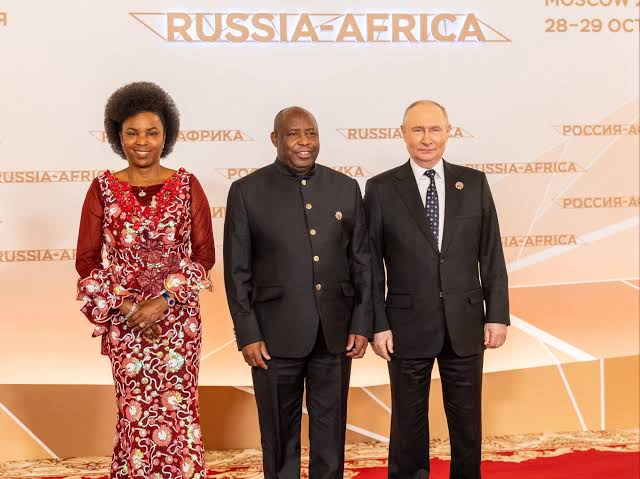
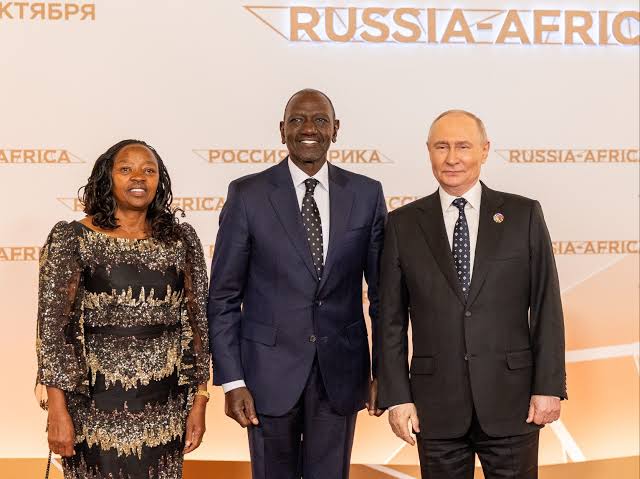
The Moscow gathering also carries significant diplomatic implications. Attendance increased to 22 African heads of state, compared with 17 at the 2023 summit. However, participation remains below the 43 leaders who attended the inaugural Russia-Africa Summit in Sochi in 2019.
For Putin, the gathering provides an opportunity to strengthen international relationships while Russia faces Western sanctions over its invasion of Ukraine. Moscow is also seeking cooperation in strategic minerals, energy infrastructure and technology, sectors attracting growing interest from China, Europe and the United States.
Putin additionally endorsed stronger African representation at the International Monetary Fund and World Bank, aligning his message with calls for reform of global financial institutions. He highlighted educational cooperation, saying approximately 40,000 African students are currently enrolled at Russian universities.
Can Africa Turn Russia’s Promises Into Real Gains?
For African governments, Moscow’s proposals could create opportunities to diversify trading relationships, attract investment and strengthen domestic industries. But diplomatic attention does not automatically produce economic transformation.
The decisive questions concern financing, implementation, local ownership and the long-term benefits of proposed agreements. Russia’s grain exports provide an established commercial relationship, but many of its wider industrial and infrastructure commitments still require tangible results.
As global powers compete for access to African markets and resources, governments across the continent have an opportunity to negotiate partnerships that deliver greater domestic value.
Putin has made his pitch. The real test is whether Africa gains factories, jobs and economic independence, or simply another set of promises from a powerful foreign partner.
RELATED: