Faith Nyasuguta

Jamaica has received its first group of migrants deported from the United States under President Donald Trump’s controversial third-country deportation programme, raising fresh questions about why African and Caribbean nations are increasingly being enlisted to accommodate individuals with no direct ties to their territories.
Jamaica Receives First Deportation Flight

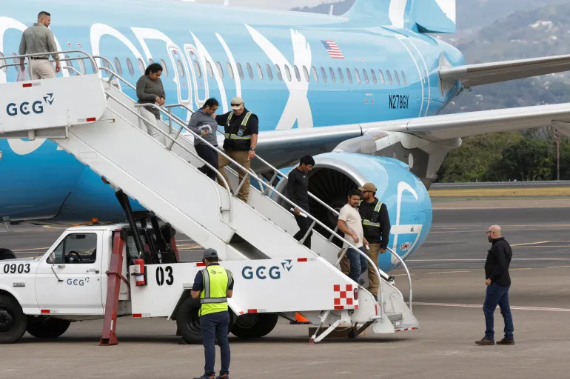
On Tuesday, 13 October 2026, 22 migrants arrived at Norman Manley International Airport in Kingston, marking the beginning of Jamaica’s participation in Washington’s expanding third-country deportation programme.

The group, comprising adults including seven women, was reportedly made up predominantly of South American nationals. Following their arrival, they were transported under police escort to an undisclosed location.

Unlike conventional deportations, which return individuals to their countries of citizenship, third-country deportations involve transferring migrants to countries where they may have no family, citizenship or previous residence.
Jamaica signed a memorandum of understanding with Washington in June 2026, agreeing to serve as a temporary transit destination before migrants are transferred to their countries of origin or other receiving states.

Under the arrangement, Jamaica will accept a maximum of 25 individuals every two weeks, with arrivals expected to receive temporary landing permission for up to 90 days.
Why Is Washington Turning To Africa & The Caribbean?
Jamaica’s participation adds another Caribbean destination to a programme that has increasingly involved African nations. Countries including Eswatini, South Sudan, Ghana, Rwanda and Equatorial Guinea have featured in US third-country deportation arrangements.
According to Third Country Deportation Watch, at least 35 countries have entered into agreements with Washington. A September investigation by The Washington Post revealed that the Trump administration had authorised or pledged at least $410 million to facilitate deportation arrangements involving 31 countries by the end of June 2026.
The investigation also documented extensive US diplomatic efforts across Africa to persuade governments to accept migrants who were not their citizens. This raises an important question for African governments: What diplomatic, economic or strategic considerations justify accepting responsibility for migrants removed from the United States?
While individual governments may have different reasons for participating, the terms of several agreements remain undisclosed, making their potential benefits and obligations difficult to assess.
Jamaica Defends Agreement Amid Criticism
Jamaican authorities insist the arrangement is temporary, lawful and designed to facilitate onward repatriation. The government maintains that individuals with criminal records will not be accepted and that the International Organization for Migration will oversee accommodation, logistical support and onward transfers.
Officials have also assured citizens that Jamaican taxpayers will not finance the programme. The agreement includes a provision suspending the arrangement if ten transferred individuals apply to remain in Jamaica through asylum or other humanitarian procedures.
However, opposition leaders have criticised the government’s refusal to disclose the agreement. Fitz Jackson, the opposition spokesperson on national security, has demanded parliamentary scrutiny, questioning the security arrangements, accommodation facilities and potential legal liabilities.
Foreign Minister Kamina Johnson Smith has defended the government’s negotiations, explaining that Washington has not agreed to make the memorandum public.
The controversy has intensified concerns about transparency and whether citizens should have access to agreements carrying potential national security and humanitarian implications.
Human Rights Report Exposes African Deportation Concerns
The expansion comes amid disturbing findings concerning deportations to African countries. In a report published on 8 October 2026, Human Rights Watch revealed that US immigration authorities transferred 536 individuals to African third countries between January 2025 and August 2026.
The organisation documented concerns involving arbitrary detention, mistreatment and inadequate protection against further deportation to dangerous destinations.
On 8 October, outlets also reported that a US federal judge had ordered the Trump administration to facilitate the return of an Egyptian national deported to Equatorial Guinea, where he was subsequently detained.
The case illustrates the legal and humanitarian risks associated with transferring migrants to countries where they have no established connections.
Human rights organisations argue that such arrangements can undermine safeguards intended to prevent individuals from being returned to places where they face persecution.
Is Africa Becoming America’s Immigration Burden Destination?
For Africa, the growing number of deportation arrangements raises broader questions about sovereignty, diplomatic influence and the responsibilities of governments towards their citizens.
Critics question whether African countries are being encouraged to assume immigration enforcement responsibilities primarily serving Washington’s domestic political objectives.
The financial commitments associated with these agreements have also prompted scrutiny over whether participating governments receive compensation, diplomatic concessions or other benefits.
However, the existence of financial arrangements does not establish that every participating country receives direct payments.
The Trump administration maintains that its deportation policies are intended to enforce US immigration laws. Nevertheless, the involvement of countries facing their own economic, security and humanitarian challenges continues to generate debate.
A Growing Test
Jamaica’s first deportation flight represents more than another development in Washington’s immigration crackdown. It highlights the expanding international consequences of US immigration policy and the difficult decisions confronting African and Caribbean governments.
As more countries participate, questions surrounding transparency, financial accountability, migrant protection and national sovereignty are becoming increasingly urgent.
For Africa and the Caribbean, the central question remains: Why should countries with limited resources assume responsibility for migrants who have no established connection to their territories, and what do their governments receive in return?
RELATED: