Njoki Kangethe

When we talk about forests, we tend to count trees. We talk about hectares of forest cover, numbers of seedlings planted, tonnes of timber harvested and the percentage of land covered by trees. These measurements are useful, particularly in a country like Kenya where increasing forest cover has become an important national target. But they can also make forests seem much simpler than they really are.
A forest is not simply a large collection of trees standing in one place. It is a functioning system in which trees, soil, water, plants, animals, fungi, insects and people interact over time. Its value is partly found in the things we can take from it, such as timber, fuel, food and medicinal plants, but much of its value comes from what happens when we leave it alone. Forests hold water, protect soil, store carbon, support biodiversity and regulate ecological processes that most of us never see.

This is one reason the debate around Kenya’s forests cannot be reduced to how many trees are cut down or planted each year. We need to ask a more difficult question: what exactly are forests doing for us while they are standing?

Kenya’s forest cover is estimated at 8.83 per cent of the country’s land area, according to the 2021 National Forest Resources Assessment, while tree cover stands at 12.13 per cent. The country has committed to increasing forest cover to at least 10 per cent, and the government has made tree growing and restoration central to its environmental agenda.Those targets matter. But if we are serious about understanding forests, the number of trees is only the beginning of the conversation.

The Water Inside The Forest
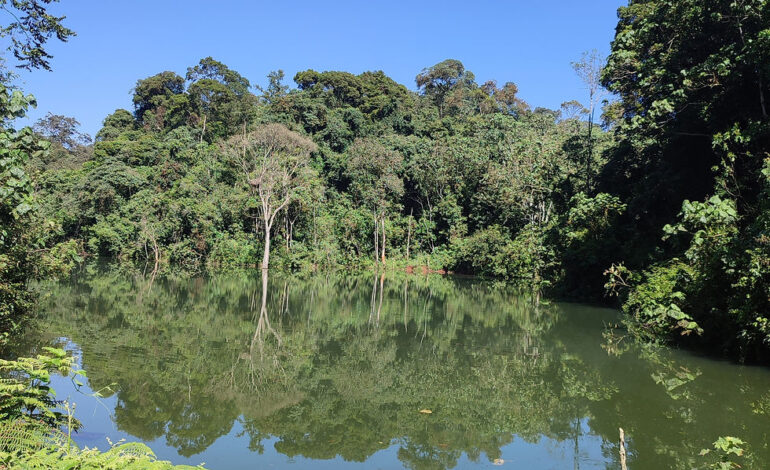
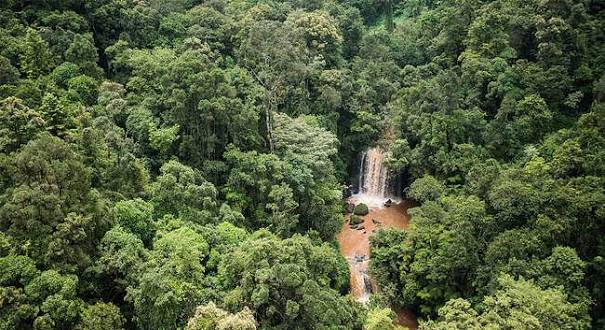
Perhaps nowhere is the hidden value of forests more apparent than in water. Kenya’s major forests include landscapes that act as water towers, capturing rainfall and regulating the movement of water through the environment. Forest soils absorb and store water, while vegetation slows runoff and helps reduce erosion. Water that might otherwise rush rapidly across the landscape can infiltrate the ground and feed springs, streams, rivers and groundwater systems.

The relationship is not as simple as saying that forests ‘create’ rain or that every tree automatically increases water availability. Different forests, soils, landscapes and tree species interact with water in different ways. But functioning forest ecosystems are important components of watersheds, helping regulate how rainfall moves through a landscape.
The economic value of this service is considerable. A Kenya Forestry Research Institute study examining the Mau, Cherangany Hills and Mount Elgon forest ecosystems estimated their combined ecosystem services at approximately KSh339 billion per year. Regulating services, which include functions associated with water and environmental regulation, accounted for the largest share of the estimated value in all three ecosystems.
That figure is striking partly because most of us do not pay a forest directly for providing these services. We pay water companies, farmers, businesses and governments. We pay for infrastructure. We pay for treatment and distribution. But the forest upstream is quietly participating in the system. This is why degradation of a water tower can eventually become a problem far beyond the boundary of the forest itself.
The Mau Forest Complex provides an especially useful example. Research under the UN Environment Programme’s TEEBAgriFood initiative found that different land-use scenarios in the Mau produce dramatically different economic returns when ecosystem services are included. An enhanced forest scenario was estimated to generate US$1,816 per hectare per year, compared with US$300 under a business-as-usual scenario. A carbon-farming scenario was estimated at US$2,493 per hectare per year. The study also projected that restoration could help recover significant areas of forest and sections of rivers that have dried up.
The point is not that forests should be reduced to a monetary calculation. Quite the opposite. The figures illustrate how much economic activity can depend on ecological functions that are rarely reflected in conventional accounting.
What About Soil?
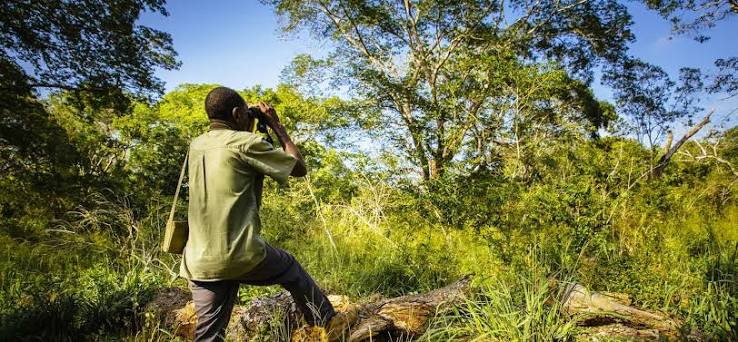
Water is only part of the story. Walk through a forest and it is easy to see the trees but much harder to appreciate what is happening underneath them. Roots hold soil together. Fallen leaves and other organic material become part of the forest floor. Microorganisms break down this material and cycle nutrients back into the ecosystem. The soil, in turn, supports the vegetation that maintains the system.
When forest cover is removed, rainfall reaches exposed ground differently. On steep slopes, increased runoff can carry soil downhill. Over time, this can contribute to erosion and sedimentation in rivers and reservoirs. For agriculture, this matters enormously. Soil is one of those resources that appears abundant until it begins to disappear. A farmer can replace fertilizer. Rebuilding soil structure and fertility after severe degradation is considerably more difficult.
Forests therefore perform a kind of natural infrastructure function. They protect landscapes in ways that would otherwise require engineered interventions, and they do so continuously, without electricity, fuel or maintenance crews.That does not make forests a substitute for dams, drainage systems or other infrastructure. It means that natural and built infrastructure are often working alongside each other, whether our budgets recognise it or not.
The Biodiversity We Barely Notice
Then there is everything living inside the forest. Kenya’s forests contain an enormous variety of plants and animals, including species found nowhere else. The Kenya Forest Service describes the country’s forest ecosystems as having high species richness and endemism, contributing to Kenya’s status as one of the world’s megadiverse countries.
Globally, the relationship between forests and biodiversity is even more significant. The Food and Agriculture Organization estimates that forests are home to the majority of terrestrial biodiversity, while its work on sustainable forest management notes that forests provide habitat for approximately 80 per cent of amphibian species, 75 per cent of bird species and 68 per cent of mammal species.
Biodiversity can sometimes sound like a distant conservation concern, something belonging to wildlife documentaries rather than ordinary economic life. It is not.
The plants, insects, birds, fungi and microorganisms in an ecosystem perform functions that support agriculture, water systems and human health. Some species pollinate crops. Others disperse seeds. Some contribute to soil formation and nutrient cycling. Forests also contain genetic resources that may eventually prove useful for food, medicine or other purposes that we cannot yet anticipate.
This is one of the uncomfortable realities of destroying an ecosystem: we can measure the trees we have removed, but we may have no way of knowing what biological relationships we have disrupted.
Forests In a Hotter World
The climate conversation makes this even more complicated.Forests absorb and store carbon in their vegetation and soils, making them important components of efforts to address climate change. At the same time, climate change is placing forests under greater stress. The FAO’s State of the World’s Forests 2024 warns that rising temperatures and changing climatic conditions are increasing the vulnerability of forests to wildfires, pests and diseases.
This creates something of a feedback loop. Forests help societies cope with climate change, but the changing climate can make forests themselves less resilient. A degraded forest may be less capable of regulating water, storing carbon, supporting biodiversity or recovering from drought and fire. The condition of the ecosystem matters, not merely the number of trees standing in it. This is also why restoration requires more thought than planting seedlings.
A newly planted landscape may eventually become a functioning forest, but that transformation takes time. The species composition matters. The age structure matters. The soil matters. Water availability matters. Wildlife needs habitat and corridors. Communities need to be able to live alongside and benefit from the restored landscape. A forest cannot be manufactured overnight.
What Are We Actually Counting?
Perhaps the biggest problem is that the things we measure most easily are not necessarily the things that matter most. We can count seedlings and hectares. We can calculate tonnes of timber and record the value of forest products sold in a market. These figures are useful because they give policymakers something tangible to work with.
But the most important contribution of a forest may be something that never appears on a receipt. It is the water that continues flowing, the soil that stays on the hillside, the species that continue reproducing, the carbon that remains stored, the farmer whose land is protected from erosion, the community that gathers medicinal plants or honey, and the city downstream that continues receiving water.
The Forest Conservation and Management Act recognises this broader understanding of forests. Kenya’s forest law assigns the Kenya Forest Service responsibilities that include managing public forests, supporting forest management plans and managing water catchment areas in relation to soil and water conservation, carbon sequestration and other environmental services. It also establishes public participation and community involvement as guiding principles for forest management.
That is an important starting point because it recognises something that our everyday language often forgets: forests are infrastructure. They are natural infrastructure, but infrastructure nonetheless. The challenge is to make that understanding meaningful in the decisions that determine what happens to them. If a forest is valued only for the timber that can be removed from it, then cutting it down can look economically rational. If its water, biodiversity, soil, carbon and livelihood functions are included in the calculation, the picture becomes much more complicated.
And perhaps that is the conversation Kenya needs to have as it tries to increase its forest cover while simultaneously developing its timber industry. We should certainly count the trees. But we should also count what the trees are doing, because a forest’s greatest contribution may be the part that cannot be carried away on a truck.
RELATED: