Faith Nyasuguta

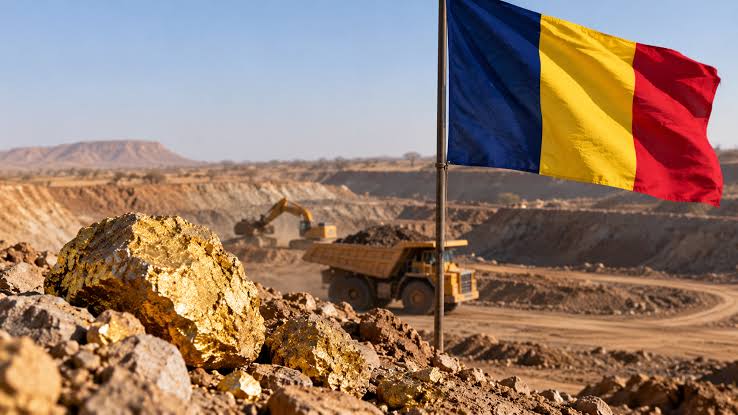
Chad has suspended the granting of new mining prospecting authorisations across the entire country, placing all new exploration applications on hold until further notice.
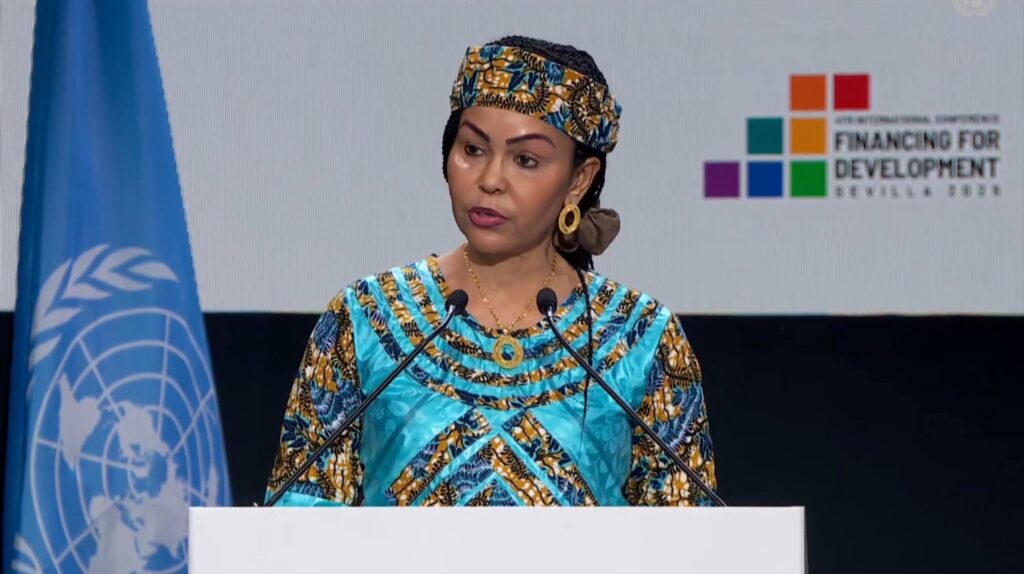
The decision was signed by Mines, Petroleum and Geology Minister Fatima Haram Acyl through Ministerial Order No. 064, and communicated to mining companies and other sector players in a circular dated September 11. The suspension applies to new applications for prospecting rights; it does not mean that existing mines have been ordered to stop operating.

The government has not announced when the freeze will end or provided a detailed public explanation for the timing. But the decision comes as Chad is reassessing how it manages its mineral wealth and works on changes to its mining framework. That makes the move bigger than a temporary administrative pause.

Across Africa, governments are increasingly asking a fundamental economic question: if a country owns the minerals, how much of the wealth created from those minerals should actually remain in that country?
For decades, much of Africa’s mining model has been built around attracting foreign capital to discover and extract resources, with minerals then exported into international supply chains where the most lucrative stages—refining, processing, manufacturing, trading and financing—often happen elsewhere.
That model generated foreign investment and government revenues, but it also left many mineral-rich economies dependent on exporting relatively low-value raw materials. The new wave of African mining policies is increasingly attempting to change that equation.
Why Chad Is Looking More Closely At Gold
Chad remains overwhelmingly dependent on oil. According to the U.S. Geological Survey, hydrocarbons accounted for 76% of Chad’s total export value and 41% of government revenues in 2024. Non-fuel minerals were still a relatively small part of the formal economy, and reliable production statistics for gold remain difficult because much of the sector is artisanal and informal.
Yet gold is becoming increasingly important. A World Bank analysis of Chad’s 2023 trade profile found that crude petroleum represented about 69% of goods exports, while gold accounted for approximately 37%. The figures illustrate the country’s unusual dependence on two major commodities at the same time: oil remains dominant, but gold has become too economically significant to treat as a peripheral activity.
The informal nature of much of Chad’s gold industry makes the numbers even more significant. USGS data citing Chad’s Extractive Industries Transparency Initiative reports estimated artisanal gold production at 1,699 kilograms in 2021 and 8,254 kilograms in 2022, while reliable national production estimates for 2023 and 2024 were unavailable. In other words, the country has substantial gold activity without necessarily having a complete picture of where all the gold is being produced, traded and exported.
Authorities have reported 324 gold exploitation sites in 2024 and announced plans for four gold-processing plants. The objective is not simply to extract more gold but to increase the amount of value created inside Chad before the resource leaves the country.
That distinction is key. Gold that is mined, processed, refined, assayed, certified and transformed domestically can generate more economic activity than gold simply extracted and shipped elsewhere. It can support laboratories, refineries, engineering companies, transport, financial services, jewellery manufacturing, skilled employment and government revenue.
Chad’s suspension of new prospecting rights therefore arrives at an important point in the country’s economic evolution. Before issuing more exploration licences, the government has an opportunity to examine who receives those rights, under what conditions, how long they can hold them, what they must invest, what happens when they fail to develop a concession, and how much of the eventual value must remain in Chad.
This Is Happening Across Africa
Chad is not acting in isolation. One of the clearest examples is Mali, another major African gold producer. On November 28, 2022, Mali suspended the allocation of mining titles across the country while it worked to improve the system for issuing and monitoring licences.
The suspension lasted more than two years. In March 2025, Mali partially lifted the moratorium after what its government described as major work to clean up the mining cadastre—the official registry of mining rights. But new mining titles and transfers of exploration permits remained excluded from the reopening.
Mali subsequently implemented a new mining code adopted in August 2023. The code increased the potential state stake in new mining projects: the government could take an initial 10% interest, with an option for another 20%, while a further 5% could be allocated to local private interests. That potentially raised state and Malian private participation in new projects to 35%, compared with up to 20% under the previous framework. The 2024 implementing regulations also strengthened local-content requirements and restricted companies from holding excessive exploration rights in the same areas.
Mali’s experience also demonstrates that resource sovereignty can produce serious disputes. In 2025, tensions between the government and international mining companies, including Barrick, escalated over taxes, contracts and implementation of the new mining regime. Barrick temporarily suspended operations at its Loulo-Gounkoto complex after the government seized gold amid the dispute.
The lesson is important: greater state control can increase national revenue, but if reforms are unpredictable, poorly negotiated or aggressively implemented, they can also frighten investors and disrupt production.
Ghana
Ghana provides another important example because it is Africa’s leading gold producer and is increasingly trying to capture more of the gold value chain domestically.
In 2025, Ghana created the Ghana Gold Board, or GoldBod, giving the institution extensive authority over the purchase, sale, weighing, grading, assaying, valuation and export of gold and other precious minerals. Ghana’s presidency explicitly described the reform as an attempt to establish national sovereignty over the country’s mineral wealth and move the industry from raw extraction toward value addition.
The strategy has since moved further. From September 1, 2026, Ghana requires gold doré purchased under specified arrangements to be refined in Ghana before export. GoldBod says no unrefined doré will receive export approval after that date.
This is the same underlying philosophy appearing in Chad: control the resource before it leaves the country.
Ghana is also trying to increase domestic participation in mining services. In 2025, new rules required surface mining to be conducted by wholly Ghanaian-owned firms and underground mining by companies with at least 50% Ghanaian ownership. In 2026, regulators directed major international miners including Newmont, AngloGold Ashanti and Zijin to transition operations to local contractors by the end of the year or face sanctions.
Zimbabwe & Raw Materials
Zimbabwe has taken perhaps one of Africa’s clearest approaches to mineral beneficiation. In December 2022, the government banned exports of unprocessed lithium-bearing ore, arguing that the country should not simply ship lithium out while foreign companies capture the higher-value stages of the supply chain.
The policy has since evolved. Zimbabwe’s national development strategy says the country intends to move beyond lithium concentrate toward lithium salts and eventually battery-related materials. It plans to phase out lithium concentrate exports by January 2027, subject to development of domestic processing capacity. The government is also targeting greater beneficiation of platinum-group metals.
The DR Congo
The Democratic Republic of Congo provides an even bigger example because it controls an extraordinary share of the world’s cobalt supply.
On February 22, 2025, the DRC suspended cobalt exports for four months in an attempt to deal with global oversupply and extremely low prices. The government also indicated that greater domestic processing was part of its longer-term strategy.
The DRC’s own government later described the measure as part of a broader effort to restore the sovereignty and integrity of the mining sector, with the ultimate objective of gaining greater control over the cobalt value chain rather than remaining simply a supplier of raw material.
The move had global consequences because the DRC is responsible for roughly 70% of global cobalt production. Prices rose sharply after the suspension, demonstrating something Africa has historically struggled to achieve: the ability to influence global commodity markets rather than simply absorb their prices.
But it also exposed the risk. If a country restricts exports without developing sufficient domestic processing capacity, stockpiles can accumulate, investors can hesitate and competing producers can gain market share.
Africa’s Mineral Moment
The movement extends beyond gold and cobalt. Africa holds roughly 30% of the world’s mineral reserves, according to recent estimates, yet the continent accounts for only about 10% of global mineral revenues. That gap explains why governments are increasingly pursuing local processing, export controls, state participation and domestic value addition.
The competition is also no longer simply between Africa and foreign mining companies. It is happening within a much larger global scramble.
The United States, China, Europe, India, Gulf states, Japan, Australia and other investors are all seeking secure access to minerals needed for batteries, electronics, defence systems, renewable energy and advanced technologies. China remains particularly dominant in mineral processing, while Western governments are trying to diversify supply chains.
That gives African governments greater bargaining power—but only if they use it strategically.
Guinea is trying to move further into aluminium processing rather than remaining overwhelmingly a bauxite exporter. More than 70% of its bauxite exports have historically gone to China, while the government is now discussing alumina refining and broader industrial investment.
Rwanda, meanwhile, is pursuing mineral processing partnerships, including a 2026 tungsten venture in which the country will hold a 25% ownership stake.
Kenya is also positioning itself around critical minerals, including the potentially significant Mrima Hill deposit, while seeking investment that could support domestic processing rather than simply exporting mineral-bearing material.
The common thread is not that Africa is closing itself to foreign investors. In fact, African countries still need enormous amounts of foreign capital, technology, expertise and infrastructure. The posture is changing from “How do we attract investors?” to “What kind of investment do we want, and what does Africa receive in return?”
Chad’s Freeze Could Be a Reset
That is ultimately what makes Chad’s September 2026 decision worth watching. The country has not nationalised its mining industry. It has not banned gold mining. It has not told existing investors to leave. Instead, it has temporarily stopped new prospecting applications while its mining framework is being reviewed.
That gives Chad a window to strengthen its mining cadastre, improve geological information, prevent speculative licence holding, establish clearer investment obligations and potentially negotiate stronger local-content, taxation, environmental and processing requirements.
But sovereignty cannot simply mean government ownership or higher taxes. True mineral sovereignty requires knowledge, geological data, regulatory capacity, transparent contracts, skilled workers, local companies, processing infrastructure, reliable electricity, transport networks, financial systems and the ability to enforce environmental standards.
Otherwise, a country can own the mineral underground while still losing most of the economic value above ground.
Chad’s gold story therefore fits into a much larger African transformation. From Mali’s mining-code overhaul to Ghana’s GoldBod, Zimbabwe’s lithium restrictions and the DRC’s cobalt intervention, governments are challenging the old model in which Africa supplied raw materials while other parts of the world captured the highest-value stages.
The opportunity is enormous. So is the responsibility.
RELATED: