Faith Nyasuguta

Jamaica is taking the fight for slavery reparations to an unlikely place: Britain’s own legal system.
For decades, the debate over reparations has been trapped between moral arguments and political resistance. Caribbean governments have demanded apologies. Activists have documented the wealth built through slavery. Former colonial powers have expressed regret—while largely avoiding the far more consequential question of compensation.

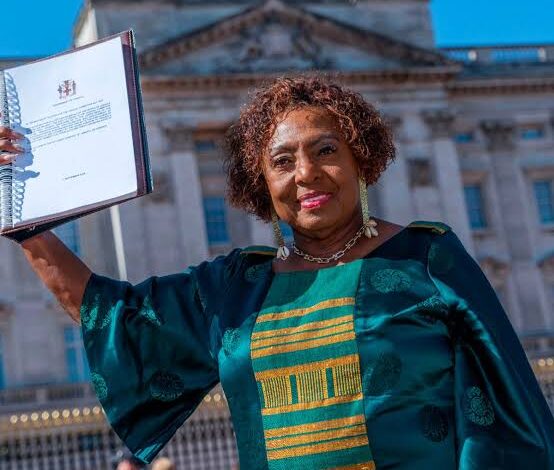
Now Jamaica is trying a different route. A delegation led by Culture Minister Olivia Grange (Pictured) travelled to London and formally filed a petition to King Charles III, asking for three fundamental questions about slavery and Britain’s legal responsibility to be referred to the Judicial Committee of the Privy Council, Jamaica’s highest court of appeal. The petition does not make a monetary claim. At least, not yet.

Instead, Jamaica is attempting something potentially more significant: moving reparations from the arena of political sympathy into the arena of legal accountability. The concern is no longer simply whether slavery was morally wrong. The question Jamaica wants examined is far more uncomfortable: Was Britain legally responsible—and if so, does that responsibility carry consequences today?

Three Questions. One Historical Reckoning
Jamaica wants the Privy Council to consider three central questions surrounding the transatlantic trafficking and chattel enslavement of Africans.

First: Was the forced transportation and enslavement of Africans in Jamaica lawful under English law?
Second: Did the system violate international legal principles?
And third: Does the United Kingdom have a legal obligation to provide restitution or another form of redress?
These are not ordinary political questions. They strike at one of the foundations of Britain’s historical defence against reparations: the argument that slavery, however morally abhorrent today, was legal at the time.
Jamaica is challenging that assumption. The petition asks Britain’s legal establishment to examine whether a system that kidnapped, transported, bought and sold human beings was ever legally defensible under the principles Britain itself claims to uphold.
That makes this more than another diplomatic appeal. It is an attempt to force a legal confrontation with the architecture of the empire.
UN Changed The Global Conversation
Jamaica’s move comes months after a major development at the United Nations. On March 25 the UN General Assembly adopted a resolution declaring the transatlantic trafficking of enslaved Africans and racialised chattel enslavement to be “the gravest crime against humanity.”
The resolution, spearheaded by Ghana and supported by the African Union and CARICOM, passed with 123 votes in favour, three against and 52 abstentions. The resolution is not legally binding. It does not automatically force Britain, France, Portugal or any other former colonial power to pay reparations. But politically and historically, it represents a major change.
The international community has moved further away from treating slavery as merely an unfortunate chapter that ended centuries ago. Instead, the resolution explicitly connects the crime to its enduring consequences and calls for reparatory justice. For Jamaica, that creates new momentum. The country is not walking into Britain’s legal and political institutions alone. It is doing so at a moment when African and Caribbean governments are increasingly coordinating their demands for historical justice.
Britain Paid The Slave Owners
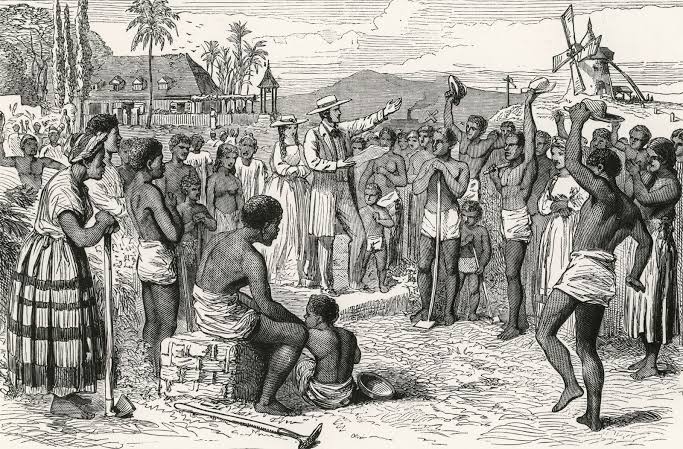
Perhaps the most extraordinary fact in the reparations debate is this: When Britain abolished slavery across much of its empire in the 1830s, the British government paid enormous compensation. But the money did not go to the people who had been enslaved. It went to the people who had owned them.
The British government paid £20 million to compensate slave owners for the loss of what the law had treated as “property.” Enslaved Africans received nothing. The consequences of that decision remain central to the modern reparations argument. Britain helped finance the end of slavery. But it financially protected those who had profited from it. That historical contradiction is difficult to escape.
The descendants of enslaved people inherited societies shaped by centuries of extraction. The descendants of institutions that benefited from slavery inherited capital, infrastructure and wealth.
This is why reparations advocates insist that the debate cannot be reduced to asking modern British citizens to personally pay for crimes committed centuries ago. Their argument is about states, institutions, accumulated wealth and historical advantage.
Was Slavery Really “Legal at the Time?”
This may be the most important legal ground. British governments have often argued that historical events should be understood according to the laws and circumstances of their own time. This simply means – You cannot apply twenty-first-century law to the eighteenth century.
Jamaica’s petition challenges the assumptions behind that argument. The legal question is not whether modern international law condemns slavery. Everyone agrees that it does. The deeper query is whether the kidnapping and chattel enslavement of Africans was genuinely lawful even under the legal principles that existed at the time.
The petition reportedly seeks legal consideration of English law, international law and Britain’s potential responsibility to provide redress. It does not guarantee that Jamaica will win a reparations case. Nor does the filing automatically create a legal obligation for Britain to pay compensation.
But it could force a level of legal examination that political leaders have spent decades avoiding. And that may be precisely the point.
Not Just About Money
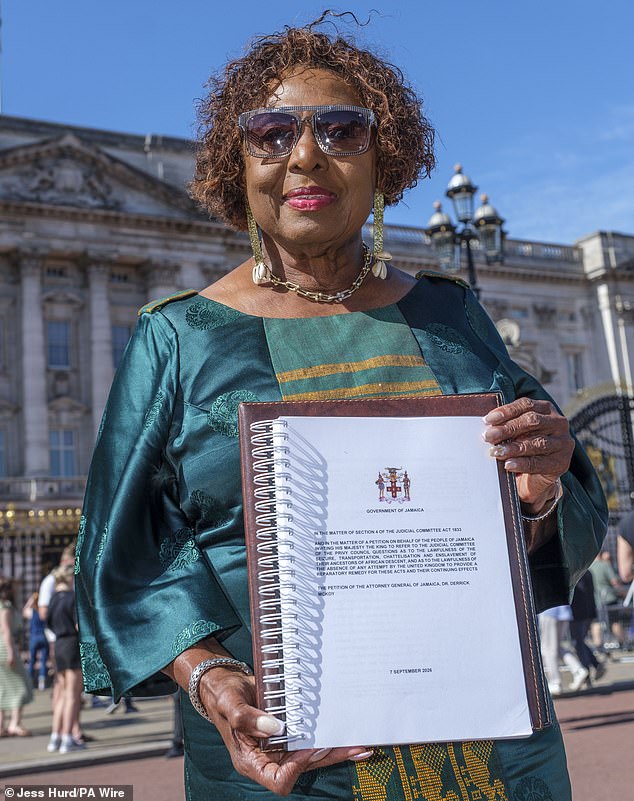
/ PA/
Jamaica has emphasised that its petition is not currently a direct demand for a financial settlement. That is important because reparatory justice is often deliberately reduced to one question: “How much money does Britain owe?”
CARICOM’s approach is broader. The Caribbean Community has developed a framework that includes formal apologies, development assistance, debt-related measures, public health initiatives, education, cultural restoration and the return of stolen heritage. The argument is that centuries of slavery and colonialism did not simply remove individual freedom. They transformed entire economies.
Plantation systems concentrated land and wealth. Colonial economies were built around extraction. African and Caribbean societies were integrated into global markets largely as suppliers of labour and raw materials. Those structures did not disappear overnight when slavery formally ended and that is the heart of the reparations argument. The crime ended. Its economic consequences did not.
Jamaica Testing Britain’s Own System
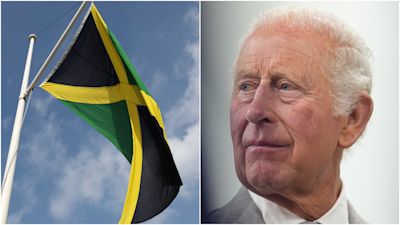
There is an extraordinary political irony in Jamaica’s strategy. The country is using legal institutions inherited from British colonial rule to question Britain’s responsibility for colonial slavery. The petition has been filed to King Charles in his capacity as Jamaica’s head of state and seeks the referral of questions to the Judicial Committee of the Privy Council.
But the King cannot simply issue a personal legal verdict. The process involves constitutional and legal procedures, and the petition’s path remains uncertain. That uncertainty should not be mistaken for weakness. Even if Jamaica does not immediately obtain the legal review it seeks, the petition has already achieved something important. It has altered the question.
Britain is no longer being asked only to express sorrow. It is being asked to confront whether sorrow is enough.
The Bigger Battle – Precedent
Jamaica’s case matters far beyond the Caribbean. If former colonial powers can be legally compelled to examine their historical responsibility for slavery, the implications could extend across Africa and the wider African diaspora. Britain was not the only European power involved in the transatlantic slave trade.
Portugal, France, Spain, the Netherlands and other states participated in systems that moved millions of Africans across the Atlantic. European companies, banks, merchants, insurers and plantation owners accumulated enormous wealth from the trade.
The core debate, therefore, is not simply whether Jamaica receives reparations. It is whether the international system is moving toward a new principle: That historical crimes do not become irrelevant simply because the victims are dead.
States survive generations. Institutions survive generations. Wealth survives generations. And, reparations advocates argue, so should responsibility.
Britain’s Uncomfortable Question
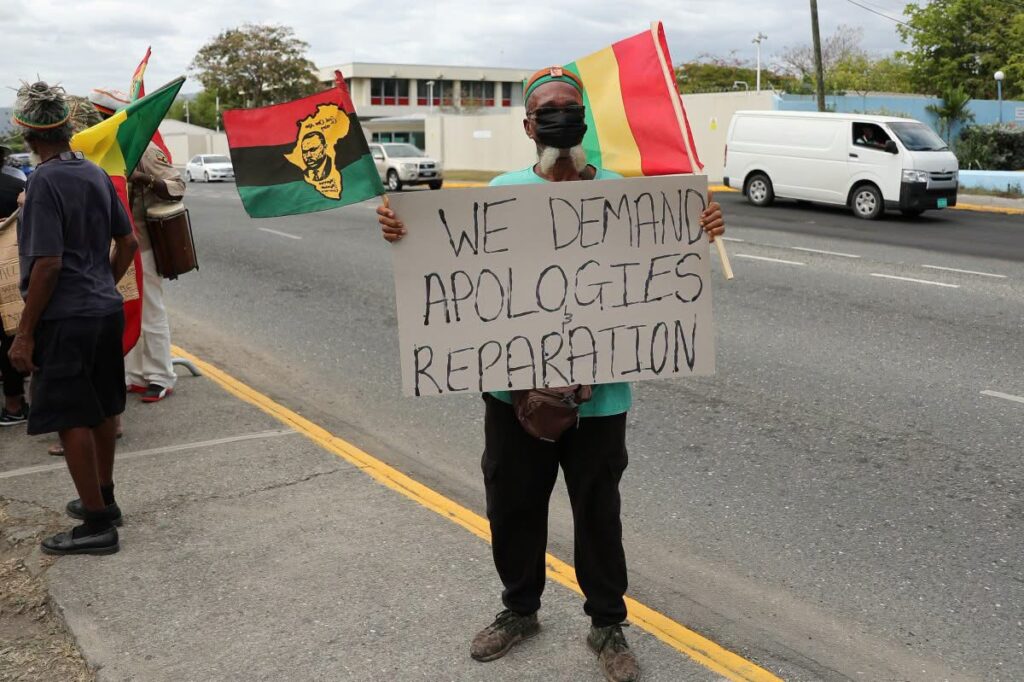
Jamaica’s petition does not guarantee reparations. It does not guarantee a Privy Council ruling. And it certainly does not mean Britain will suddenly write a cheque. But that is not what makes this moment important. The significance lies in the strategy.
For years, the reparations movement has relied heavily on moral persuasion. Jamaica is now testing the legal route. That changes the conversation from: “Should Britain apologise?” To: “Does Britain have a legal responsibility to repair the consequences of what it did?”
Those are very different issues. One can be answered with a speech. The other may require evidence, legal arguments and accountability. Jamaica has not yet won the reparations battle. But it has taken the battle somewhere Britain may find far more difficult to control. Into Britain’s own legal architecture.
And that could be the beginning of a much larger reckoning—not only for Britain, but for every nation whose modern wealth was shaped by the extraction of African lives, labour and resources.
RELATED: