Faith Nyasuguta

A series of developments in Washington is placing Mali and the wider Alliance of Sahel States (AES) under renewed American scrutiny, reviving an uncomfortable question across West Africa: Could the United States be preparing for a deeper security role in a region it largely lost to Russia?
The concern follows three significant developments in recent months: reports that the Trump administration is considering military options against jihadist groups in Mali, renewed debate over U.S. sanctions and a new bipartisan bill in Congress focused specifically on counterterrorism and security partnerships in Mali.

Taken together, the developments signal a shift. They do not prove that Washington has decided to attack Mali or overthrow the governments of the AES. There is currently no public evidence of an approved U.S. military intervention against Mali.

But they do show that the Sahel—after years of deteriorating relations with Washington and Europe—is once again becoming an important American security concern.

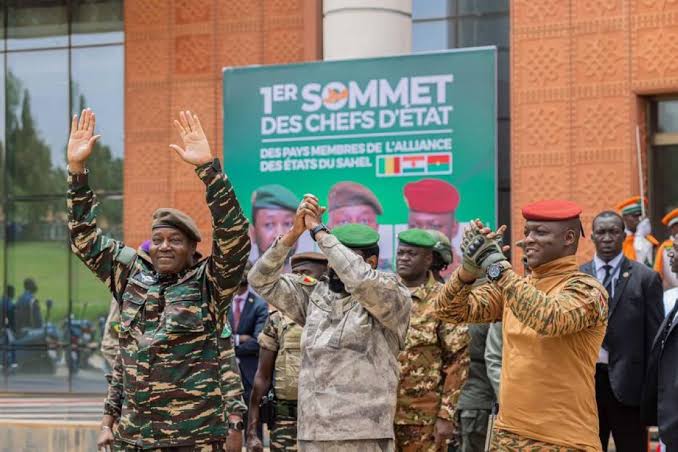
For Mali, Burkina Faso and Niger, the timing is particularly significant. The three countries have spent the past several years dismantling their traditional security relationships with France and other Western partners, expelling foreign troops, withdrawing from ECOWAS and creating the AES as a new regional security and political framework. They have also deepened relations with Russia.
Now, as jihadist violence continues to spread across the region, Washington appears to be reconsidering how it engages with the Sahel. And this time, the United States is confronting a fundamentally different West Africa.

From Sanctions To Engagement
Only months ago, Washington appeared to be moving in the opposite direction. On February 27, 2026, the United States lifted sanctions against three senior Malian officials who had previously been targeted over their alleged connections to Russia’s Wagner Group.
Those removed from the sanctions list included former Malian Defence Minister Sadio Camara, Alou Boi Diarra and Adama Bagayoko. The decision was formally confirmed by the U.S. Treasury Department.
The move was widely interpreted as an attempt to improve relations with Mali and reopen channels of security cooperation. Washington had already begun reassessing its approach to military-led governments in the Sahel.
The United States had lost an enormous strategic advantage when Niger ordered American forces to leave the country. The withdrawal forced Washington to abandon Air Base 201 in Agadez, one of the most important American drone facilities in Africa.
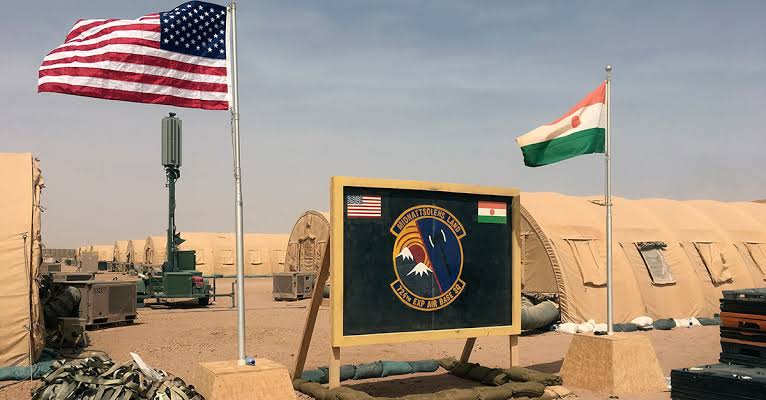
For years, the base had been central to U.S. surveillance and counterterrorism operations across the Sahel. Its loss dramatically reduced Washington’s ability to monitor one of the world’s fastest-growing jihadist theatres. That changed the strategic calculation.
Rather than treating the AES solely as a diplomatic problem, Washington increasingly had to confront a more practical question: How can the United States respond to a growing terrorist threat in a region where its military footprint has dramatically shrunk?
The July Report
That question became more serious on July 22. The Washington Post reported that the Trump administration was considering military options against Jama’at Nusrat al-Islam wal-Muslimin, or JNIM, an al-Qaeda-affiliated militant organisation operating across Mali and the wider Sahel.
According to the report, senior American officials were divided over whether to use military force. No final decision had been made.
That distinction is crucial. The report did not say that the United States had approved strikes. It said military options were being considered. JNIM, however, is not an imaginary threat invented for geopolitical convenience. The organisation has become one of the most powerful jihadist networks in Africa.
Its influence extends across Mali and into neighbouring countries, while the wider region is also facing the expansion of Islamic State-linked groups. The security crisis has continued despite more than a decade of foreign military intervention.
France deployed thousands of soldiers under Operation Barkhane. The United Nations deployed one of its largest peacekeeping missions through MINUSMA. The United States provided intelligence, surveillance and counterterrorism assistance. Yet militant violence continued to spread. That failure is one of the reasons the political climate of the Sahel changed so dramatically.
AES Does Not Trust Another Foreign Military Solution
For many citizens in Mali, Burkina Faso and Niger, Western promises of security carry a difficult history. France’s military intervention began in Mali in 2013 after jihadist groups seized large areas of the north.
Operation Serval initially succeeded in pushing militants from major urban centres. It was later replaced by Operation Barkhane, a much larger regional counterterrorism mission. But over time, the conflict spread. Militant groups expanded beyond northern Mali into central Mali, Burkina Faso and Niger. By the early 2020s, large sections of the region were experiencing repeated attacks, military casualties and displacement. The frustration created political consequences.
Military governments came to power in Mali, Burkina Faso and Niger. Each government eventually broke with France. French troops were expelled. The military relationship with the United States deteriorated. The United Nations peacekeeping mission in Mali ended. And Russia moved into the security vacuum. First through Wagner and later through the Russian government’s Africa Corps, Moscow became an increasingly important security partner for Mali and other Sahel states.
The AES governments argued that the region needed a new approach. Their position was straightforward: African governments should have greater control over their own security arrangements. That does not mean the new approach has solved the security crisis. It has not. JNIM and Islamic State affiliates remain powerful. Mali, Burkina Faso and Niger continue to face serious attacks.
But the AES has rejected the idea that the answer must automatically be another large Western military deployment. That is why reports of possible American military action immediately raised concerns.
Malian Foreign Minister Abdoulaye Diop responded by stressing that any country wishing to work with Mali must respect its sovereignty. He said Mali had not received an official American statement confirming the reports.
That response captures the central tension. Mali is not necessarily saying that it will reject every form of international cooperation. It is insisting that cooperation cannot be imposed.
Congress Joins The Debate
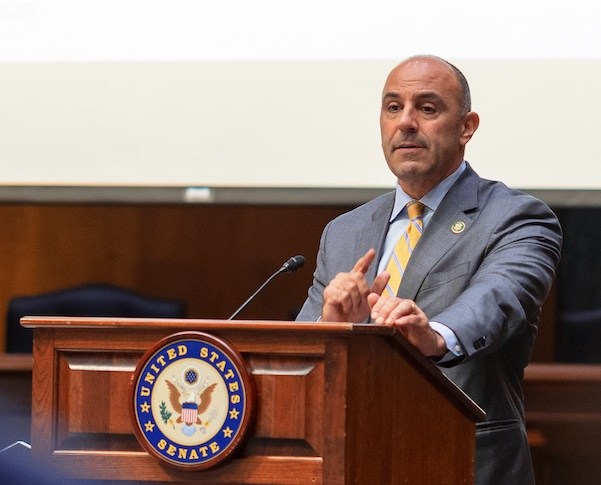
The Washington debate moved further on September 2, when Congressman Jimmy Panetta introduced the Mali Security Partnership and Counterterrorism Act. The bill was co-led by Republican Congressman Joe Wilson.
Its purpose is to require the U.S. State Department to develop a comprehensive strategy for responding to the expansion of al-Qaeda and affiliated organisations in Mali. The legislation focuses on several areas. It calls for an assessment of JNIM’s territorial reach and operational capabilities. It seeks greater understanding of terrorist financing networks. It examines the security connections between Mali, Burkina Faso and Niger. And it directs Washington to develop a more coordinated diplomatic strategy towards the crisis.
That is important because the bill does not, at least in its introduced form, authorise an American invasion of Mali. Nor does it automatically authorise drone strikes. It is primarily a strategy and policy framework. Still, legislation matters.
A government cannot build a coherent foreign policy without defining its objectives, identifying threats and determining which tools it intends to use. For the AES, that means Mali is increasingly becoming a formal subject of U.S. counterterrorism planning.
The Sahel- A Geopolitical Crossroad
The security crisis is only one part of the story. The Sahel is also becoming an arena of competition between major powers. Russia has expanded its security influence. China remains deeply involved in African infrastructure, mining and trade. Western governments are concerned about Russia’s growing military presence.
The region also contains significant strategic resources. Mali is one of Africa’s major gold producers. Burkina Faso is another major gold-producing country. Niger remains globally significant because of its uranium resources. These resources matter.
But it would be inaccurate to claim that minerals alone explain every Western policy decision towards the AES. Counterterrorism is also a genuine concern. JNIM and Islamic State affiliates have demonstrated their ability to expand across borders. The danger is increasingly reaching coastal West African states.
Countries such as Benin and Togo have experienced growing security threats. If the Sahel’s jihadist crisis continues moving southwards, it could affect some of West Africa’s most important economic centres and ports. That gives the crisis international significance.
Europe’s Pressure Campaign
Europe is also maintaining pressure on AES governments, although this pressure takes a different form.
In 2026, the European Parliament adopted resolutions addressing political developments and human rights concerns in Burkina Faso and Niger. On June 18, the European Parliament adopted a resolution on the deterioration of civic space and fundamental freedoms in Burkina Faso. The resolution raised concerns about arbitrary detention, media restrictions, repression of political opponents and the shrinking space for civil society.
The European Parliament also issued a resolution concerning Niger, calling for a restoration of constitutional order and addressing developments involving the country’s political transition and the AES.
These resolutions reflect a genuine divide between Europe and the military-led governments of the Sahel. European institutions emphasise democracy, human rights and constitutional government. The AES governments argue that Western powers are selectively applying those principles while ignoring their own failures in the region.
This is where the political debate becomes intensely contested. The West sees democratic backsliding. AES supporters see foreign interference. Both narratives are now competing for influence.
The ‘Military Solution’ Problem
There is another reason the latest developments should concern Africa. The Sahel has already experienced multiple military experiments. France tried a large regional deployment. The United Nations deployed peacekeepers. The United States invested heavily in surveillance and intelligence infrastructure. Russia entered through Wagner and later Africa Corps. Yet the security crisis remains severe.
The Washington Post report itself highlighted disagreement among experts about whether another military campaign would solve the problem. One Sahel specialist argued that another military intervention could repeat the mistakes of the past, noting that France had spent years fighting militants without resolving the crisis and that Russia’s security intervention had also failed to end the violence.
This is perhaps the most important lesson. Military force can kill fighters. It does not automatically eliminate the conditions that produce insurgencies.
The Sahel’s crisis is connected to poverty, weak governance, political exclusion, ethnic tensions, land disputes, climate pressures, corruption and the absence of state services in remote communities. A drone can destroy a militant camp. It cannot build a functioning school. It cannot resolve a dispute over land. It cannot create jobs. And it cannot automatically restore public trust in the state.
What Is Changing?
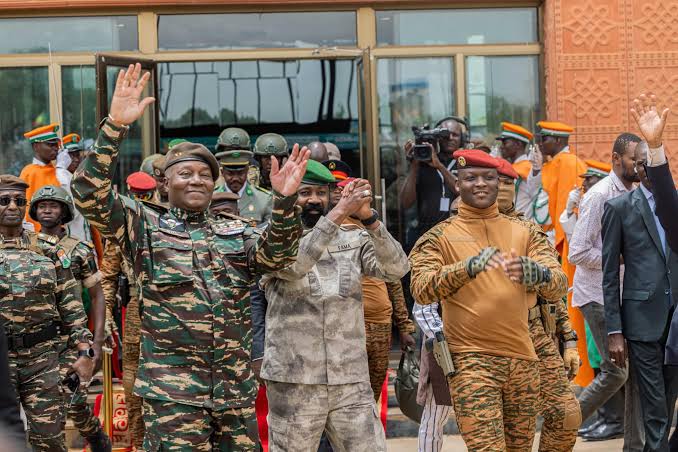
The most significant development is not that Washington has decided to attack the AES. It has not publicly done so. The more important shift is that the United States is once again trying to define its place in the Sahel. Washington lost Niger. It lost access to one of Africa’s most important drone bases. Russia expanded its presence. JNIM continued to grow. And the AES became a permanent political reality.
Ignoring the region is no longer an option. The concern now is what engagement will look like. Will Washington return primarily through military partnerships? Will it expand intelligence cooperation? Will it use sanctions and diplomatic pressure? Or will it develop a new model based on recognising the political reality of the AES while cooperating against shared security threats? The answer will shape the future of the region.
The Real Battle
The story of the Sahel is ultimately bigger than the United States, Russia or France. It is about African agency. The AES has emerged from a powerful political argument: that countries which have spent decades relying on foreign security partners should have greater control over their own defence, resources and political decisions. That argument resonates far beyond Mali, Burkina Faso and Niger. But sovereignty alone does not guarantee security.
The AES governments now face the difficult task of proving that their alternative model can protect civilians, defeat armed groups and build functioning economies. Western governments face a different challenge. If they want to re-engage the Sahel, they cannot simply return with the same assumptions that defined the last decade. The region has changed. Foreign troops have left. New alliances have emerged. And African governments are demanding a different relationship with external powers.
The United States is now paying attention again. Congress is drafting legislation. Officials are debating military options. Russia remains entrenched. And jihadist groups continue expanding.
The Sahel has become one of the world’s most important geopolitical fault lines. But Africa’s future cannot be reduced to a competition between Washington, Moscow, Paris and Beijing. The central concern belongs to Africans themselves: Can the people and governments of the Sahel build a security system that is genuinely sovereign, effective and capable of protecting the millions of civilians trapped between armed groups, political instability and international power struggles?
That is the real battle for the Sahel. And unlike the battles of the past, Africa is increasingly insisting that it must have a decisive say in how it is fought.
RELATED: