Faith Nyasuguta

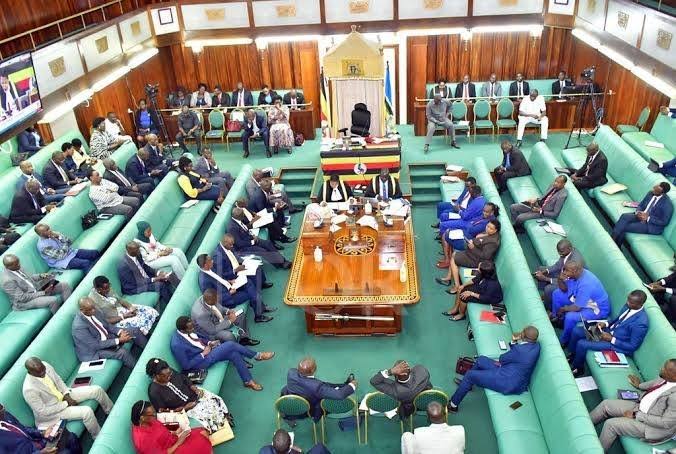
When news broke this week that a delegation of Ugandan Members of Parliament had landed in Kenya for specialized training on governance, ethics, integrity, and accountability, the reaction across East Africa was immediate.
It was not admiration. It was collective, satirical laughter. Across social media, public forums, and local radio stations, Kenyans reacted with scathing irony. Popular commentary framed the visit with proverbs of absolute absurdity: “Hyenas teaching wolves that eating carcasses is dangerous,” and “The blind leading the blind.”

To the average citizen struggling under systemic corruption, heavy taxation, and state-sanctioned violence, the idea of Kenya serving as the regional “beacon of integrity and ethical leadership” reads less like public service, and more like a stand-up comedy routine.

The Training Is Serious. The Contradiction Isn’t

The irony surrounding the visit does not mean the training itself is fictitious. The Ugandan lawmakers are undertaking a capacity-building programme facilitated by Kenya’s Ethics and Anti-Corruption Commission (EACC), through its training arm, the National Integrity Academy.
The programme focuses on public-sector ethics, anti-corruption strategies, leadership, integrity and institutional accountability. From an institutional perspective, such exchanges are hardly unusual. Governments regularly send officials abroad to study systems, compare legislation and strengthen public institutions.

Kenya has, on paper, an extensive architecture for promoting ethical leadership. Chapter Six of the 2010 Constitution establishes standards for integrity among state officers. The Leadership and Integrity Act provides additional requirements for public officials, while the EACC is mandated to investigate and prevent corruption and promote ethics in public service. There is therefore plenty of material for Kenyan officials to teach.
The uncomfortable part is that Kenya’s own record makes the exercise difficult for citizens to watch without irony.

The country has built institutions designed to fight corruption while continuing to struggle with corruption. It has constitutional protections for citizens while repeatedly facing allegations of abuses by state agencies. It has accountability mechanisms while public confidence in those mechanisms remains deeply strained.
That gap between what exists on paper and what citizens experience in reality is at the centre of the backlash.
Kenya’s Corruption Problem
Kenya’s anti-corruption credentials remain complicated. Transparency International’s Corruption Perceptions Index has consistently placed the country among states facing significant corruption challenges. Kenya scored 30 out of 100 in the latest index cited in the debate, placing it well below the standards that would inspire confidence in its anti-graft record.
Behind the score are years of allegations involving procurement, public tenders, inflated project costs, ghost workers, questionable government expenditure and misuse of public resources.
The country has sophisticated institutions for investigating and prosecuting corruption, yet high-profile cases frequently become prolonged legal battles. Some collapse, some are withdrawn, while others remain unresolved for years.
For ordinary Kenyans, corruption is not an abstract governance concept. It appears in the quality of roads, hospitals, schools and public services. It appears when projects are announced with impressive budgets but deliver little on the ground. It appears when taxpayers are asked to contribute more while reports of waste and misuse of public money continue circulating.
That is why an integrity seminar in Nairobi can feel disconnected from reality to the very citizens paying for the system.
Good Governance Equals Protecting Citizens
The governance debate extends beyond corruption. A government can have elaborate anti-graft laws and still fail the broader test of good governance if citizens cannot freely exercise their constitutional rights.
Kenya’s recent history has placed this issue firmly in the spotlight. The Gen-Z protests that erupted over taxation and the Finance Bill became a defining moment in the country’s relationship between citizens and the state. What began as opposition to proposed tax measures grew into a broader movement against the cost of living, corruption, political privilege and poor governance.
The demonstrations were met with a heavy security response. Deaths, injuries, arrests and allegations of excessive force generated widespread concern among human rights organisations and the public.
Parliament itself became a focal point during some of the protests, with young Kenyans losing their lives in demonstrations taking place around the institution that represents their democratic voice.
The wider record of police accountability has also remained contentious, with organisations such as Missing Voices documenting cases of police killings and other alleged abuses. Abductions, arbitrary arrests and allegations of enforced disappearances have further deepened public anxiety.

For citizens living through these events, governance is not simply about seminars on leadership ethics. It is about whether the state respects the same Constitution it expects citizens to obey.
The Taxpayer As Part Of The Governance Equation
Kenya’s economic difficulties have added another layer to the controversy. The government has faced intense pressure to raise revenue as it attempts to manage public debt and finance its programmes. But successive tax proposals have collided with a population already dealing with high living costs.
Fuel prices, food costs, housing expenses and other basic necessities have placed considerable pressure on households. The Finance Bill controversy became a symbol of the growing disconnect between government priorities and public expectations.
Many Kenyans felt that the burden of financing the state was increasingly being transferred to ordinary citizens while waste, corruption and political extravagance remained unresolved. This is where fiscal responsibility becomes part of ethical leadership.
Good governance is not simply about collecting revenue. It is about demonstrating that public money is being used efficiently, transparently and for the benefit of citizens.
When that confidence disappears, even necessary economic reforms become difficult to sell.
Uganda’s Governance Record- More Irony
Uganda is hardly entering this arrangement from a position of perfect governance. The country has faced longstanding criticism over corruption, political accountability, democratic space and the treatment of opposition figures.
Its political system has also been dominated by President Yoweri Museveni for decades, creating its own debates around political competition and institutional independence.
Ugandan lawmakers therefore have genuine reasons to seek stronger approaches to ethics and accountability. But Kenya’s own governance struggles mean the exchange carries an unusual symbolism.
It is not exactly a case of one flawless democracy mentoring another.
It is two neighbouring countries, each with substantial governance challenges, exchanging institutional lessons while their citizens continue demanding better accountability.
That is where the “blind leading the blind” jokes find their fuel.
The Problem Isn’t The Laws
Perhaps the biggest problem facing Kenya—and much of Africa—is not a lack of legislation. The laws exist.
Kenya’s Constitution contains detailed provisions on integrity and leadership. The country has an anti-corruption commission, an Auditor-General, parliamentary oversight structures, courts and investigative agencies. What remains difficult is consistent enforcement.

A country can have the strongest anti-corruption laws in the region and still struggle if powerful individuals can evade consequences. The same principle applies to human rights. Constitutional protections mean little if violations are not investigated and punished.
Accountability cannot depend on someone’s political connections, economic status or proximity to power. That is the point at which governance moves from theory to reality.
Africa Needs Results- Not More Workshops
There is nothing inherently wrong with Kenya training Ugandan lawmakers. Institutional cooperation can be valuable. Kenya has accumulated expertise in public administration, constitutional governance and anti-corruption systems, and there are legitimate lessons that can be shared.
But the credibility of those lessons depends heavily on what happens inside Kenya itself. Good governance is ultimately measured outside conference rooms.
It is measured when public money is protected.
It is measured when corruption allegations are investigated without fear or favour.
It is measured when courts can hold powerful officials accountable.
It is measured when police protect protesters instead of treating them as enemies.
It is measured when governments listen to citizens before imposing policies that affect their livelihoods.
And it is measured when leaders subject themselves to the same constitutional standards expected of everyone else.
That is why the Ugandan delegation’s visit has produced so much amusement in Kenya. The laughter is not really about Uganda. It is about the uncomfortable spectacle of a country still wrestling with corruption, police accountability, economic pressure and public distrust positioning itself as a classroom for ethical leadership.
Kenya can absolutely teach. But the most convincing lesson would not come from a PowerPoint presentation, a certificate or a carefully worded institutional speech. It would come from Kenya demonstrating, in practice, that its own laws work.
Until then, the contradiction will remain impossible to ignore: Kenya is teaching Uganda about good governance while Kenyans themselves are still demanding it from their own government.
And perhaps that is the real concern. Governance is not what governments teach but what citizens experience.
RELATED: