WHEN THE RAINS NO LONGER COME: FARMING ON THE FRONTLINES OF CLIMATE CHANGE

Njoki Kangethe
For generations, African agriculture has followed a rhythm that was as familiar as the changing seasons. Farmers planted when the rains arrived, harvested when the crops matured and prepared their fields for the next cycle with a confidence born of experience passed down over centuries. Communities understood the seasons, rivers followed relatively familiar patterns and farming calendars were shaped by an intimate knowledge of the land. Unfortunately, that rhythm is becoming increasingly difficult to recognise.

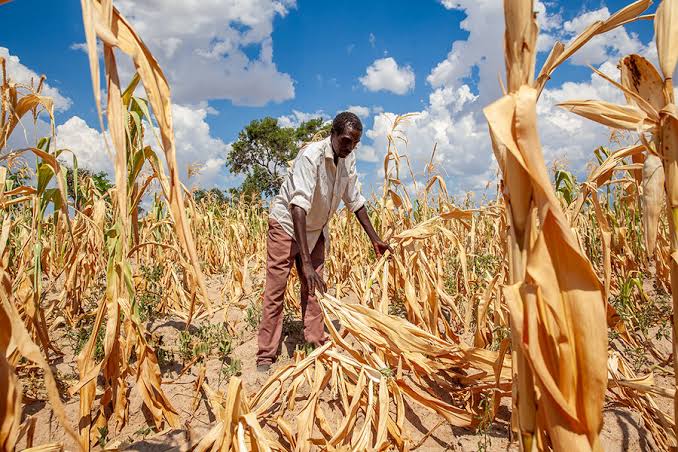
Across the continent, farmers are finding that the knowledge they inherited no longer guarantees the harvests it once did. Rains that traditionally arrived in March may now come weeks later,or not at all. A season that begins with promising showers can end abruptly in prolonged dry spells, while intense storms deliver in a few days the rainfall that once fell steadily over several weeks.

In some places, floods now destroy crops before they can be harvested. In others, droughts have become so frequent that communities barely recover from one failed season before another begins.

Climate change is often discussed through statistics: rising global temperatures, changing precipitation patterns and increasing concentrations of greenhouse gases. These figures are important because they help us understand the scale of the problem. Yet for Africa’s farmers, climate change is experienced less through graphs than through uncertainty. It is the uncertainty of not knowing whether to plant this week or wait another month. It is watching familiar rivers run dry earlier than expected or seeing newly planted seeds washed away by storms that arrive with unprecedented intensity. Above all, it is the growing realisation that the seasons can no longer be relied upon in the way they once were.
Agriculture remains the backbone of many African economies, employing more than half of the continent’s workforce and providing livelihoods for hundreds of millions of people. Unlike highly industrialised nations, however, much of Africa’s agriculture is rain-fed, meaning it depends directly on seasonal rainfall rather than extensive irrigation systems. This makes the sector particularly vulnerable to even small shifts in climate.

A delayed rainy season can shorten growing periods. Higher temperatures can reduce crop yields and accelerate evaporation from already scarce water sources. Extreme weather events can wipe out years of investment in a matter of days. And the consequences extend far beyond the farm.
When harvests fail, food supplies tighten and prices rise. Consequently, families already spending a significant share of their income on food find themselves forced to make impossible choices between nutrition, education and healthcare. Governments increase food imports to stabilise domestic markets, placing additional pressure on national budgets and foreign exchange reserves.
Livestock losses reduce household incomes, while declining agricultural productivity slows economic growth in countries where farming remains a major contributor to GDP. Climate change, therefore, is more than an environmental challenge; it is an economic one, a social one and increasingly, a food security challenge.
Perhaps nowhere has this been more evident than in the Horn of Africa, where consecutive failed rainy seasons in recent years have left millions of people facing severe food insecurity. Pastoral communities have watched grazing lands disappear under prolonged drought, forcing families to travel ever greater distances in search of water for their livestock.
Elsewhere, southern Africa has experienced recurring droughts that have affected maize production, one of the region’s most important staple crops. Meanwhile, countries in West and Central Africa have seen increasingly intense floods damage farmland, roads and storage facilities, disrupting food production long after the floodwaters have receded.
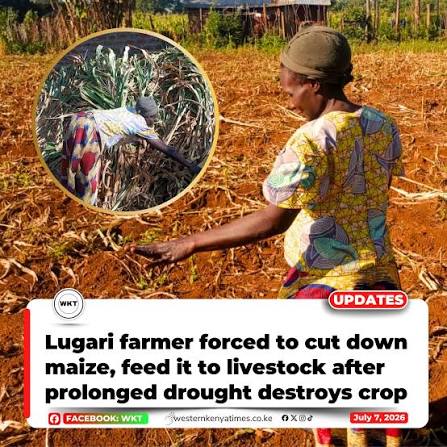
Yet climate change does not affect every farmer equally. Smallholder farmers, who produce the majority of Africa’s food, often have the fewest resources with which to adapt. Many lack access to irrigation, crop insurance, improved seed varieties or reliable weather forecasts. Their ability to respond to changing conditions is constrained by limited financial resources and infrastructure. Ironically, these are the very communities that have contributed least to global greenhouse gas emissions. Africa accounts for only a small fraction of historical emissions, yet its farmers are among those experiencing some of the most severe consequences of a warming planet.
This imbalance raises important questions about climate justice. The countries that industrialised earliest and emitted the most carbon over the past two centuries are not necessarily the ones bearing the greatest agricultural risks today. Instead, many African nations find themselves adapting to a crisis they did little to create. This has strengthened calls for increased climate finance, technology transfer and international support to help vulnerable countries build more resilient food systems. But while global cooperation remains essential, adaptation is already taking place at the local level, often driven by farmers themselves.
Across the continent, agricultural communities are responding with remarkable ingenuity. Farmers are diversifying crops to reduce dependence on a single harvest. Others are reviving indigenous drought-resistant varieties that had gradually fallen out of use, recognising that resilience sometimes lies in crops their grandparents once cultivated.
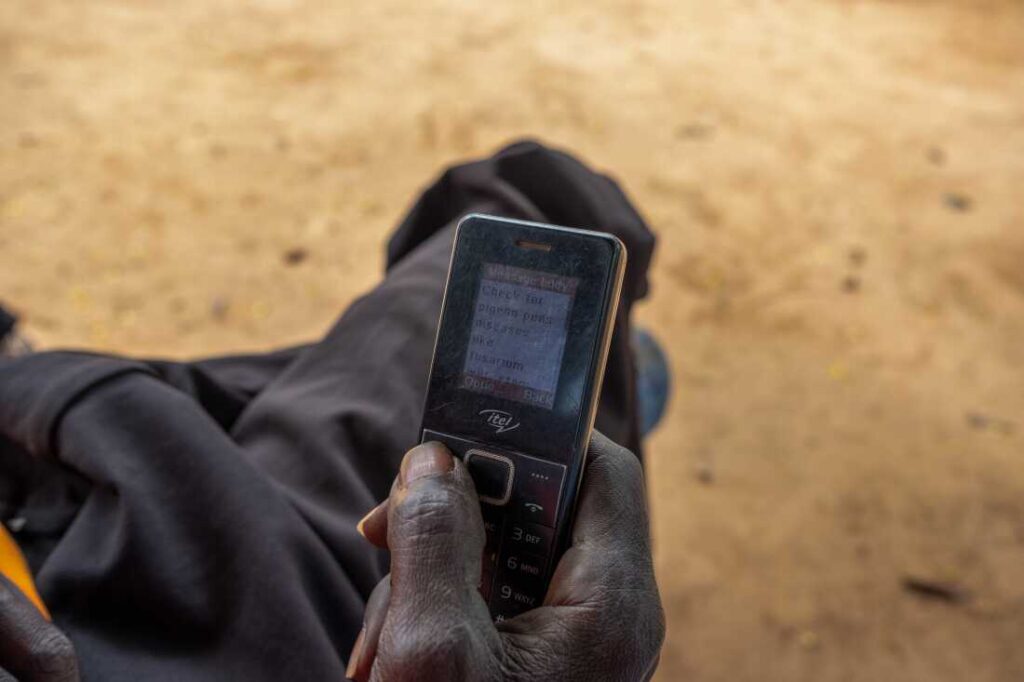
Conservation agriculture, agroforestry and water harvesting techniques are helping restore degraded soils while improving moisture retention. Increasingly, digital technologies are providing farmers with seasonal weather forecasts delivered directly to their mobile phones, allowing them to make more informed decisions about planting and harvesting.
These innovations demonstrate an important truth: African farmers are active participants in shaping the continent’s response to climate change. Yet adaptation has its limits. No amount of ingenuity can compensate indefinitely for increasingly severe droughts, repeated flooding or rising temperatures if the broader systems supporting agriculture fail to evolve alongside a changing climate.
Climate-smart agriculture has emerged as one of the most promising responses to this new reality, not because it offers a single solution, but because it recognises that farming itself must evolve alongside the climate. The concept encompasses a range of practices designed to increase agricultural productivity while strengthening resilience and, where possible, reducing greenhouse gas emissions. Across Africa, farmers are adopting drought-tolerant crop varieties, expanding small-scale irrigation, restoring degraded landscapes through agroforestry and using conservation agriculture to improve soil health and retain moisture.
In regions where rainfall has become increasingly erratic, simple innovations such as rainwater harvesting, farm ponds and drip irrigation are helping communities make better use of every drop of water.
Technology is also reshaping how farmers respond to climate risks. Satellite imagery and remote sensing are improving seasonal forecasting, allowing governments and humanitarian agencies to anticipate droughts before they escalate into crises. Mobile applications now provide farmers with weather forecasts, planting advice and pest alerts tailored to their locations. Artificial intelligence is beginning to support crop monitoring and early warning systems, while digital financial services are making it easier for farmers to access insurance products that provide a safety net when extreme weather destroys harvests.
These innovations cannot prevent droughts or floods, but they can reduce the uncertainty that makes climate change so devastating for rural livelihoods.
Yet technology alone will not secure Africa’s food future. Resilience also depends on investments that extend beyond individual farms. Expanding irrigation infrastructure, strengthening agricultural research, restoring watersheds, protecting forests and improving rural roads all contribute to food systems that are better equipped to withstand climate shocks. Equally important are policies that ensure smallholder farmers have access to finance, extension services and markets. Climate adaptation cannot remain the responsibility of farmers alone. It requires coordinated action from governments, development partners, financial institutions and the private sector, all working towards the shared goal of building food systems that can endure an increasingly unpredictable climate.
There is also an important lesson to be drawn from Africa’s own history. Long before climate change became part of the global vocabulary, communities across the continent had developed ways of living with environmental uncertainty. Farmers diversified crops to spread risk, pastoralists moved livestock seasonally in search of grazing lands, and indigenous water harvesting systems helped communities survive prolonged dry periods.
Modern science and technology have expanded the tools available to us, but they have not diminished the value of local knowledge. In many cases, the most resilient agricultural systems are those that combine scientific innovation with generations of practical experience.
Ultimately, climate change is forcing Africa to rethink how it understands food security itself. For decades, agricultural success was measured largely by the size of a harvest. Today, success must also be measured by resilience; the ability of farmers, communities and food systems to withstand shocks and recover from them. A record harvest means little if the next drought wipes out livelihoods, or if repeated floods destroy the infrastructure needed to move food from farms to markets.
The rains may no longer come when they once did, and the seasons may no longer follow familiar patterns. But Africa’s agricultural future need not be defined by uncertainty alone. With the right investments, stronger institutions and a willingness to combine indigenous knowledge with modern innovation, the continent can build resilient food systems. Climate change has undoubtedly altered the rhythm of African agriculture. The challenge now is to compose a new rhythm; one capable of sustaining both farmers and future generations in a world where change has become the only constant.
RELATED: