WHO REALLY OWNS AFRICA’S FARMS? LAND, POWER AND THE POLITICS OF FOOD

Njoki Kangethe
Africa possesses around 60 per cent of the world’s uncultivated arable land, a statistic that has become central to discussions about the continent’s agricultural future. It is often cited as evidence that Africa has everything it needs to become the world’s breadbasket.

Yet beneath that optimistic narrative lies a more complicated reality. Owning land and having access to land are not always the same thing, and for millions of African farmers, the greatest barrier to increasing agricultural productivity is more than just the quality of the soil beneath their feet, but the uncertainty surrounding their right to use it.

Who Really Owns, Has Access & Security To Fully Utilize The Land?
Land is the foundation of every food system. It determines who can farm, what can be grown and whether farmers are willing, or even able, to invest in the future. A farmer who knows they will still have access to their land ten or twenty years from now is far more likely to plant fruit trees, invest in irrigation, restore degraded soils or adopt conservation practices that improve yields over time. These are investments whose returns may not be realised for years, making them difficult to justify when land tenure is insecure. Security of tenure is therefore a food security issue, not just legal.

This is one of the least visible dimensions of Africa’s food challenge. Discussions about agriculture often focus on improved seeds, fertilisers, irrigation, mechanisation and climate change. These factors undoubtedly shape harvests, but they overlook a more fundamental question: who owns the land on which Africa’s food is grown, and who has the power to decide how that land is used?
In many parts of the continent, the answer is not as straightforward as a title deed or a government registry. Land ownership in Africa exists within a complex web of customary traditions, statutory laws and community agreements that have evolved over generations. In some countries, these systems complement one another. In others, they overlap or even contradict each other, creating uncertainty that affects everyone from smallholder farmers to commercial investors.

Unlike many parts of Europe or North America, where private land ownership is typically documented through formal legal systems, much of rural Africa continues to operate under customary tenure. Families inherit land through community traditions, local elders allocate plots, and ownership is recognised because communities acknowledge it rather than because governments have issued official documents. These customary systems have supported livelihoods for centuries and remain the primary form of land governance for millions of people. They are often flexible, locally understood and deeply rooted in cultural identity.
The challenge arises when these informal systems meet modern financial and legal institutions. A farmer may have cultivated the same land for decades and be recognised by the entire community as its rightful owner, yet still lack the documentation required to access bank loans, government support programmes or commercial investment. Financial institutions rarely accept customary claims as collateral, leaving many farmers unable to secure the capital needed to expand their operations, purchase equipment or invest in irrigation. The result is a paradox: farmers may possess land in practice while remaining land-poor in economic terms.
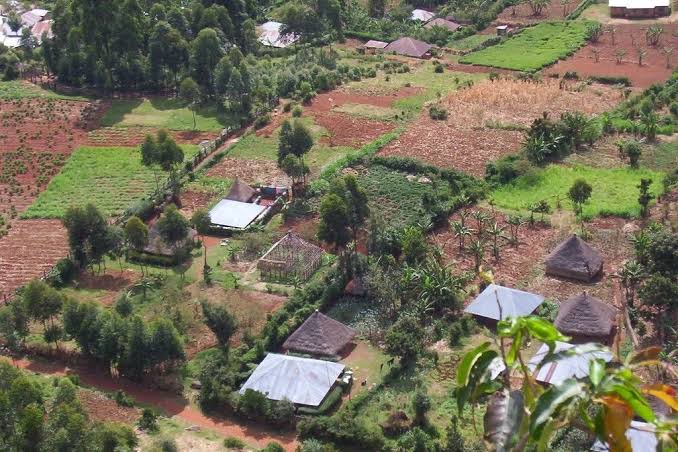
This uncertainty has consequences that extend far beyond individual farmers. Agriculture is an industry built on long-term investment. Healthy soils take years to restore. Irrigation infrastructure requires significant upfront capital. Fruit orchards may not produce commercial harvests for several seasons. Farmers who fear losing access to their land have little incentive to make investments whose benefits may only be realised years later. Instead, they often prioritise short-term survival over long-term productivity, a rational decision that can gradually reduce soil fertility, limit innovation and constrain agricultural growth.
What About Land Fragmentation? (disintegration, breakup and splintering)
Land fragmentation presents another growing challenge. As populations increase and families expand, farmland is frequently divided among successive generations through inheritance. What was once a viable family farm can become several much smaller plots, each struggling to generate sufficient income. Smaller farms are often more difficult to mechanise, less attractive to commercial lenders and less capable of benefiting from economies of scale.
Across many parts of Africa, this gradual subdivision of farmland is quietly reshaping rural economies and placing additional pressure on already limited agricultural resources.
Young people entering agriculture face an especially difficult landscape. Africa has the youngest population of any continent, and governments increasingly encourage youth to view agriculture as a business rather than a subsistence activity. Yet enthusiasm alone cannot overcome structural barriers. Purchasing land is prohibitively expensive for many young entrepreneurs, while inherited land often remains under the control of older family members for decades.
Leasing land can provide temporary access, but short-term agreements rarely encourage investments in irrigation, soil restoration or perennial crops. The result is a generation of aspiring farmers with ideas, energy and technical knowledge, but limited access to the single resource agriculture depends on most.
The Gender Equation
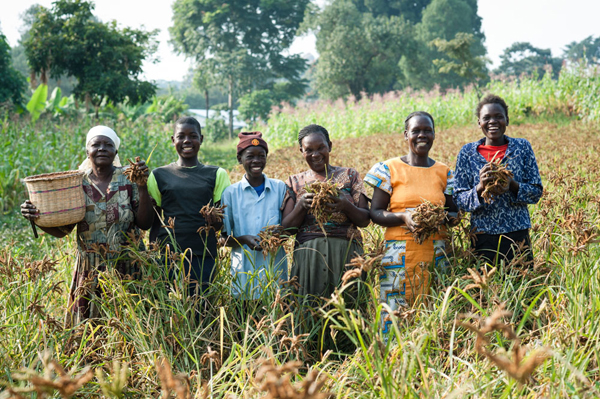
The conversation around land must also recognise the central role of women in African agriculture. Across the continent, women make up a substantial share of the agricultural workforce, producing food, managing farms and supporting rural livelihoods. Yet they frequently face greater obstacles than men in accessing, owning and inheriting land.
While many countries have introduced legal reforms promoting equal land rights, customary practices and social norms can still limit women’s tenure security in practice. This has far-reaching implications. Farmers with secure land rights are more likely to invest in productivity-enhancing technologies, access agricultural credit and participate in extension programmes. When women are excluded from these opportunities, the effects can be felt by entire food systems.
Corporations, Multinationals & Foreign Investors
These issues have become even more significant as demand for African land has grown. Over the past two decades, governments, multinational companies and institutional investors have acquired or leased large areas of farmland for commercial agriculture, renewable energy projects, conservation initiatives and other forms of development.
Supporters argue that such investments bring infrastructure, employment and technology transfer. Critics caution that poorly governed land acquisitions can displace communities, weaken local food systems and fuel conflict where consultation is inadequate or compensation is unfair. The debate is rarely as simple as choosing between investment and protection. Rather, it raises an important question: how can Africa attract the investment needed to modernise agriculture while ensuring that the rights and livelihoods of local communities are respected?
The answer lies in building land governance frameworks that provide clarity, fairness and security for everyone involved. Secure land rights encourage investment, reduce disputes and create the confidence farmers need to think beyond the next harvest. As Africa seeks to transform its agricultural sector, land will remain one of its most valuable assets. The challenge is ensuring that those who cultivate it have the certainty to invest in its future as confidently as they invest in each new planting season.
What Are African Governments Doing To Address These Challenges?
While the challenges are significant, they are far from insurmountable. Across Africa, governments are recognising that secure land rights are fundamental to agricultural transformation. Countries such as Rwanda have undertaken nationwide land registration programmes, issuing millions of land titles that have increased tenure security and reduced disputes. Ghana is modernising its land administration systems to simplify registration and improve transparency, while Kenya has accelerated the digitisation of land records in an effort to reduce fraud and improve public access to land information. These reforms are not without challenges, but they demonstrate a growing recognition that land governance is as much an economic issue as it is a legal one.
Technology
Technology is also beginning to reshape how land is managed. Geographic Information Systems (GIS), satellite imagery and digital cadastres are making it easier to map land boundaries, resolve disputes and maintain accurate records. In some countries, drones are being used to survey farmland more efficiently than traditional methods, while mobile platforms are helping communities document customary land rights that previously existed only through oral agreements. These tools cannot solve every governance challenge, but they can make land administration more transparent, efficient and accessible, particularly in rural areas where formal registration has historically been limited.
Equally important is ensuring that reforms are inclusive. Strengthening land rights should not come at the expense of customary systems that have supported communities for generations. Rather, the goal should be to bridge the gap between traditional and statutory approaches, creating frameworks that recognise local realities while providing farmers with the legal certainty needed to invest, borrow and plan for the future.
Women, young people and marginalised communities must also be at the centre of these reforms. A food system cannot reach its full potential if a significant share of those producing the food remain excluded from owning or securely accessing the land they cultivate.
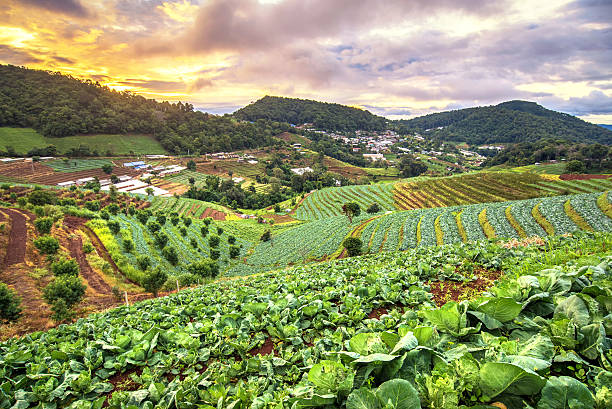
Across Africa, land is more than an economic asset, as it is deeply tied to history, identity and belonging. It carries memories of families, communities and generations that have depended on it for their livelihoods. That is precisely why conversations about land are often emotionally and politically charged. They touch on questions of equity, justice and opportunity just as much as they do agricultural productivity. Yet avoiding these conversations only delays the reforms needed to build stronger and more resilient food systems.
As Africa seeks to feed a population expected to exceed 2.5 billion people by the middle of the century, improving agricultural productivity will require more than better seeds, improved irrigation or advanced technology. It will require creating an environment in which farmers have the confidence to make long-term investments in the land beneath their feet. Secure land rights encourage soil conservation, attract finance, support innovation and strengthen rural economies. They provide the stability upon which every other agricultural investment depends.
How well will land in Africa be governed? That’s the big question. Africa has no shortage of fertile soil. What it needs are systems that give farmers the confidence to cultivate it, improve it and pass it on to the next generation. Feeding the continent will depend on the policies, institutions and partnerships that determine who has the right to nurture that ground in the first place.
RELATED: