Faith Nyasuguta
West Africa’s long-awaited single currency project has encountered its first major political setback.
Guinea has officially opted out of plans to adopt the ECO, the common currency being developed by the Economic Community of West African States (ECOWAS), becoming the first country to publicly declare that it will not participate in the planned 2027 rollout. The decision signals that, while regional leaders remain committed to deeper economic integration, not every member state is prepared to surrender control of its national currency.

Guinean authorities say their priority is preserving the Guinean franc, arguing that retaining an independent currency gives the country greater flexibility to manage inflation, monetary policy and long-term economic development.

Officials have described the Guinean franc as a strategic instrument that is better suited to protecting national sovereignty and responding to Guinea’s unique economic realities than a shared regional currency.
The decision comes just weeks after ECOWAS leaders renewed their commitment to introducing the ECO in 2027.
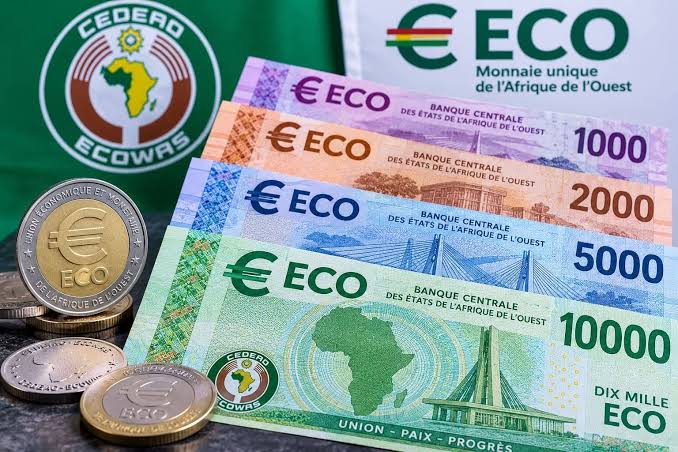
Meeting in the Sierra Leonean capital, Freetown, heads of state reaffirmed that the project remains one of the bloc’s biggest priorities despite years of delays caused by the COVID-19 pandemic, rising inflation, growing public debt and uneven economic performance across member states. Rather than insisting that every country joins simultaneously, ECOWAS has now embraced a phased rollout, allowing only countries that satisfy agreed economic benchmarks to participate initially.

The ECO has been discussed for more than two decades and is often compared to Europe’s euro.
If implemented successfully, the currency would eliminate exchange-rate costs between participating countries, simplify cross-border payments, reduce transaction expenses for businesses and strengthen trade across one of Africa’s largest regional blocs.
Supporters believe the ECO could dramatically boost intra-African commerce while reinforcing the goals of the African Continental Free Trade Area (AfCFTA), making it easier for businesses to invest and trade across West Africa.
However, turning that vision into reality has proved far more difficult than expected.
To qualify for the common currency, member states must meet strict macroeconomic convergence criteria covering inflation, fiscal deficits, debt sustainability, foreign exchange reserves and monetary stability. Few countries have consistently achieved those targets, forcing ECOWAS to postpone the project multiple times before settling on the current 2027 timetable.
Guinea’s decision highlights one of the biggest challenges facing any monetary union: balancing regional integration with national economic independence.
Unlike countries that already share the CFA franc, Guinea has maintained its own currency for decades and has often viewed independent monetary policy as an essential component of national sovereignty. The Guinean franc has remained the country’s official currency since it was reintroduced in 1985, giving the Central Bank of the Republic of Guinea full control over monetary decisions.
For Guinea, keeping that control appears to outweigh the potential advantages of joining a regional monetary union.
The announcement raises broader questions about how the ECO will be introduced if more countries choose to remain outside the system.
ECOWAS officials have repeatedly stressed that the project will continue even if some member states are not immediately ready. The bloc’s leadership has indicated that countries meeting the required conditions will move ahead first, while others can join later after satisfying the necessary economic benchmarks.
Economists note that a gradual approach may actually improve the currency’s chances of success.
Launching the ECO with fewer, economically prepared countries could reduce financial risks and avoid the instability that often arises when countries with sharply different inflation rates, debt levels and fiscal policies attempt to share one monetary system.
Still, Guinea’s withdrawal illustrates that economics is only part of the equation.
For many governments, decisions about currency extend beyond trade and finance. National currencies often represent political independence, sovereignty and state identity—issues that remain deeply important across post-colonial Africa.
While ECOWAS leaders continue presenting the ECO as the future of regional integration, Guinea has chosen a different route.Its decision does not necessarily derail the single-currency project, but it serves as a reminder that Africa’s drive toward economic integration will likely move at different speeds, with national priorities continuing to shape the continent’s most ambitious regional initiatives.
RELATED: