Wayne Lumbasi

The United States and the administration of Somalia’s semi-autonomous Puntland state have finalized a bilateral security cooperation agreement, expanding the American military footprint in northern Somalia. The agreement represents a significant deepening of counterterrorism and maritime surveillance operations across the Horn of Africa, driven by escalating security challenges along vital international shipping corridors.
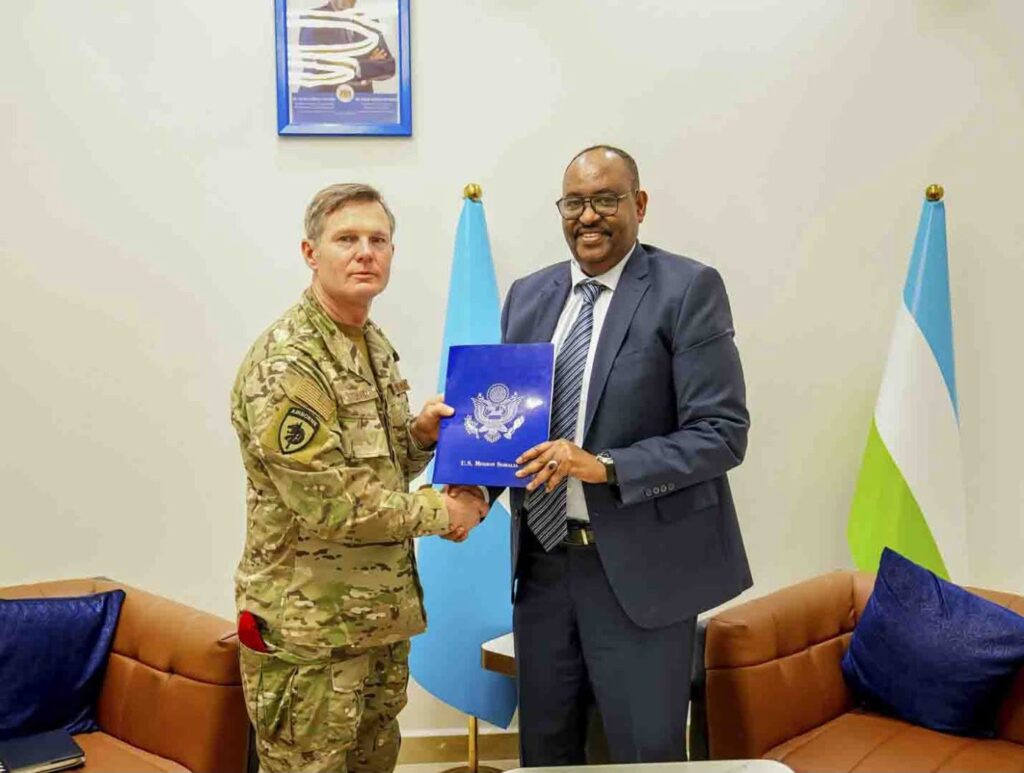
The agreement was concluded following high-level discussions between Puntland President Said Abdullahi Deni and a United States military delegation led by Major General Claude K. Tudor Jr., commander of United States Special Operations Command Africa. The talks were attended by senior regional government ministers, advisers, and defense commanders. According to an official statement from the regional presidency, the expanded facility will directly support intensified joint counterterrorism campaigns against insurgent networks while reinforcing maritime security across the Gulf of Aden and the Red Sea corridor.

While central and southern Somalia primarily confront the al-Qaeda-aligned Al-Shabaab network, northern Somalia’s Bari region, specifically the rugged Cal Miskaad mountain range serves as the main operational base for Islamic State in Somalia. Intelligence reports identify the local affiliate as a crucial financial and logistical hub for militant operations across Africa and South Asia. Local defense forces, supported by American airstrikes, intelligence sharing, and logistical assistance, have conducted sustained military operations to dismantle mountain bases and supply lines. Upgrading the northern military facility provides United States special operations units and local partner forces with enhanced operational capacity and streamlined staging closer to frontline areas.

Beyond regional counterterrorism, the expansion reflects broader efforts by the United States to safeguard critical maritime trade routes. Heightened threats to commercial vessels navigating the Bab al-Mandeb Strait have driven the need for flexible, forward-operating staging options in the region. The northern Somali coastline provides a strategic vantage point to oversee global maritime traffic passing between the Arabian Sea and the Suez Canal.

Direct security arrangements between American officials and Puntland authorities also highlight complex internal governance dynamics within Somalia. Somalia’s federal framework vests primary authority over foreign defense agreements in the central government, making direct international security engagements with regional administrations a delicate political balance. As regional security structures adapt to evolving threats, foreign military cooperation in northern Somalia will remain central to broader stability efforts across the Horn of Africa.
RELATED: