Title: Beyond the Waste: Rethinking Africa’s Urban Future
Njoki Kangethe
Introduction: More Than a Waste Story

Across this series, waste has appeared in many forms. It has been visible in overflowing dumpsites and clogged drainage systems, in the daily routines of informal workers, and in the emerging business models of startups attempting to turn discarded materials into value. At first glance, these may seem like separate stories: environmental, economic, and social, unfolding in parallel.
But taken together, they point to something larger. Waste is not just a sanitation issue or a technical challenge. It is a reflection of how cities grow, how economies function, and how value is assigned. In rapidly expanding urban centers such as Nairobi, Lagos, and Accra, the way waste is managed reveals deeper truths about infrastructure, inequality, and opportunity.

This is, ultimately, a story about systems, and the people who live within them.
A System Under Pressure
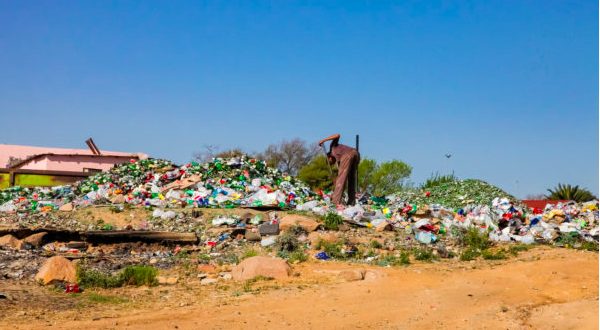
The earlier articles in this series have shown how waste systems across African cities are under increasing strain. Rapid urbanization, shifting consumption patterns, and limited infrastructure have combined to create a situation in which waste is generated faster than it can be managed.
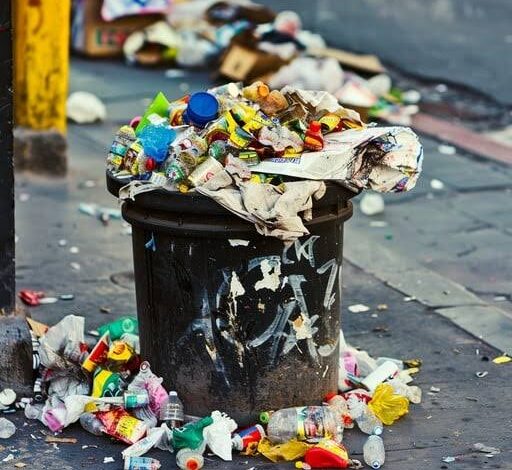
The consequences are visible and immediate. Uncollected waste accumulates in neighborhoods, blocks drainage systems, and contributes to flooding. Open dumping and burning introduce environmental and public health risks that are felt most acutely in low-income communities.
Yet these outcomes are not simply the result of poor management. They are the product of systems that have not kept pace with the scale and speed of urban change. Waste, in this sense, becomes a symptom of broader structural challenges, from governance and financing to spatial inequality.
The People Behind the System
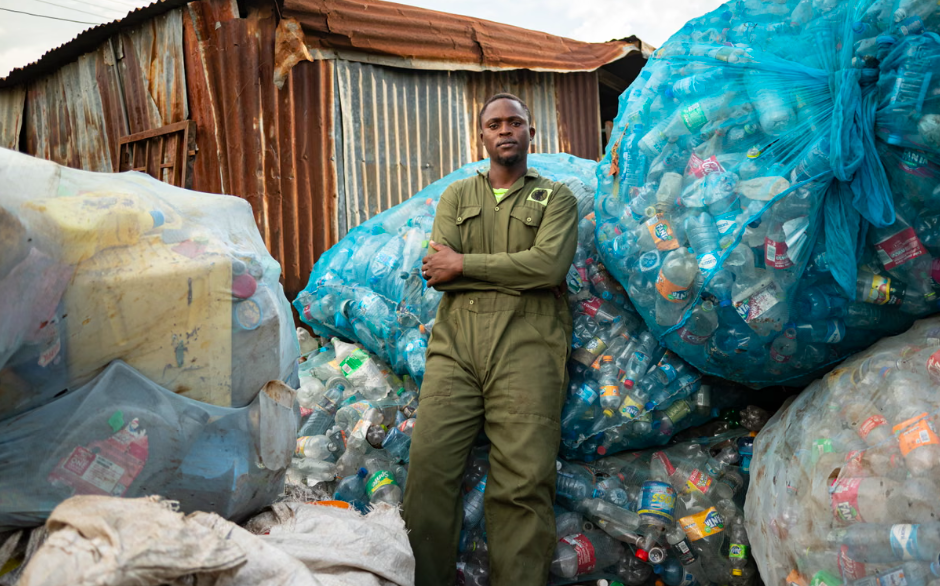
At the center of these systems are people whose work often goes unrecognized. Informal waste workers: collectors and recyclers, who have long formed the backbone of waste recovery across the continent. Their labor sustains a significant portion of recycling activity, even as it remains largely invisible within formal frameworks.
Their stories complicate the narrative. Waste is more than something that cities produce; it is also something that people depend on. For many, it is a source of income, resilience, and survival within constrained economic environments.
At the same time, these workers operate under challenging conditions, often without adequate protection, stable income, or formal recognition. As new systems and businesses emerge, their place within the evolving waste economy remains uncertain.
From Problem to Possibility
Alongside these challenges, the series has also explored a different trajectory, one in which waste is transformed, not only managed. Entrepreneurs and startups across the continent are building businesses that treat waste as a resource, creating value through recycling, material recovery, and circular production systems. These efforts signal a shift from reactive solutions to more intentional economic design.
The rise of circular economy models suggests that waste can play a role in shaping more sustainable urban futures. By reducing reliance on raw material extraction and extending the life cycle of products, these systems offer both environmental and economic benefits.
Yet this transformation is still unfolding. It is uneven, constrained by infrastructure gaps, policy limitations, and access to finance. It is also shaped by questions of inclusion, particularly around who participates in, and benefits from, this emerging economy.
The Question of Inclusion
Across each stage of the waste value chain, a central question persists: who is included, and who is left out?
As waste becomes more valuable, the dynamics around it begin to shift. Investment increases, systems become more formalized, and new actors enter the space. While this can drive efficiency and scale, it also carries the risk of marginalizing those who have historically operated within the sector.
The challenge, then, is not only to build more efficient systems, but to build systems that are equitable. This requires deliberate choices in policy, in business models, and in the design of interventions, to ensure that value is distributed more broadly.
Without this, the transition from waste to wealth may replicate existing inequalities, even as it creates new opportunities.
Rethinking the Future
What this series ultimately reveals is that waste sits at the intersection of urban planning, economic development, environmental sustainability, and social equity. To address it effectively requires more than technical solutions. It calls for a rethinking of how cities are designed, how systems are financed, and how value is understood.
There is no single pathway forward. Some cities may prioritize infrastructure expansion, others may focus on innovation and entrepreneurship, and many will continue to rely on hybrid systems that combine formal and informal approaches. What matters is intentionality and a willingness to design systems that are both functional and inclusive.
Conclusion: From Stories to Voices
The story of waste in Africa is often told through statistics like tons collected, percentages recycled, infrastructure built. But behind these numbers are lived experiences that are far more complex and human. They are the experiences of communities navigating the realities of inadequate systems, of workers building livelihoods within challenging conditions, and of entrepreneurs attempting to create new possibilities within existing constraints.
As this series transitions into a documentary, the focus shifts from analysis to voice.
The next step is to move beyond what can be observed and measured, and to listen to the people who live and work within these systems every day, to the experts shaping policy and practice, and to the innovators imagining different futures.Because the future of Africa’s cities will not be determined by systems alone.
It will be shaped by the people within them, how they are included, how they are heard,and how the value they create is recognized. Stay tuned, and thanks for being here.
RELATED: