Wayne Lumbasi
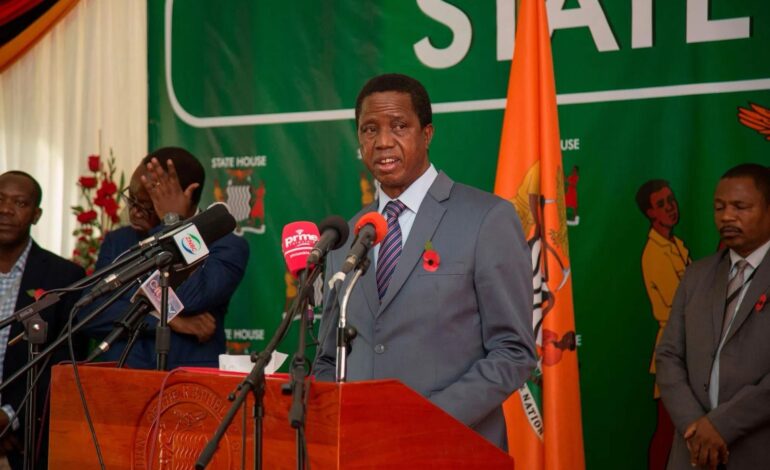
A prolonged and emotionally charged dispute over the remains of former Zambian president Edgar Lungu has taken a new turn after the government and his family reached an interim agreement before South Africa’s High Court in Pretoria.
Under the arrangement, Lungu’s body will be transferred to a private mortuary in Pretoria East, with the Zambian government covering the associated costs. The facility, operated by the Afrikaanse Verbond Begrafnis Onderneming, is expected to serve as a neutral holding site as legal and political tensions over the burial continue to unfold.

The development follows a dramatic sequence of events in which the government of Zambia took custody of the former president’s remains in April 2026, nearly a year after his death in June 2025. That move intensified an already bitter standoff with the family, who have challenged the state’s authority over the burial process.
At the heart of the dispute is a fundamental disagreement over how Lungu should be laid to rest. The Zambian government has pushed for a state funeral and burial on home soil, arguing that his status as a former head of state warrants official recognition. The family, however, has maintained that Lungu had expressed personal wishes regarding his funeral arrangements, including concerns over the involvement of current political leadership.
The matter has since spilled into South Africa’s legal system, with proceedings in Pretoria producing a series of rulings and counter rulings. At different points, the courts have alternated between granting the government custody of the body and ordering that it be returned to a mortuary, underscoring the complexity of the case.
The decision to relocate the remains to a private mortuary appears to represent a temporary compromise, one that allows both parties to step back from immediate confrontation while broader issues remain unresolved. However, it does little to settle the central question of where and under what conditions Lungu will ultimately be buried.
Beyond the legal technicalities, the dispute reflects deeper political and personal tensions. Lungu’s long standing rivalry with current President Hakainde Hichilema has cast a long shadow over the proceedings, turning what might have been a routine state funeral into a highly sensitive national issue.
The case also raises broader questions about the balance between state authority and family rights in the handling of former leaders’ remains, particularly in contexts where political divisions remain sharp even after death.
For now, the transfer to the Pretoria mortuary offers a pause in a saga that has stretched on for months. But with neither side backing down on the final burial arrangements, the fate of Lungu’s remains and the legacy battle surrounding them remains far from settled.
RELATED: