Wayne Lumbasi

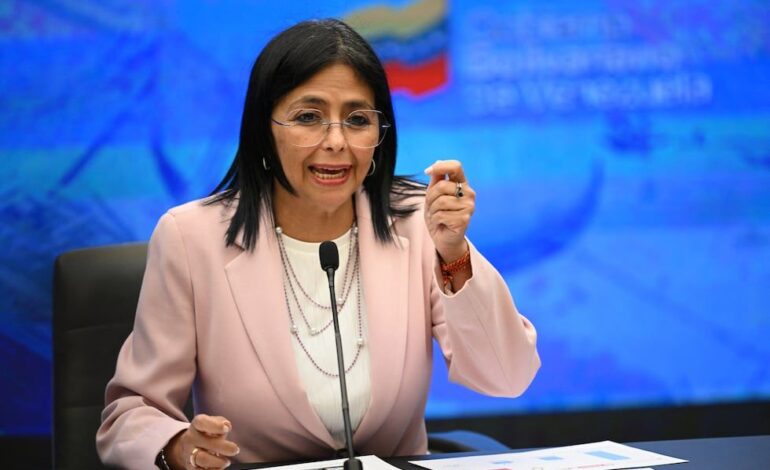
Delcy Rodríguez, Venezuela’s acting president, has traveled to The Hague to take part in proceedings at the International Court of Justice concerning the long-running territorial dispute between Venezuela and Guyana over the resource-rich Essequibo region.
The hearings are part of a case brought by Guyana in 2018 asking the court to confirm the validity of the 1899 arbitration award that established the boundary between the two countries when Guyana was still a British colony. Guyana argues that the ruling legally settled the border more than a century ago and that the territory, known as Essequibo, rightfully belongs to the country.

Venezuela, however, rejects the 1899 decision, saying it was unfair and the result of political manipulation. Caracas maintains that the dispute should instead be resolved under the terms of the 1966 Geneva Agreement, which called for negotiations between the two sides after Guyana gained independence from Britain. Venezuelan officials have also questioned the jurisdiction of the world court, although the court previously ruled that it has authority to hear the case.

The disputed Essequibo region covers roughly two-thirds of Guyana’s territory and has gained global attention in recent years after the discovery of major offshore oil reserves. Guyana has since become one of the world’s fastest-growing oil producers, a development that has heightened the strategic and economic importance of the border dispute.
Guyana has urged the court to uphold the 1899 ruling and provide legal certainty over the border, saying this would safeguard the country’s sovereignty and stability in the region. The government in Georgetown argues that continued claims by Venezuela threaten development and investment in the country’s rapidly expanding energy sector.
Venezuela, for its part, insists that the Essequibo territory historically belongs to Venezuela and that negotiations remain the only legitimate path to resolving the disagreement. The government has repeatedly emphasized that it will continue defending its claim while pursuing diplomatic solutions.

The case at the International Court of Justice is considered one of the most significant territorial disputes currently before the United Nations’ highest judicial body. A final ruling by the court could determine the internationally recognized border between the two South American neighbors, though political and diplomatic tensions may continue regardless of the outcome.
RELATED: