Faith Nyasuguta

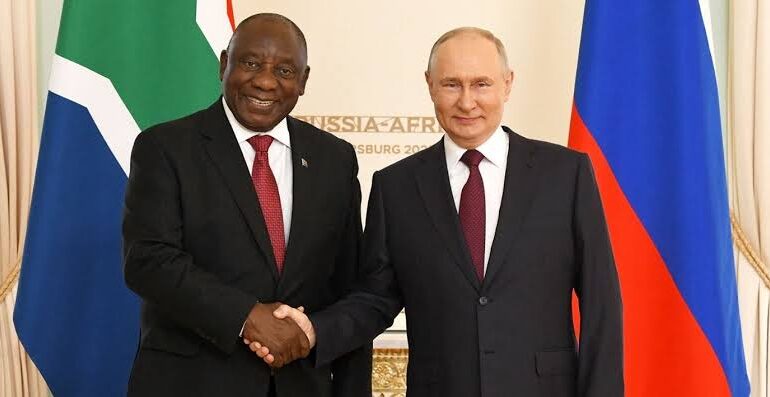
South Africa and Russia are taking another step toward deepening their long-standing military relationship, signalling that Moscow’s campaign to expand its strategic footprint across Africa is gathering pace despite sustained efforts by Western nations to isolate the Kremlin.
The latest development follows an official visit to Moscow by South African Army Chief Lieutenant General Lawrence Mbatha, where senior military leaders from both countries agreed to strengthen defence cooperation, expand military exchanges and pursue new areas of collaboration between their respective armies.

The visit highlights that, even as the war in Ukraine continues to reshape global alliances, Russia is finding willing partners across Africa—not only among military-led governments in the Sahel, but also among influential powers such as South Africa.

According to Russia’s Ministry of Defence, discussions focused on improving cooperation between the land forces of both countries, enhancing combat readiness and identifying additional joint military projects.

While neither government announced a new weapons deal or defence procurement agreement, officials confirmed that cooperation would deepen through institutional exchanges, military education and broader defence collaboration.
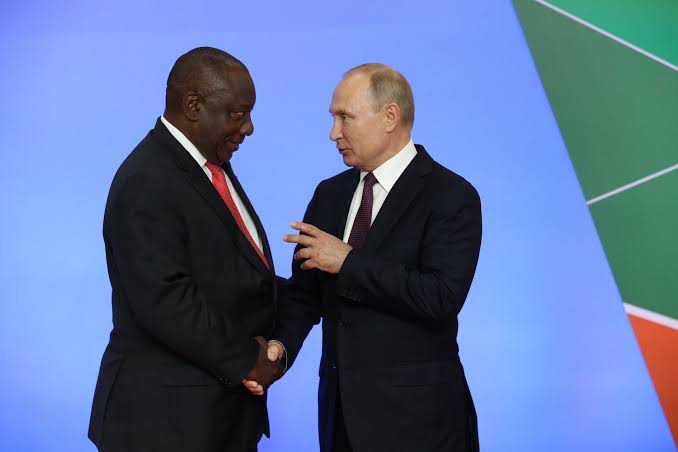
As part of the visit, Mbatha’s delegation is also expected to tour Russian military academies and defence industries, indicating that the partnership could increasingly focus on officer training, military doctrine and technical expertise rather than simply political engagement.

The trip marks Mbatha’s second official visit to Russia since becoming Chief of the South African Army, suggesting that military cooperation between Pretoria and Moscow is becoming increasingly institutionalised rather than symbolic.
The renewed engagement comes as Russia aggressively expands its security partnerships across Africa.
Over the past three years, Moscow has steadily positioned itself as an alternative security partner for African governments seeking military support without the political conditions often attached to Western assistance.
Earlier this month, Russia pledged stronger defence cooperation with Mali, Burkina Faso and Niger through the Alliance of Sahel States (AES), promising continued military training, technical support and security cooperation as the three countries battle jihadist insurgencies.
Russia has also maintained defence relationships with countries including the Central African Republic, Equatorial Guinea and several other African states through military advisers, training programmes and the deployment of the state-backed Africa Corps, which succeeded the Wagner Group following its dissolution.
The Kremlin has repeatedly declared that Africa remains one of its top foreign policy priorities, with cooperation expected to extend beyond defence into trade, energy, mining and infrastructure.
South Africa, however, occupies a unique place within Russia’s African strategy. Unlike the military governments of the Sahel, Pretoria is not turning to Moscow because it has severed ties with Western powers.
Instead, the relationship rests on decades of political solidarity dating back to the Soviet Union’s support for South Africa’s anti-apartheid liberation movements.
For many within South Africa’s governing establishment, those historical ties continue to shape diplomatic relations today.
Pretoria has consistently defended its foreign policy as one of strategic non-alignment, insisting it will maintain constructive relations with both Western nations and Russia rather than choosing sides in global rivalries.
That position has frequently attracted criticism from the United States and several European governments.
Western capitals have questioned South Africa’s neutrality, particularly after Pretoria hosted joint naval exercises with Russia and China shortly after Moscow launched its invasion of Ukraine.
South African officials, however, have repeatedly rejected accusations that the country has abandoned neutrality.
Instead, they argue that dialogue with all major powers remains central to South Africa’s foreign policy and reflects its broader commitment to a multipolar international order.
The latest military engagement also reinforces cooperation within the expanded BRICS grouping, where South Africa and Russia continue to advocate reforms to global governance institutions and reduced dependence on Western-led systems.
According to the Russian Defence Ministry, officials welcomed what they described as South Africa’s independent foreign policy and praised Pretoria’s refusal to participate in Western sanctions against Moscow.
Although neither side disclosed the full scope of future cooperation, defence analysts believe expanding military education, officer exchanges and institutional partnerships could have lasting strategic significance.
RELATED: