Wayne Lumbasi

A coalition of human rights organizations has filed a major legal complaint against the government of Ghana before West Africa’s regional court, challenging Accra’s role in a controversial “third-country removal” pact with the Trump administration.
The application, submitted early Tuesday to the Community Court of Justice of the Economic Community of West African States (ECOWAS), was filed on behalf of 27 individuals who were deported from the United States to Ghana despite holding explicit U.S. legal protections against being returned to their home countries. Legal advocates say the case represents a critical test of regional sovereignty and international human rights law as Washington aggressively expands its strategy to outsource immigration enforcement to third nations.

According to the legal filing, at least 60 people have been flown from the U.S. to Ghana since September 2025 under a bilateral strategy the Trump administration has defended as an essential tool to end illegal immigration and bolster national border security. The lawsuit alleges that the Department of Homeland Security (DHS) is utilizing Ghana as a transit point to bypass U.S. federal court protections. The deportees involved had previously been granted “withholding of removal” or protections under the UN Convention Against Torture by U.S. immigration judges, who ruled they faced a high probability of persecution, torture, or death if returned to their countries of origin, which include Nigeria and Gambia.

Instead of direct repatriation, the U.S. government flew the individuals to Accra. The complaint asserts that upon arrival, most of the deportees were quickly processed by Ghanaian authorities and removed to their home states within hours or days, a practice advocates call a severe violation of non-refoulement , the international legal principle prohibiting the return of asylum seekers to danger. The deportees told authorities they had been granted protections in the U.S., but most of them were removed immediately, while others were left entirely stranded in third countries without financial resources or identity documents.

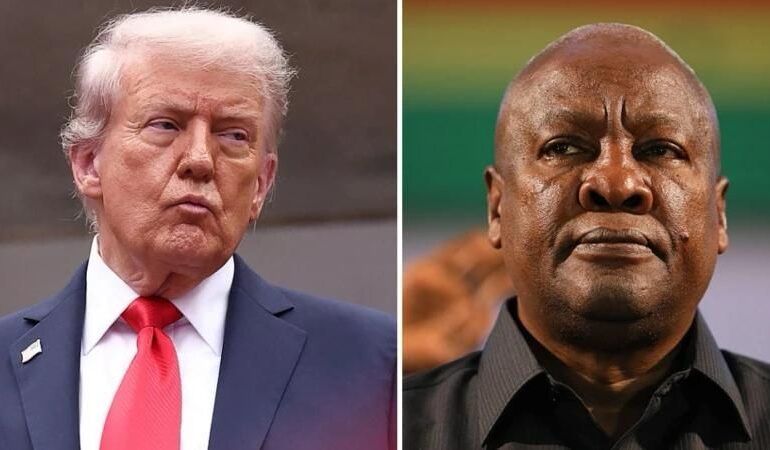
The legal team, led by the Global Strategic Litigation Council (GSLC), is seeking at least $100,000 in financial compensation for each deportee from the Ghanaian government, alongside broader legal reparations. However, the litigation’s primary objective appears geopolitical. Beatrice Njeri, a litigator for the GSLC representing the deportees, noted that the ultimate aim is to discourage other ECOWAS members from entering into similar deals with the Trump administration. The lawsuit seeks to force the administration of President John Mahama to fully disclose the hidden terms of its deportation agreement with Washington and block the West African nation from accepting any future flights.
The financial underpinnings of these third-country arrangements have increasingly drawn the scrutiny of international watchdogs and lawmakers. A U.S. Senate Foreign Relations Committee minority report published in February revealed that while total operating costs remain classified, the U.S. government has quietly funneled more than $32 million directly to five cooperating nations to facilitate third-country transfers. Similar bilateral pacts have been documented or discussed with other African states, including Eswatini, Equatorial Guinea, Cameroon, and Rwanda.

Spokespeople for the ECOWAS Court and the Ghanaian government could not be immediately reached for comment on Tuesday’s filing. Ghanaian officials have previously defended their cooperation by indicating that assistance was limited to processing West African nationals in compliance with ECOWAS free movement protocols before helping them transition back to their home states.
The human cost, however, continues to mount behind closed doors. The coalition representing the plaintiffs noted that they were unable to provide direct interviews with the deportees, as the majority are currently in hiding across West Africa out of fear for their safety. A previous legal challenge filed in U.S. federal courts by Asian Americans Advancing Justice (AAJC) highlighted cases of extreme enforcement, alleging that some migrants were forced to endure the 16-hour flight to Accra in restraint suits, only to be threatened with immediate further deportation upon landing. The UN Human Rights Office has previously urged Accra to halt the transfers, citing documented cases of vulnerable individuals including LGBTQ+ asylum seekers being funneled directly back into jurisdictions where they face criminalization and physical violence.
While U.S. federal judges have previously expressed sharp skepticism of the third-country removal strategy with some noting that it appears designed explicitly to make an “end-run” around domestic judicial oversight U.S. courts have consistently ruled they lack jurisdiction over the individuals once they are removed from U.S. soil. By shifting the battlefield to the ECOWAS Court in Abuja, human rights litigators are aiming to cut off the supply side of the policy, wagering that the financial incentives offered by Washington will no longer be worth the legal and diplomatic liabilities for West African governments.
RELATED: