Faith Nyasuguta

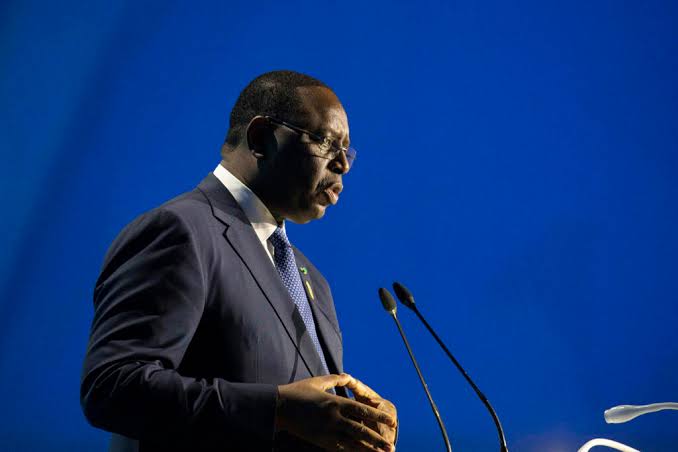
Africa has been left with just one candidate in the race to become the next United Nations Secretary-General after former Senegalese President Macky Sall withdrew his candidacy, leaving Uganda’s Olara Otunnu as the continent’s sole remaining contender.
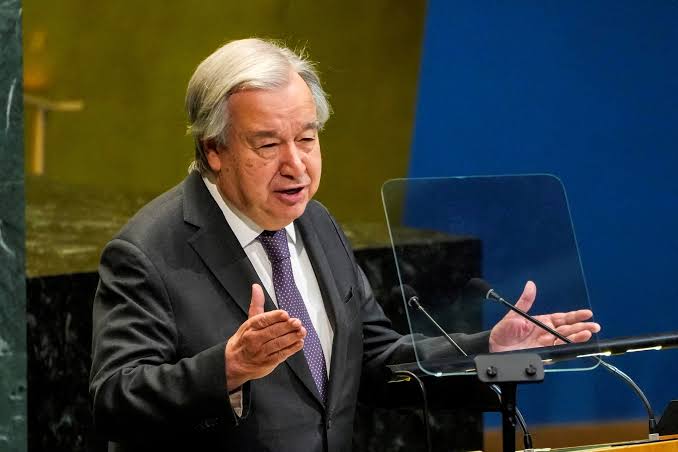
Sall announced his withdrawal on October 17, a day after the UN Security Council conducted its sixth informal ballot to assess support for candidates seeking to succeed António Guterres, whose second five-year term ends on December 31, 2026.

The former Senegalese leader said his decision followed consultations with Burundi’s President Évariste Ndayishimiye, who chairs the African Union, and Senegalese President Bassirou Diomaye Faye, the current chairperson of the Economic Community of West African States (ECOWAS).

Sall said the results of successive informal votes indicated growing support for a candidate from Latin America and the Caribbean, potentially a woman. He expressed hope that withdrawing would help the Security Council reach a consensus on the next UN leader.
His departure leaves six candidates in the contest, including Uganda’s Otunnu, although none has secured the support needed to advance to a formal recommendation.
The development comes at a critical stage in the selection process, with Security Council members struggling to agree on a successor to Guterres amid geopolitical divisions and mounting pressure for reforms within the United Nations.
Uganda’s Olara Otunnu Remains Africa’s Sole Contender
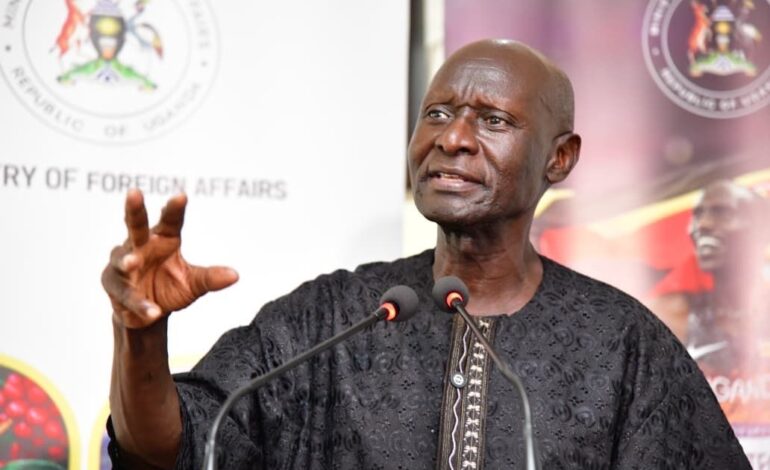
Ugandan diplomat Olara Otunnu is now Africa’s only remaining candidate in the current field, but his campaign faces significant opposition within the Security Council.
Otunnu, a former UN Under-Secretary-General, served as the United Nations Special Representative for Children and Armed Conflict from 1998 to 2005. He previously served as Uganda’s foreign affairs minister and permanent representative to the United Nations.
His diplomatic career has included extensive work on conflict prevention, children’s protection and international cooperation. However, the latest informal ballot suggests he faces considerable difficulty securing the backing required to become Secretary-General.
According to voting figures reported by GWL Voices, Otunnu received four votes of encouragement, ten votes of discouragement and one expression of no opinion during the October 16 ballot. Three of the discouraging votes came from permanent members of the Security Council, indicating that his candidacy could face a veto if the same positions were maintained during a formal vote.
The five permanent members — China, France, Russia, the United Kingdom and the United States — each possess veto power over the Security Council’s recommendation.
Despite the opposition, the informal results do not automatically eliminate Otunnu from the race. Council members can change their positions during subsequent negotiations and voting rounds.
Latin American Candidates Lead as Security Council Remains Divided
While Africa’s representation in the contest has narrowed, candidates from Latin America and the Caribbean have emerged as the leading contenders.
Former Costa Rican Vice-President Rebeca Grynspan received the highest number of encouraging votes in the October 16 ballot. Grynspan secured nine votes of encouragement, five votes of discouragement and one expression of no opinion.
However, two of the discouraging votes came from permanent Security Council members, presenting a major obstacle to her candidacy.
Guyana’s Carolyn Rodrigues-Birkett and Argentina’s Rafael Grossi, who heads the International Atomic Energy Agency, also performed strongly. Both received eight encouraging votes and six discouraging votes, with one member expressing no opinion. Each also faced opposition from two permanent Security Council members. The results highlight the difficulty of securing agreement among the world’s major powers.
Although Grynspan currently leads the informal voting, no candidate has obtained the level of support needed to ensure selection.
The October 16 ballot was particularly significant because it was the first in the current process to use colour-coded ballots distinguishing votes cast by permanent Security Council members from those of elected members. This allowed diplomats to identify which candidates faced potential vetoes, although the identities of the individual countries casting discouraging votes remained confidential.
The results showed that all seven candidates participating in the ballot faced opposition from at least one permanent member. With no clear consensus emerging, diplomats have left open the possibility that additional candidates could enter the contest before a final decision is reached.
Macky Sall’s Candidacy Faced Divisions Within Africa
Sall’s withdrawal also brings attention to disagreements among African governments over his nomination. The former Senegalese president was nominated by Burundi and supported by Senegal, but efforts to secure broader African Union endorsement encountered objections from several member states.
Nigeria was among the countries that questioned the nomination process, arguing that the procedure used to seek continental endorsement was inconsistent with established diplomatic practices. The disagreement also reflected wider concerns about regional rotation in the selection of UN Secretaries-General. Under an informal diplomatic convention, the position is generally expected to rotate among different geographical regions.
Latin American and Caribbean countries have argued that their region should provide the next Secretary-General, particularly as it has not held the position since Peru’s Javier Pérez de Cuéllar left office in 1991.
The principle of regional rotation is not a binding requirement under the UN Charter, but it remains an influential consideration in negotiations over the appointment. For African countries, these differences have complicated efforts to rally behind a common candidate.
Sall’s withdrawal therefore reflects not only the opposition he faced within the Security Council but also the challenges surrounding his candidacy at the continental level.
Africa’s History in UN Leadership
Africa has previously held the United Nations’ highest administrative position through two Secretaries-General. Egypt’s Boutros Boutros-Ghali served from 1992 to 1996, becoming the first African to lead the organisation. He was succeeded by Ghana’s Kofi Annan, who served two consecutive terms from 1997 to 2006.
Since Annan’s departure, the position has been held by South Korea’s Ban Ki-moon and Portugal’s António Guterres. Africa’s reduced presence in the current contest comes amid longstanding calls for the continent to secure greater influence in international institutions.
African governments have repeatedly advocated reforms to the UN Security Council, particularly the expansion of permanent representation to address the continent’s exclusion from permanent membership.
The African Union’s longstanding position calls for at least two permanent seats for Africa, with veto rights for as long as those rights continue to exist, alongside additional non-permanent seats. These demands reflect wider concerns that Africa remains underrepresented in institutions responsible for decisions affecting international peace, security and development.
However, the appointment of the Secretary-General is separate from negotiations over Security Council reform.
A candidate’s nationality does not automatically determine how the UN will respond to African priorities, and the selection process ultimately depends on diplomatic negotiations among member states.
Nevertheless, the departure of one of Africa’s two candidates highlights the challenges facing the continent in securing senior positions within global governance institutions.
How the Next UN Secretary-General Will Be Chosen
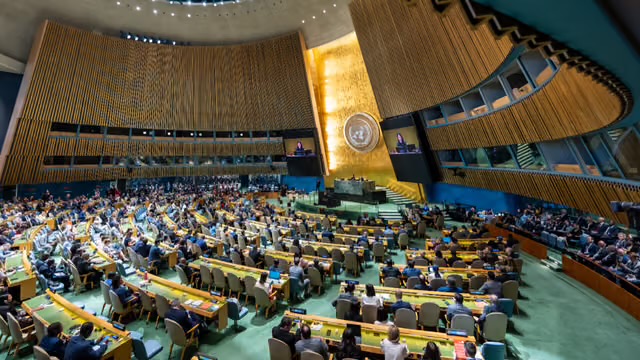
Under Article 97 of the United Nations Charter, the Secretary-General is appointed by the General Assembly following a recommendation from the Security Council. The 15-member Security Council must first agree on a candidate.
A successful recommendation requires at least nine affirmative votes and no veto from any of the five permanent members. The informal ballots conducted so far are designed to measure support and identify candidates who may be capable of securing agreement.
During these ballots, Security Council members can encourage a candidate, discourage a candidate or express no opinion. However, a discouraging vote during an informal ballot is not legally equivalent to a veto during the formal selection process.
The distinction means candidates who face opposition in early rounds can remain in contention if diplomatic negotiations produce changes in voting positions. The Security Council will eventually recommend a candidate to the General Assembly, which will then decide on the appointment. The successful candidate is expected to take office on January 1, 2027, following the conclusion of Guterres’ term.
With less than three months remaining before the leadership transition, the absence of a consensus candidate increases pressure on Security Council members to resolve their differences. The possibility of additional nominations also means the composition of the field could change before the final selection.
Africa’s Remaining Candidate Faces an Uncertain Path
For Uganda’s Olara Otunnu, the immediate challenge is to secure broader diplomatic support and overcome opposition from permanent Security Council members. His current voting figures place him behind the leading Latin American and Caribbean candidates, although the selection process remains open.
For the continent, Sall’s withdrawal reduces Africa’s representation in the current field to a single candidate at a time when African leaders continue to call for greater participation in global decision-making. In announcing his departure, Sall reaffirmed the importance of ensuring Africa’s voice is heard in international institutions, particularly on matters involving peace, security and development.
Meanwhile, the leading candidates face obstacles of their own, with none yet securing the backing of all five permanent Security Council members. The outcome will depend on whether the existing candidates can overcome opposition or whether negotiations produce a new contender capable of attracting broader support.
For Africa, the immediate concern is whether Otunnu can remain competitive in the negotiations. The wider issue is how the continent can strengthen its influence in a global governance system where the most consequential appointments remain heavily dependent on the agreement of a small group of powerful countries.
RELATED: