Njoki Kangethe

The True Cost of Consumption- Part 2
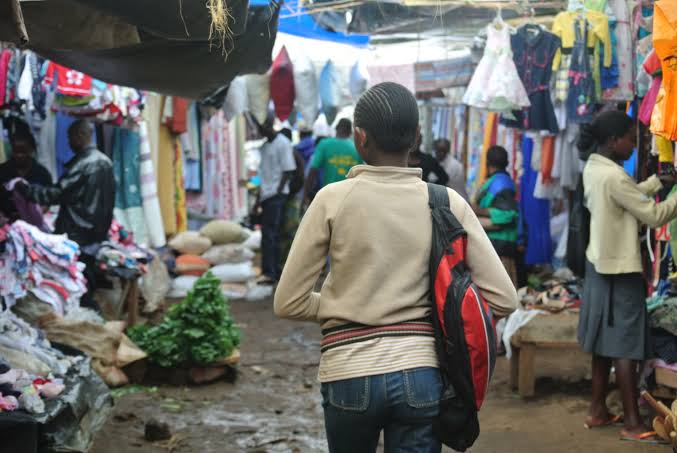
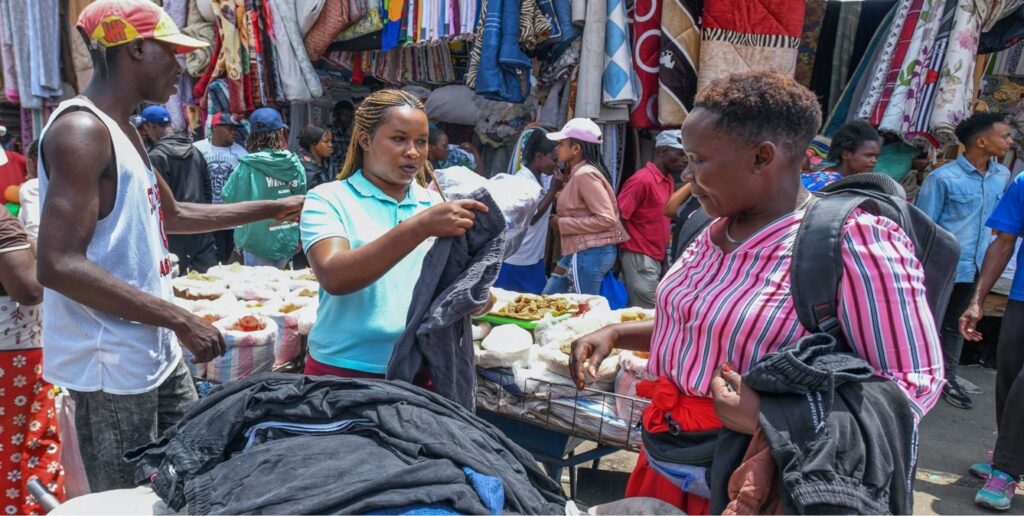
A bale of second-hand clothes arrives at a market in Nairobi. Traders gather around it, hoping to find garments they can sell at a profit. A customer searches for a jacket that fits her budget, while another looks for a pair of jeans that would cost considerably more if bought new. Nearby, tailors alter garments, resellers build their businesses, and transporters move clothing between markets. It is an ordinary scene in Kenya’s thriving mitumba (2nd Hand clothes) trade, one that supports livelihoods and makes clothing accessible to millions of people.

Yet this market is also part of a much larger global story. Before a garment reaches a second-hand stall in Nairobi, it may have travelled across several countries, passed through multiple owners and accumulated an environmental footprint that began long before its first sale. And when clothing is no longer wearable, the question of what happens next remains.

The fashion industry has made clothing more accessible while encouraging faster production cycles and increasingly frequent purchases. The consequences extend beyond what people spend on clothes. They include the resources used in manufacturing, the conditions under which garments are made, the trade in used clothing and the waste generated when products reach the end of their useful lives.

The question goes beyond whether people should stop buying clothes. It is whether the industry can continue producing and selling them at its current pace without passing an unfair share of the costs to workers, communities and the environment.
The Environmental Cost of Looking Good

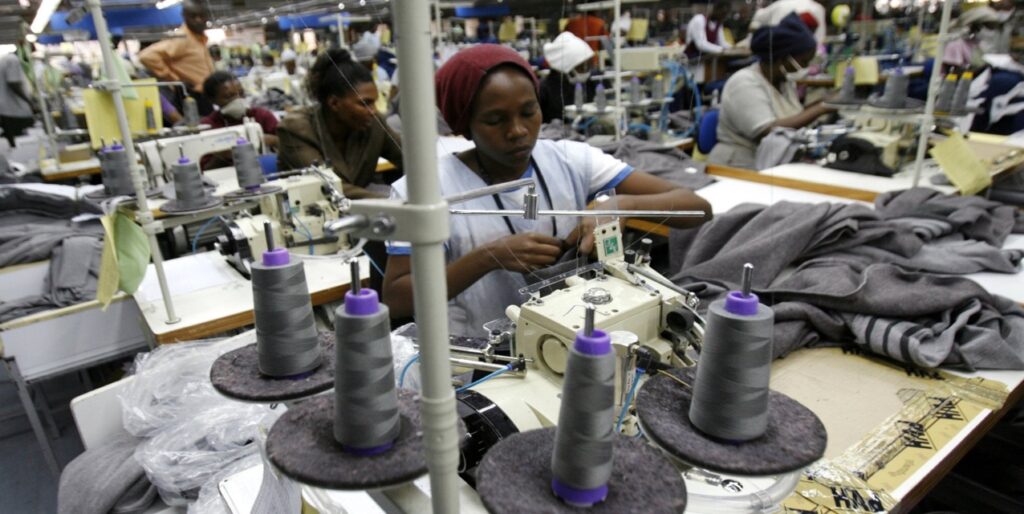
A garment’s life begins long before it appears in a shop. Cotton must be grown and processed, synthetic fibres are often manufactured from fossil fuel-derived materials, and fabrics must be dyed, finished, cut and sewn. The finished clothing then needs packaging, transport, retail space and, eventually, a way to be reused or discarded.
Each stage requires resources and can generate pollution. Cotton cultivation can place pressure on water and land, textile dyeing can contaminate waterways where wastewater is inadequately treated, and synthetic fabrics can release microfibres during washing. Manufacturing and transportation also contribute to greenhouse gas emissions.
The scale is substantial. The United Nations Environment Programme (UNEP) estimates that the textile value chain accounts for approximately 2–8 per cent of global greenhouse gas emissions. Its 2025 report, Transforming the Textile Industry: Learning to Manage Waste, Better, estimates that the world generates around 92 million tonnes of textile waste annually. In 2023, only 8 per cent of textile fibres came from recycled sources, while less than 1 per cent of the total fibre market came from textile-to-textile recycling (UNEP, 2023; 2025).
These figures point to a fundamental problem: the industry continues to rely heavily on new materials, while the systems needed to recover and reuse discarded textiles remain limited. Clothing can be produced in enormous quantities, worn for relatively short periods and discarded without its materials returning to the manufacturing process.
The Business of Buying More
Fast fashion is built around making trends available quickly and at relatively low prices. Short production cycles, frequent product launches and aggressive marketing encourage consumers to update their wardrobes more often. For businesses, selling more garments can generate revenue and keep supply chains moving. For consumers, the model offers variety and affordability.
However, the commercial incentives can create a tension between volume and durability. If a business depends on frequent purchases, products that remain useful for longer may not always align with its growth strategy. Low prices can also conceal the pressure placed on suppliers and workers to produce garments quickly and cheaply.
UNEP’s roadmap for a more sustainable textile value chain identifies changes in consumption patterns, improved production practices and investment in infrastructure as important priorities. It argues that the transition requires coordinated action from manufacturers, brands, policymakers, investors and consumers, rather than relying on individual behaviour alone (UNEP, 2023).
This is not an argument that every inexpensive garment is poorly made or that consumers should pay more simply because a product is marketed as sustainable. Price alone cannot establish whether a garment was produced responsibly. The more important questions concern its durability, the resources used to manufacture it, the treatment of workers and the arrangements for managing it when it is no longer needed.
Mitumba: Opportunity and Environmental Challenge
In Kenya, the story becomes more complicated. Second-hand clothing is not simply a destination for unwanted garments; it is an established economic sector supporting traders, transporters, market workers, tailors and other small businesses. It also provides an important source of affordable clothing for households whose budgets cannot accommodate new garments at comparable prices.
A 2021 report by the Institute of Economic Affairs Kenya on the second-hand clothing and footwear trade highlighted the sector’s contribution to employment, government revenue and access to affordable goods. The report also emphasised that demand for mitumba is closely connected to household incomes. For many consumers, buying second-hand is not merely an environmental preference or a fashion statement. It is a practical financial decision.
That economic reality matters when discussing the environmental consequences of clothing imports. A blanket argument against mitumba risks overlooking the livelihoods it supports and the value consumers derive from it. At the same time, the existence of a large resale market does not mean every imported garment can be reused.
Research published by Judit Kiss in 2024 examined the benefits and drawbacks of Kenya’s second-hand clothing industry. It highlighted the sector’s contribution to jobs and affordable clothing, alongside concerns about textile waste and pressure on domestic textile and garment production. The challenge, therefore, is not simply to choose between importing second-hand clothing and banning it. It is to understand how the trade operates, improve the quality of garments entering the market, reduce waste and strengthen viable local manufacturing.
Where Do Unwanted Clothes End Up?
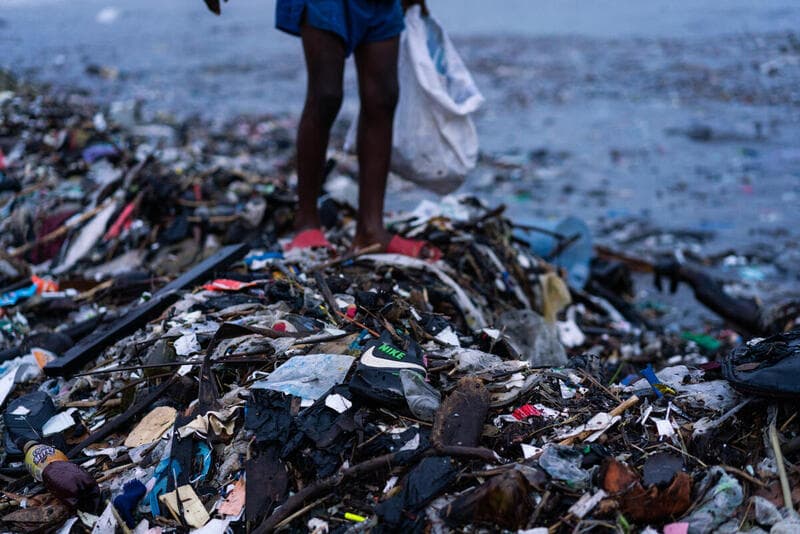
The environmental question becomes particularly pressing when garments are unsuitable for resale or wear out after repeated use. Clothing that cannot be sold may be repurposed, recycled, dumped or burned, depending on its material, condition and the recovery systems available.
The European Environment Agency’s 2023 analysis of used textile exports found that exports from the European Union had increased substantially over the preceding two decades. In 2019, 46 per cent of the EU’s used textile exports went to Africa. The agency noted that much of this clothing was intended for reuse, but garments unsuitable for reuse could end up in open landfills or informal waste streams. These figures describe EU exports at that time, not the current volume of clothing entering Kenya specifically, but they illustrate the challenges of tracking textiles across international supply chains.
For importing countries, the concern is that the costs of managing unusable garments may fall on traders, waste workers, communities and public authorities. For exporting countries, sending used clothing abroad can appear to offer a solution to domestic textile waste, but export alone does not guarantee that garments will be reused or recycled responsibly.
This raises an uncomfortable question about responsibility. If a garment is produced and sold in one country, discarded by its first owner in another, and imported for resale in Kenya, who should bear the cost when it becomes waste? The answer cannot rest solely on the final person holding the garment. Responsibility must also be considered across the production, retail, export and recovery systems that determine the garment’s journey.
Can Fashion Become More Sustainable?
There are alternatives to a system dependent on constant production and disposal. Businesses can design garments for durability, improve manufacturing practices, use materials more efficiently and make repair easier. Consumers can extend the life of clothing through mending, resale, swapping and reuse. Tailors, repair shops and second-hand retailers already play a role in keeping garments in circulation, creating economic value from products that might otherwise be discarded.
Recycling can also help recover materials, although it is not a universal solution. Blended fibres, dyes, buttons and zips can make garments difficult to process, and textile-to-textile recycling remains limited. Keeping a wearable garment in use is often preferable to breaking it down for its materials, particularly when reuse genuinely displaces the need to manufacture a replacement.
For Kenya, improving sustainability means taking the existing clothing economy seriously. That includes protecting the livelihoods connected to mitumba while examining the quality of imported garments, investing in textile recovery and supporting local designers and manufacturers who can compete on quality, durability and price. It also requires better evidence about how much textile waste is generated, where it goes and which interventions are working.
The fashion industry cannot become sustainable through consumer guilt alone. Manufacturers influence what gets produced, brands shape purchasing habits, importers determine what enters markets, and governments establish the rules under which businesses operate. Consumers make choices within the options available to them, often under financial constraints.

The next time we buy a shirt, the price tag will still tell us how much money changes hands. It will not tell us how much water was used to make it, whether the workers who produced it were fairly treated, how long it will last or who will manage it when it is no longer wearable.
Those questions belong to a wider conversation about the true cost of consumption. The challenge is to build a clothing economy in which affordability does not depend on hidden environmental damage, livelihoods are not sacrificed in the name of sustainability, and the value of a garment is measured by more than how cheaply and quickly it can be sold.
References
1. United Nations Environment Programme (UNEP). (2023). Sustainability and Circularity in the Textile Value Chain: A Global Roadmap.https://wedocs.unep.org/handle/20.500.11822/42580
2. United Nations Environment Programme (UNEP). (2025). Transforming the Textile Industry: Learning to Manage Waste, Better.https://wedocs.unep.org/handle/20.500.11822/48707
3. Institute of Economic Affairs Kenya. (2021). The State of Second-Hand Clothes and Footwear Trade in Kenya.https://ieakenya.or.ke/download/the-state-of-second-hand-clothes-and-footwear-trade-in-kenya/
4. Kiss, J. (2024). “Mitumba: Second-hand clothing industry in Kenya. A blessing or a curse?” Hungarian Journal of African Studies, 17(3), 23–44. https://doi.org/10.15170/AT.2023.17.3.2
5. European Environment Agency. (2023). EU Exports of Used Textiles in Europe’s Circular Economy.https://www.eea.europa.eu/en/analysis/publications/eu-exports-of-used-textiles
RELATED: