Faith Nyasuguta
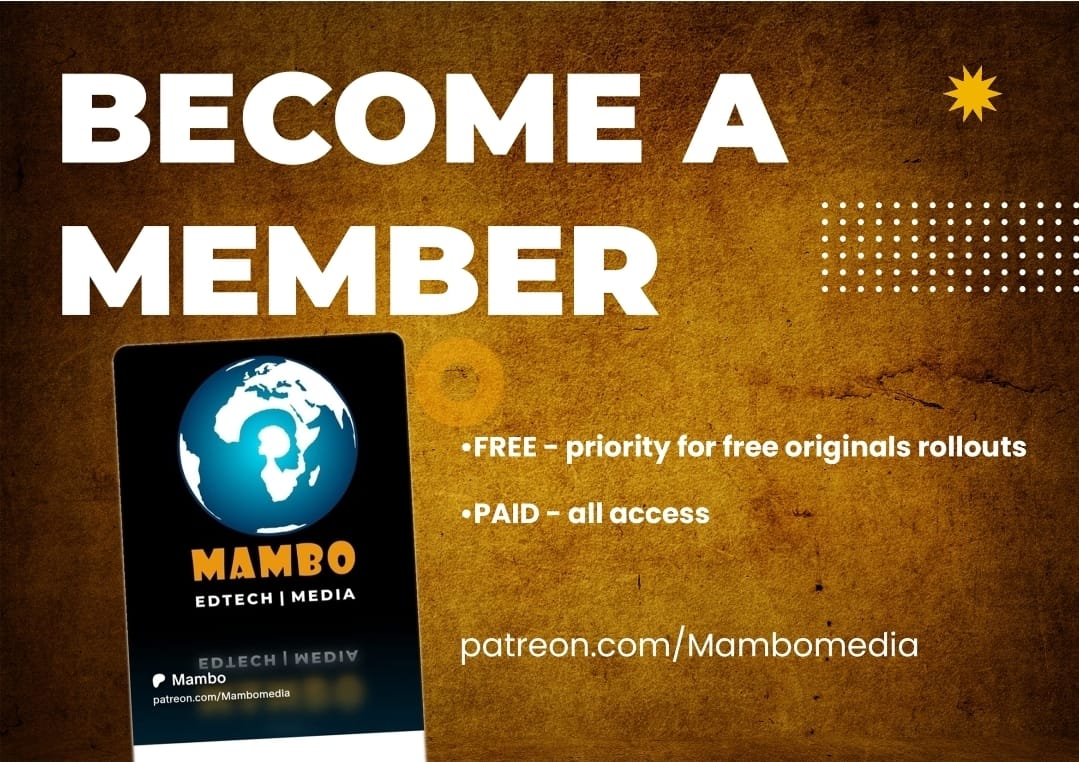
Angolan President João Lourenco has called for the immediate and unconditional lifting of the United States’ long-running economic embargo against Cuba, using his address to the 81st United Nations General Assembly in New York on Tuesday, to challenge Washington’s treatment of the Caribbean country.
Lourenco argued that Cuba should not be treated as a terrorist state and said the embargo has imposed severe consequences on ordinary Cubans. He described the policy as “inhumane” and “unfair” and said it violates principles and norms of international law. Angola’s presidency and Angolan media reported that Lourenco also invoked Cuba’s historical support for African liberation struggles, including its role in the fight against apartheid in southern Africa.

“Cuba cannot be arbitrarily and unilaterally considered a state sponsor of terrorism,” he said, according to the Angolan account of his speech. He also called for respect for United Nations resolutions opposing the embargo.

The intervention comes at a particularly significant moment. On the same day, U.S. President Donald Trump addressed the UN General Assembly and described Cuba as a “failed state”, saying his administration was applying unprecedented pressure on the Communist-led government. Trump said he expected political change on the island. The Cuban delegation walked out during his speech.
The contrast could hardly be sharper: Washington is intensifying pressure on Havana, while Angola is calling for that pressure to end.
The US Embargo
The dispute dates back to the aftermath of the 1959 Cuban Revolution, when Fidel Castro’s revolutionary government took power and began nationalising property, including American-owned assets.
The United States initially recognised Castro’s government, but relations deteriorated rapidly. Washington imposed an economic embargo in October 1960, and diplomatic relations were broken in January 1961. In February 1962, President John F. Kennedy formally proclaimed a comprehensive U.S. trade embargo against Cuba. The policy subsequently expanded through legislation and regulations.
In 1992, the Cuban Democracy Act tightened restrictions, including measures affecting foreign subsidiaries of U.S. companies. In 1996, the Helms-Burton Act further codified the embargo into U.S. law and gave Congress a much greater role in determining whether it could be lifted.
This is important because the embargo is not simply an executive policy that a U.S. president can erase with one announcement. Much of it is embedded in legislation, meaning a comprehensive removal would require congressional action.
The United States maintains that its restrictions are lawful and justified by its foreign-policy and national-security objectives. During UN discussions, the U.S. has also argued that Washington remains a major supplier of agricultural products, food and medical devices to Cuba and that the embargo contains humanitarian exceptions.
Cuba and many countries at the UN take a fundamentally different position, arguing that the restrictions amount to economic coercion that harms the Cuban population.
UN Opposes Embargo
The UN General Assembly has considered the issue for decades. Cuba first placed the question on the Assembly’s agenda in 1991, and the issue has subsequently returned repeatedly. In October 2025, the General Assembly again voted overwhelmingly for a resolution calling for an end to the U.S. economic, commercial and financial embargo.
The result was 165 countries in favour, seven against and 12 abstentions. Angola voted in favour. The vote is politically significant but does not legally force the United States to end the embargo. General Assembly resolutions of this kind express the position of the international community but do not function like binding Security Council sanctions.
The issue was reopened for debate in July 2026, after Cuba requested that the General Assembly resume consideration of the matter. UN records said the Assembly had previously concluded consideration in October 2025 before reopening the agenda item.
Why Did Lourenco Bring Up Terrorism?
Cuba has been designated by the United States as a State Sponsor of Terrorism. The designation dates to January 12, 2021, when the first Trump administration restored Cuba to the list, accusing its government of supporting acts of international terrorism. Cuba had previously been on the list from 1982 until 2015.
Then, on January 14, 2025, President Joe Biden moved to rescind the designation. His administration certified that Cuba had not provided support for international terrorism during the preceding six months and had provided assurances that it would not do so in the future.
But Biden’s decision lasted only days. On January 20, 2025, immediately after returning to office, Trump revoked Biden’s decision and restored Cuba’s designation. So when Lourenco says Cuba should not be regarded as a terrorist state, he is challenging a current U.S. designation, not describing a universally accepted international classification.
That clarification is key because there is no UN designation equivalent to the U.S. State Department’s “State Sponsor of Terrorism” list.
Cuba Important To Africa
Lourenco’s defence of Cuba also has a distinctly African historical dimension. During the Cold War, Cuba provided military and political support to several African liberation movements and governments. Its involvement in Angola became particularly important.
Cuban forces fought alongside Angola’s government during the Angolan Civil War, including the decisive 1987–88 campaign around Cuito Cuanavale. Cuba deployed tens of thousands of personnel to Angola during the conflict.
The confrontation became part of the wider struggle involving Angola, South Africa and Namibian independence. Angola’s government and other African actors have long argued that Cuban involvement contributed to the eventual political settlement that helped open the way for Namibian independence in 1990 and the end of apartheid-era regional conflict. That history explains why Angola’s leadership continues to view Cuba through a different lens from Washington.
For Lourenco, the relationship is not simply ideological solidarity with Havana. It is tied to Cuba’s historical role in southern Africa.
Human Cost & Economic Crisis
The argument over the embargo has become even more urgent because Cuba is experiencing a severe economic and energy crisis. The island has faced fuel shortages, prolonged electricity blackouts, declining tourism and shortages of essential goods. The U.S. intensified its pressure on Cuba after Trump returned to office in January 2025, including measures affecting oil shipments and financial transactions. The situation has produced a difficult debate over causation.
Cuba and its international supporters attribute a significant portion of the crisis to the U.S. embargo and its extraterritorial effects. Washington argues that Cuba’s economic problems also reflect decades of domestic economic mismanagement, restrictions, underinvestment and the structure of its state-controlled economy.
The embargo affects Cuba’s ability to trade and access finance, but it does not explain every weakness in the Cuban economy.
Lourenco’s Speech Matters
Lourenco’s intervention is significant because it comes from an African head of state at a moment when U.S.-Cuba tensions are rising again.
It also reflects a longstanding pattern at the UN: many African, Caribbean, Asian and Latin American governments have consistently supported resolutions calling for the embargo to end.
For Africa, however, there is another lesson. The Cuba debate demonstrates how foreign policy can remain shaped by decisions made decades ago. A policy introduced during the Cold War in 1962 still affects international trade, finance and diplomacy in 2026.
It also shows why the UN General Assembly remains an important political arena for countries that cannot individually change the policies of major powers.
Angola cannot lift the U.S. embargo. Neither can the UN General Assembly through a non-binding resolution. But Lourenco can use the world’s largest diplomatic platform to place an African position on record. And in 2026, that position is clear: Angola wants Washington to end its economic pressure on Cuba, while Washington is moving in the opposite direction.
RELATED: