Njoki Kangethe

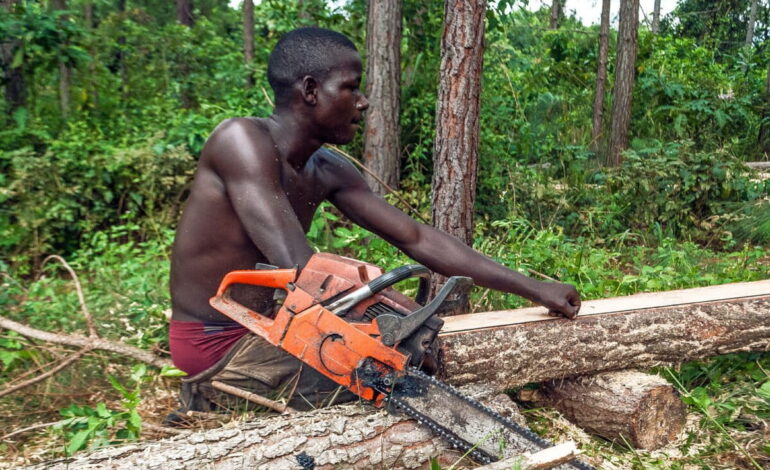
Walk into almost any Kenyan hardware shop, timber yard or construction site and you will find evidence of how dependent the country is on wood. Timber becomes doors and windows, furniture and roofing, school desks and electricity poles. It supports sawmills, carpenters, transporters, traders and thousands of households whose livelihoods are connected, directly or indirectly, to the timber trade.
Wood is one of those materials that is so familiar that we rarely stop to consider its first form. Before it was a plank stacked in a timber yard, it was a living tree, growing for years in a landscape that may have been providing much more than timber.

This is what makes Kenya’s current conversation about logging so complicated. The country needs wood, and a growing population and construction industry will continue to create demand for it. At the same time, Kenya is trying to increase forest cover, restore degraded landscapes and protect forests that perform functions extending far beyond the timber economy. The tension between these objectives is not new. In fact, Kenya has spent years moving back and forth between restrictions on logging and attempts to reopen parts of the forestry sector, each time confronting the same fundamental question: how do you use a forest without using it up?

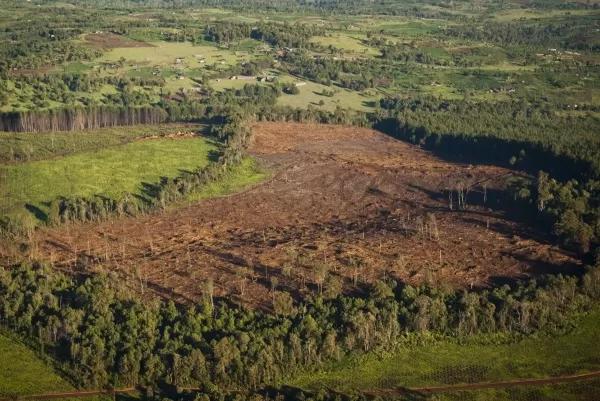
Kenya’s most recent National Forest Resources Assessment estimated forest cover at 8.83 per cent of the country’s land area, equivalent to about 5.23 million hectares. Tree cover was estimated at 12.13 per cent, a higher figure because it includes trees growing outside land classified as forest. The distinction is important, particularly at a time when tree-planting has become a major part of Kenya’s environmental agenda. Having more trees in a landscape is not necessarily the same thing as having more forest, and the ecological functions of an indigenous forest cannot automatically be recreated by planting rows of trees elsewhere.

The history of Kenya’s logging policies illustrates just how difficult it is to reconcile these competing interests. In 2018, the government imposed a moratorium on logging in public and community forests following growing concern about forest degradation, illegal logging, encroachment and weaknesses in the management of forest resources. The moratorium was extended over subsequent years, although exceptions were introduced for the harvesting of mature and over-mature trees in commercial plantations.
In 2023, the government announced that the restrictions would be lifted for commercial forests, arguing that mature trees in plantations needed to be harvested to make room for regeneration and to support the country’s timber industry. Indigenous forests were not intended to be treated in the same way.

On paper, the logic is straightforward. A commercial plantation exists partly to produce timber. Trees are planted, managed, harvested and replanted. If a mature stand is never harvested, the country loses the economic value of the plantation while potentially creating another problem: an ageing forest that is no longer being managed according to its intended production cycle. Kenya’s National Commercial Forestry Strategy 2025–2035 explicitly recognises forestry as an economic sector capable of supplying timber and other forest products while also contributing to employment, rural development and ecosystem services.
The problem is that forests are rarely as neat on the ground as they appear on a policy document. The distinction between a plantation established for timber production and a natural forest with ecological and social functions is crucial, but the governance systems that determine what can be harvested, where, when and by whom have repeatedly been contested.
Kenyan courts have dealt with several cases concerning the lifting of the logging moratorium, including questions about whether the government and forestry agencies had complied with environmental assessment and public participation requirements. These disputes are more than just technical legal disagreements. They point to a larger challenge in managing a resource that belongs, in different ways, to the economy, local communities and the wider public.
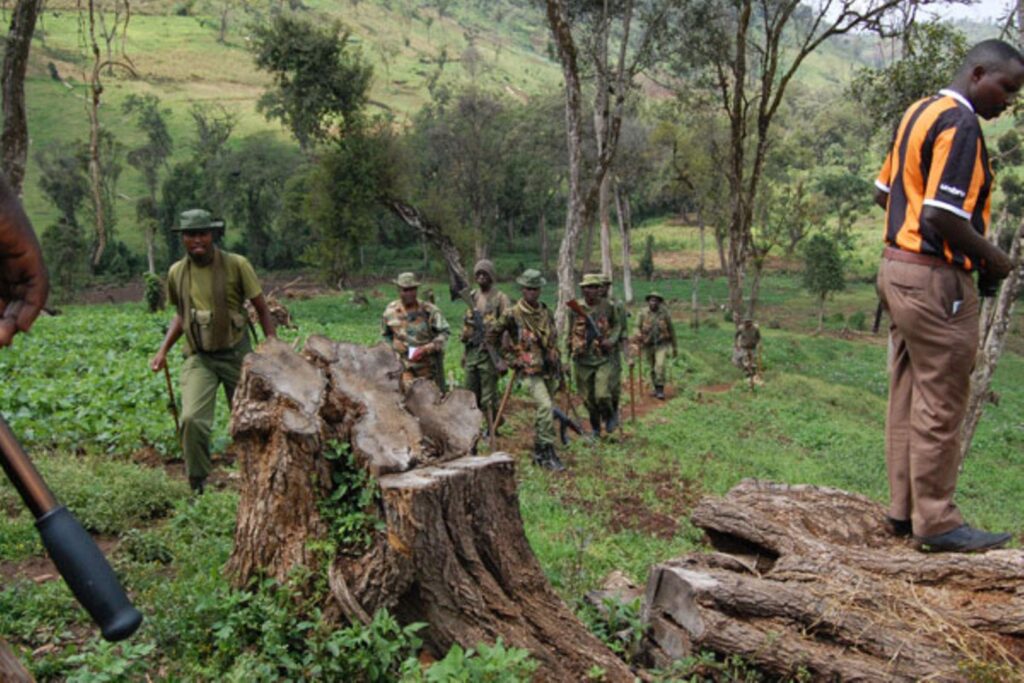
There is also a tendency to talk about forests primarily in terms of the trees that can be removed from them. Yet much of a forest’s value exists precisely because the trees remain standing. Forests regulate water flows, protect soils, provide habitat, store carbon and support biodiversity. They can influence local climates and provide products such as honey, medicinal plants, fruits and other non-timber resources. These services are often taken for granted because they do not arrive with a price tag attached to them.
Research on Kenya’s major water-tower forests has attempted to put a monetary value on some of these less visible benefits. An assessment of the Mau, Cherangany Hills and Mount Elgon ecosystems estimated their combined ecosystem services at approximately KSh339 billion per year, with regulating services, including those connected to water and environmental functions, accounting for a substantial share of the value.
This presents a peculiar economic imbalance. A mature tree destined for timber has an obvious market value. It can be measured, sold and transported. The value of that same tree standing within a functioning ecosystem is more diffuse. It may contribute to the water supply of communities hundreds of kilometres away, protect soil from erosion, provide habitat for wildlife and store carbon for decades. Those benefits are shared across society, often without anyone paying directly for them. The market therefore tends to make the value of the tree after it is cut easier to see than its value while it is alive.
That does not necessarily mean every tree should remain standing. It means that different forests need to be managed according to what they are actually there to do. A productive plantation can be harvested and replanted. A degraded forest may require restoration. A natural forest within an important water catchment may have a value that cannot be sensibly reduced to the price of its timber. Treating all three landscapes as interchangeable because they are all covered in trees would be a serious failure of forest policy.
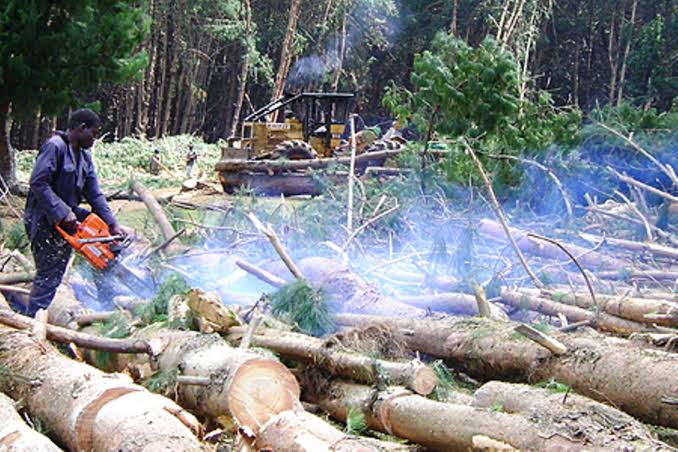
There is another part of this discussion that is sometimes overlooked: the people whose livelihoods depend on forestry. A logging ban may protect trees, but it can also disrupt sawmills, timber traders, transporters and workers whose incomes are connected to the industry. Communities living near forests may depend on forest products for cooking, construction, livestock and household income. Conservation policy that ignores these economic realities can create its own conflicts.
This is why sustainable forestry is ultimately a governance problem as much as an environmental one. It requires reliable information about the condition and extent of forests, transparent decisions about harvesting, effective monitoring and enforcement, and a clear distinction between areas where timber production is appropriate and areas where the ecological value of the forest outweighs its commercial value. It also requires communities to have a meaningful role in decisions about forests rather than being treated simply as beneficiaries or threats.
The question becomes even more important as climate change alters the conditions under which forests grow. Kenya is simultaneously dealing with drought, irregular rainfall, fires, land degradation and increasing pressure on water resources. Globally, demand for wood is also expected to continue increasing. In September 2026, news outlets reported that global demand for wood could rise by about 37 per cent by 2050, at a time when forests are already under pressure from agriculture, fires and logging.
There is nothing inherently contradictory about using forests and conserving them. Wood is renewable when it comes from systems that are genuinely capable of regeneration. The difficulty lies in the time scales involved. A tree can be harvested in a day, but the forest that produces it may take decades to mature. The economic transaction happens immediately; the ecological consequences, whether positive or negative, unfold over much longer periods.
That is why Kenya’s logging debate should move beyond the familiar question of whether logging should be allowed or banned. The more useful conversation is about what kind of forest economy the country wants. Can commercial plantations provide a reliable domestic supply of timber without increasing pressure on natural forests? Can forest-dependent communities earn livelihoods while maintaining the landscapes on which those livelihoods depend? Can the government monitor harvesting well enough that a permit means what it is supposed to mean? And can Kenya account for the economic value of forests that is lost when a landscape is degraded, rather than counting only the timber that leaves it?
These questions become particularly important as Kenya pursues its target of increasing forest cover to 10 per cent. The target is often discussed through the language of planting, but the country’s forest future will also depend on what happens to the forests that already exist. Planting millions of seedlings is one part of the equation. Keeping mature forests functioning is another.
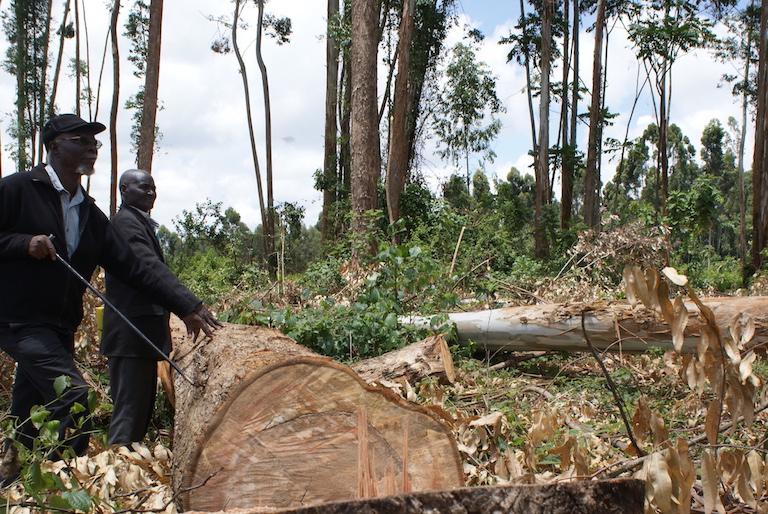
Perhaps this is the uncomfortable reality at the centre of Kenya’s relationship with its forests: we need to get better at distinguishing between a tree and a forest. A tree can be timber, fuel, shade or carbon. A forest is all of these things operating together, alongside water, soil, wildlife, livelihoods and communities. Once that distinction is understood, the question of whether a tree can be cut becomes less important than the larger question of what kind of landscape we are creating through the decision to cut it.
Because Kenya does need timber. It needs jobs and businesses and materials for a growing economy. But it also needs functioning ecosystems, reliable water systems and landscapes capable of absorbing the pressures of a changing climate.
RELATED: