Faith Nyasuguta

After 17 months of uncertainty, South African scientists can once again apply for research funding from the United States National Institutes of Health (NIH)—a decision that could help revive major medical research programmes disrupted by Washington’s funding freeze.
The reversal ends a major roadblock for researchers working on HIV, tuberculosis and other diseases, but it does not completely restore the scientific relationship between the two countries.

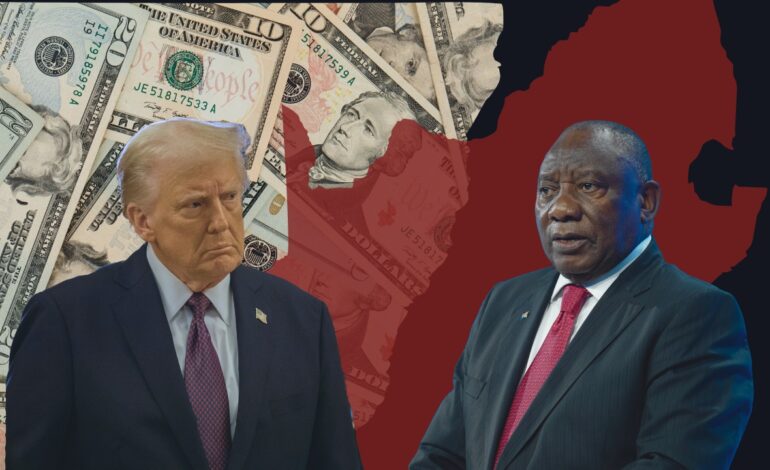
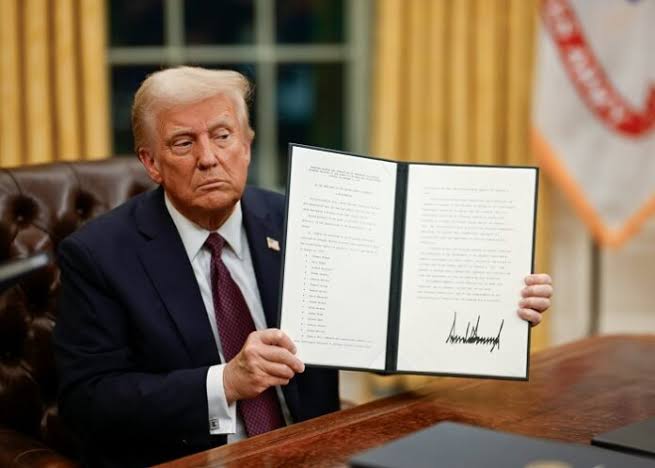
The funding freeze began in 2025 after U.S. President Donald Trump ordered American agencies to halt foreign aid and assistance to South Africa. The move disrupted a research partnership that had been built over decades between American and South African institutions.
Now, the NIH has determined that its international research grants are not foreign aid and therefore do not fall under the executive order.

The decision followed an internal memorandum from NIH Director Jay Bhattacharya, which concluded that Congress has specifically authorised the agency to participate in international research collaborations. The memo also noted that NIH research funding is not governed by the U.S. Foreign Assistance Act.
That distinction has reopened the door for South African researchers to compete for NIH research grants. But there is an important catch. The decision does not mean Washington is handing South Africa a fresh $450 million.
The $450 million figure represents the estimated scale of funding South Africa lost during the broader U.S. funding disruption, which affected research and health programmes supported through various American channels.
In other words, the money isn’t suddenly coming back. What is returning is the ability to compete for NIH research funding. And that matters enormously.
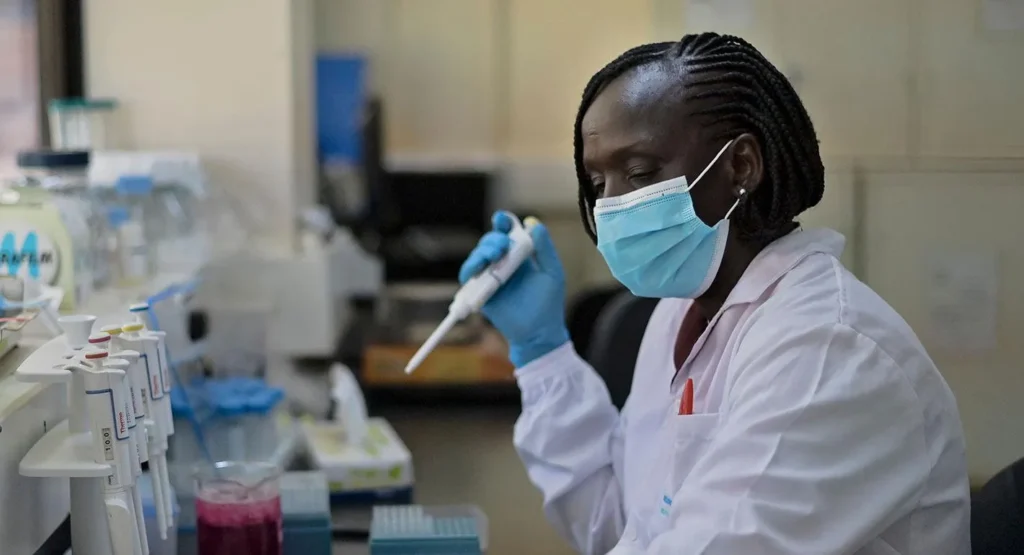
South Africa has developed into one of the world’s most important centres for medical and clinical research, particularly in HIV and TB.
The country has a large patient population, established universities and research institutions, experienced scientists and the infrastructure required to conduct large-scale clinical trials.
American researchers have consequently relied heavily on South African partners for studies involving treatments, prevention strategies and new medical technologies. When funding was frozen, the damage went beyond individual research projects.
Research sites faced the possibility of staff reductions, programme closures and cancelled studies. Institutions also warned that years of scientific expertise and infrastructure could be lost. And rebuilding that capacity is far harder than simply restoring a grant.
A laboratory can lose equipment. A research programme can lose funding. But when experienced scientists leave because their jobs disappear, rebuilding the team can take years.
That was particularly worrying for HIV and tuberculosis research, fields in which South African scientists have played a major role in studies influencing treatment and prevention strategies far beyond the country’s borders.
The NIH’s decision could now allow some of those international collaborations to restart and give affected institutions an opportunity to rebuild. However, Washington is attaching conditions.
According to the NIH, research carried out in South Africa must have a clear scientific justification for being conducted outside the United States and must have potential relevance to understanding, improving or protecting the health of Americans.
Projects will also remain subject to NIH scientific review, State Department scrutiny and U.S. regulations governing international research awards.
And there is another limitation: South African researchers remain excluded from certain training and career-development programmes operated by the NIH’s Fogarty International Center.
That restriction could have a wider impact across Africa because Fogarty programmes have historically helped develop scientists and strengthen research capacity across the continent.
So while the NIH reversal is a significant win for South Africa’s scientific community, it is not a complete reset.
After 17 months without access to an important source of international research funding, universities and research institutions now face the difficult task of restoring lost programmes, rebuilding teams and recovering momentum.
RELATED: