Faith Nyasuguta
Africa’s richest man, Aliko Dangote, is preparing to give away one-third of his fortune in what is set to become one of the largest philanthropic commitments ever made by an African billionaire.
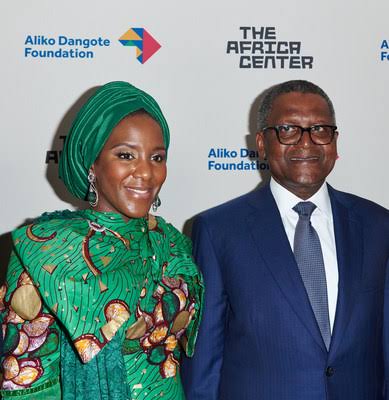
The pledge, revealed by his daughter Halima Dangote, forms part of the Nigerian business magnate’s long-term succession strategy and would see billions of dollars channelled into charitable causes through the Aliko Dangote Foundation after his lifetime.

Speaking in an interview with Bloomberg, Halima Dangote—who serves as a trustee of the foundation—said the family had formally agreed to dedicate 33 percent of the billionaire’s estate to philanthropy, describing the decision as a reflection of values that have guided the Dangote family for decades.
Based on the Bloomberg Billionaires Index, Aliko Dangote’s fortune is currently estimated at about $35.1 billion, meaning the planned donation would be worth roughly $11.7 billion at current valuations. That would rank among the largest charitable commitments ever announced on the African continent.
According to Halima, the arrangement is far more than a verbal promise.
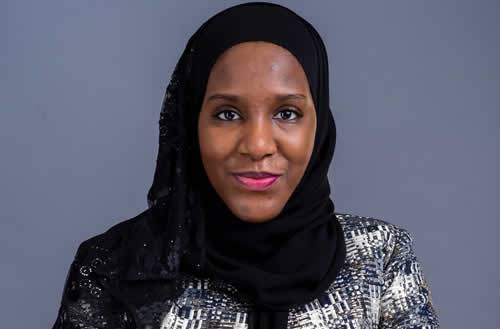
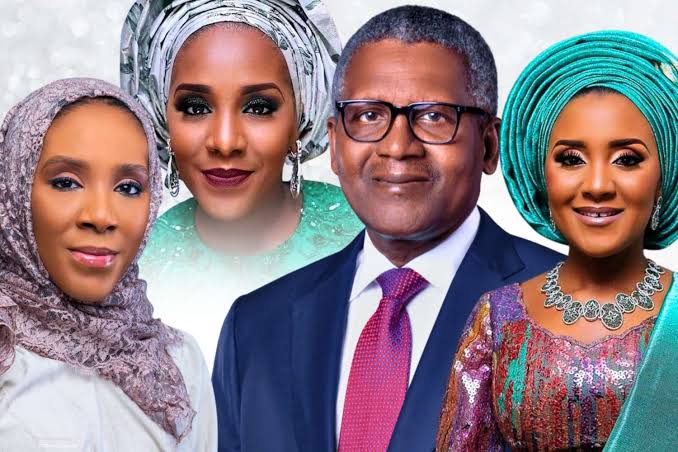
She disclosed that Dangote personally asked his mother and his three daughters—Halima, Mariya and Fatima—to sign a will formally supporting the decision, ensuring that philanthropy remains embedded in the family’s long-term succession plans.
“Giving back is part and parcel of what we do,” Halima said, adding that the family believes much of its business success is tied to a culture of generosity and social responsibility.
The announcement comes as Dangote simultaneously prepares the next generation to assume greater responsibilities across the Dangote Group, Africa’s largest industrial conglomerate.
Over the past year, his daughters have taken increasingly prominent leadership positions within the business empire, with Bloomberg previously reporting that the billionaire has been carefully expanding their responsibilities as part of a structured succession programme aimed at ensuring the group’s continuity well into the future.
Founded in 1994, the Aliko Dangote Foundation has become one of Africa’s largest private charitable organisations.
The foundation received a $1.25 billion endowment in 2014 and has since received an additional $700 million, allowing it to significantly expand programmes focused on healthcare, education, nutrition, disaster relief and poverty reduction across Nigeria and other African countries.
Its initiatives have included large-scale vaccination campaigns, maternal and child health programmes, scholarships, school infrastructure projects and emergency humanitarian support during disease outbreaks and natural disasters.
Education and health remain the foundation’s biggest priorities, with billions of naira invested over the years to strengthen public services and improve opportunities for vulnerable communities.
Dangote himself has long argued that wealth carries responsibilities beyond business success.
While building an empire spanning cement, sugar, fertiliser, salt, petrochemicals and, more recently, one of the world’s largest single-train oil refineries, he has repeatedly maintained that lasting impact should be measured not only by financial achievements but also by contributions to society.
The latest pledge reinforces that philosophy.
Unlike many succession plans that focus solely on preserving family wealth, Dangote’s proposal places philanthropy at the centre of his legacy, ensuring that a substantial share of his estate is permanently dedicated to public good rather than private inheritance.
The move also stands out because large-scale philanthropic pledges remain relatively uncommon among Africa’s wealthiest individuals despite the continent facing some of the world’s highest levels of inequality.
Observers say the commitment could encourage more African billionaires to institutionalise charitable giving through foundations capable of supporting long-term development programmes.
Even after setting aside one-third of his wealth for charity, Dangote’s family would retain control of one of Africa’s most valuable privately owned business empires.
For now, however, the succession plan sends a clear signal about the legacy the Nigerian industrialist hopes to leave behind.
Beyond cement plants, refineries and billion-dollar investments, Africa’s richest man wants a significant portion of his fortune to continue funding schools, hospitals and development projects long after he is gone—a commitment that could reshape philanthropy on the continent for generations to come.
RELATED: