When Climate Hits the Tap: Droughts, Floods and Africa’s Water Crisis

Njoki Kangethe
There is a particular kind of fear that comes with watching the sky and not knowing what it will bring.

For farmers, it is the fear of clouds gathering but refusing to break into rain. For pastoralists, it is the sight of dry riverbeds where water once flowed year-round. For families living in flood-prone settlements, it is the sound of heavy rain against rooftops late at night, knowing that by morning, entire homes could be underwater.

Across Africa, climate change is no longer arriving as a distant scientific prediction. It is arriving through failed rains, empty reservoirs, flooded roads, collapsing harvests, contaminated water sources, and rising food prices. It is reshaping the relationship between people, land, and survival itself.

And increasingly, it is exposing how fragile many water systems already were.
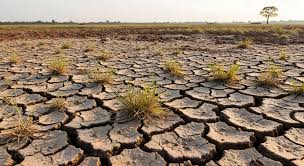
For years, conversations around climate change often felt abstract to many people; something discussed in global conferences, reports, and statistics. But for millions across the continent today, climate instability is deeply personal. It determines whether crops survive, whether livestock live through the season, whether families can access safe drinking water, and whether entire communities are forced to move.

Few regions illustrate this more painfully than the Horn of Africa.
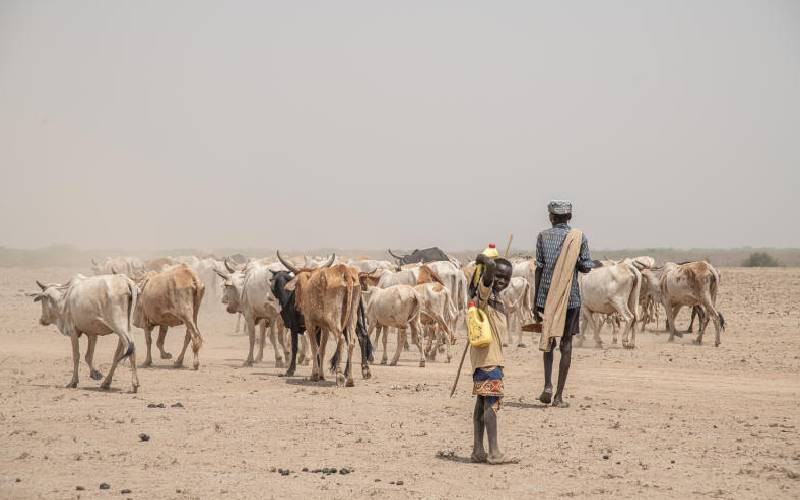
Countries such as Kenya, Somalia, and Ethiopia have experienced repeated drought cycles linked to failed rainy seasons and rising temperatures. In many pastoralist communities, rivers and grazing lands have dried up at alarming rates, leaving families struggling to sustain livestock that often represent their primary source of income and food security.
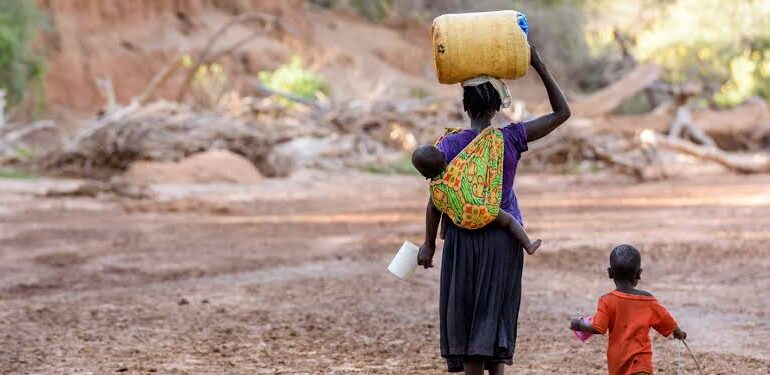
The images emerging from these regions have become heartbreakingly familiar: emaciated cattle collapsed under the heat, women walking long distances in search of water, children standing beside empty containers, entire landscapes turning brittle and brown under relentless sun.
But drought is never only about water.
When rains fail repeatedly, the effects ripple outward into nearly every aspect of life. Crops fail. Food prices rise. Families fall deeper into poverty. Communities that once survived through farming or livestock are forced to adapt or migrate. Increasingly, climate pressure is pushing people away from rural areas toward towns and cities already struggling with overcrowding, unemployment, and strained infrastructure.
In this way, climate change is not just an environmental crisis. It is becoming an economic and social one as well.
Yet even as some regions battle devastating drought, others are experiencing the opposite extreme.
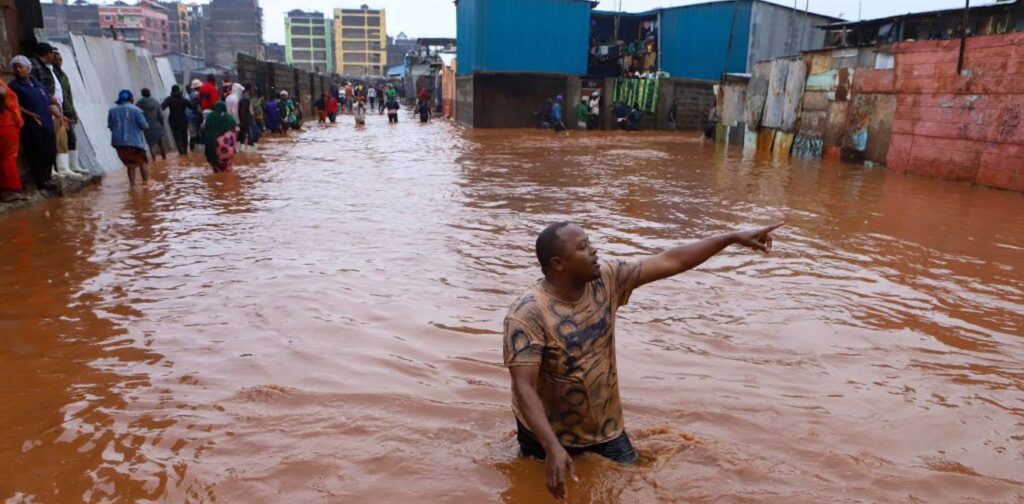
Flooding across African cities has intensified in recent years, overwhelming drainage systems and exposing the dangerous consequences of rapid urbanization without adequate infrastructure planning. In cities such as Nairobi, heavy rains regularly flood roads, homes, and informal settlements built near rivers, drainage channels, and low-lying areas.
For residents in wealthier neighborhoods, flooding may mean traffic delays or temporary inconvenience. In lower-income communities, it can mean losing everything overnight.
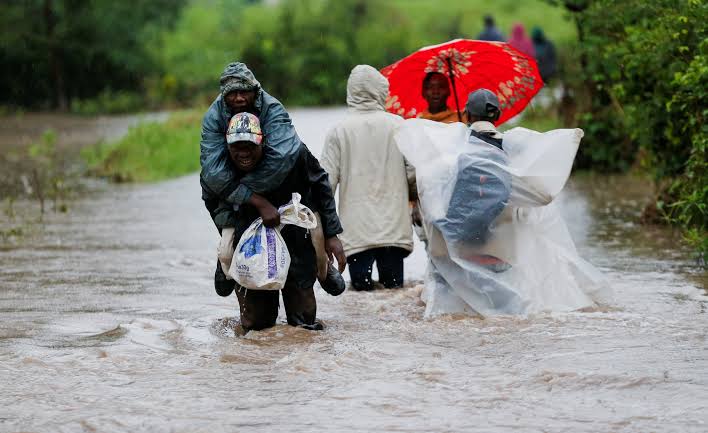
Floodwaters often carry sewage, industrial waste, and contaminated runoff directly into homes and water sources. Families wade through polluted water trying to salvage mattresses, clothing, schoolbooks, and household items. Waterborne diseases such as cholera and typhoid become more likely after major flooding events, particularly in areas where sanitation systems are already weak.
One of the cruelest ironies of climate-related flooding is that communities can find themselves surrounded by water while simultaneously losing access to safe water altogether. The water is everywhere, yet none of it is clean enough to drink.
Climate instability is also revealing the sharp inequalities embedded within African cities themselves.
Those with financial resources often have greater ability to absorb environmental shocks. They may live in elevated neighborhoods less vulnerable to flooding, install private boreholes and storage systems during shortages, or temporarily relocate during climate emergencies. Poorer communities rarely have such options.
A drought affects an entire country, but not equally.
Flooding affects a city, but not equally.
Water shortages inconvenience some people while pushing others into survival mode.
This divide becomes particularly visible in urban areas where infrastructure systems are already overstretched. African cities are growing rapidly, but investments in drainage, sanitation, reservoirs, and water distribution systems have often lagged behind population growth. Climate change is now placing even greater pressure on systems that were already struggling.
Reservoir levels fluctuate unpredictably.
Hydropower systems become less reliable.
Water treatment facilities face contamination risks during floods.Demand continues rising as urban populations expand.
Climate change is not creating all these vulnerabilities from scratch. In many cases, it is magnifying existing weaknesses that decades of underinvestment and inequality have already produced. Perhaps nowhere is the connection between water and survival more visible than in food systems.
Across much of Africa, agriculture remains heavily dependent on rainfall. When rainy seasons become shorter, weaker, or erratic, entire harvests are affected. Farmers must make impossible calculations about when to plant, whether to risk buying seeds, or whether the season itself can still be trusted.
In some communities, rivers that once sustained irrigation are shrinking dramatically. Elsewhere, floods wash away crops before harvest season arrives. The consequences are felt far beyond rural areas. Food shortages and reduced harvests contribute directly to rising prices in urban markets, placing additional strain on low-income households already struggling with economic pressures.
Water insecurity and food insecurity are deeply intertwined. When water systems become unstable, livelihoods become unstable too. And yet, despite the growing scale of the crisis, many communities continue adapting with remarkable resilience.
Farmers are experimenting with drought-resistant crops and climate-smart agriculture. Communities are building local rainwater harvesting systems. Environmental groups are advocating for stronger watershed protection and better urban planning. Across the continent, young innovators are developing technologies aimed at improving water monitoring, conservation, and climate adaptation.
There is ingenuity everywhere. But resilience alone cannot replace structural investment.
One of the most unsettling aspects of climate change is how quickly abnormal conditions begin to feel ordinary. Communities adapt psychologically long before systems adapt materially. People begin expecting drought. Flood alerts become seasonal rituals. Families normalize storing water constantly because uncertainty itself has become routine. But survival should not be mistaken for sustainability.
Africa contributes only a small fraction of global greenhouse gas emissions, yet many of its communities are already living on the frontlines of climate vulnerability. The question, increasingly, is not whether climate change will affect water systems further. It already is.
The deeper question is whether governments, cities, and institutions will respond quickly enough to protect the people most exposed to its consequences. Because when climate hits the tap, it reveals far more than environmental instability. It reveals whose systems were built to endure, whose communities were protected, and whose survival was always treated as negotiable.
References
• Intergovernmental Panel on Climate Change (IPCC) Reports
• UN Environment Programme (UNEP) – Climate and Water in Africa
• World Bank (2022). Climate Change and Water Security in Africa
• African Development Bank (2023). Climate Resilience and Urban Infrastructure
• FAO Reports on drought and food security in the Horn of Africa.
RELATED: